Slugging went viral on TikTok and Reddit a few years ago, and it has stuck around because for a lot of people, it actually works. The idea is simple: seal your entire skincare routine under a layer of petroleum jelly overnight, locking in every drop of moisture. Sounds odd, but dermatologists have been recommending this technique for decades under different names. The question is whether it is right for your skin type, or whether it will leave you with clogged pores and breakouts. So is it a yes or no to slugging? Here is what you need to know.
What Is Slugging?
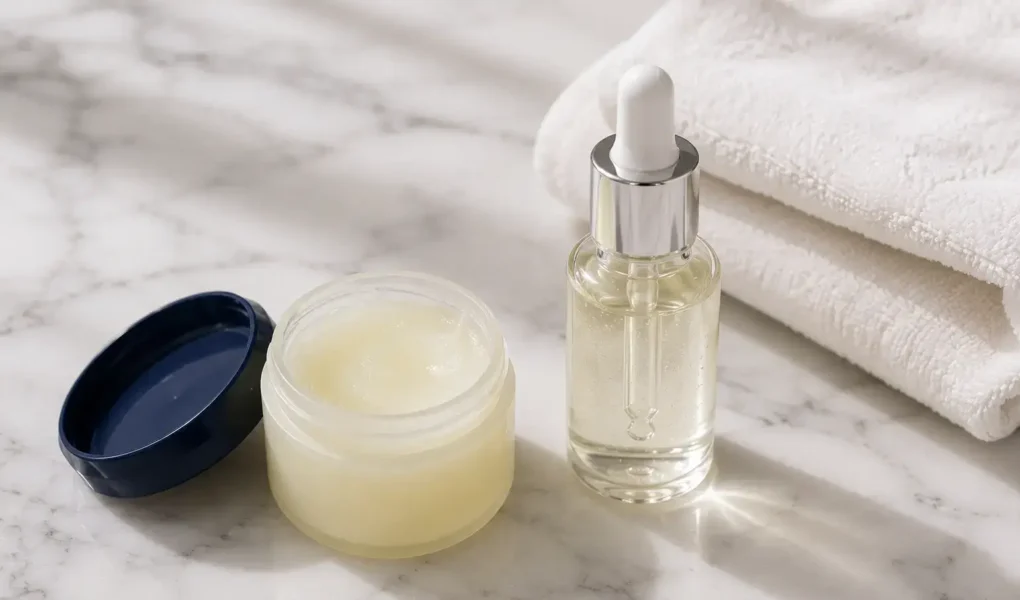
Slugging is the practice of applying a thin layer of an occlusive product, most commonly petroleum jelly (Vaseline), as the final step of your nighttime skincare routine. The occlusive layer forms a physical seal over your skin, preventing transepidermal water loss (TEWL) while you sleep. It does not add moisture on its own. It locks in whatever hydration and actives you applied underneath.
The term became popular through skincare communities online, but the technique itself is well-established in dermatology. According to Harvard Health, occlusives like petroleum jelly are among the most effective ingredients for preventing moisture loss and supporting skin barrier repair, making them a legitimate tool in any dry or sensitive skin routine. You can find more practical skincare guides at YesVsNo.net.
Is Slugging Right for Your Skin Type?
The answer to whether you should slug depends almost entirely on your skin type. Here is a quick reference before you commit to the routine.
| Skin Type | Slugging Verdict | Frequency | Best Product |
| Dry / Very Dry | Highly recommended | Every night | Petroleum jelly |
| Normal | Good option | 2-3x per week | Petroleum jelly or squalane |
| Combination | Use on dry areas only | 1-2x per week | Squalane oil |
| Oily | Not recommended | Avoid | Skip slugging |
| Acne-prone | Avoid | Avoid | Use niacinamide instead |
| Sensitive | Yes with caution | 1-2x per week | Petroleum jelly (fragrance-free) |
Benefits of Slugging
For the right skin types, slugging delivers real, visible results. Here is where the evidence and real-world results are strongest.
It Locks In Moisture and Prevents Water Loss Overnight
This is the core benefit and the reason slugging works so well for dry skin. While you sleep, your skin loses moisture through evaporation. An occlusive layer stops that process almost entirely. The result is skin that wakes up visibly softer, plumper, and more hydrated than it would be with a regular moisturizer alone. If you have dry or dehydrated skin that never feels quenched no matter what you apply, slugging addresses the actual mechanism behind that problem.
It Repairs and Strengthens the Skin Barrier
A compromised skin barrier is behind most chronic skin complaints, from redness and sensitivity to persistent dryness and reactivity. Slugging gives the barrier time to repair itself overnight by reducing external stress while minimizing moisture loss. Research supports petroleum jelly specifically as an effective barrier repair agent, and dermatologists regularly recommend it for post-procedure skin recovery and eczema management.
It Is Safe for Sensitive Skin Types
Petroleum jelly is one of the most inert ingredients in skincare. It is non-comedogenic for most skin types, fragrance-free, non-irritating, and unlikely to cause allergic reactions. For people with sensitive or reactive skin who struggle to find products they can tolerate, petroleum jelly is often one of the safest options available. Used carefully on a clean, well-prepped skin surface, it is gentle enough for even compromised skin.
It Supports Anti-Aging by Keeping Skin Plump Overnight
One of the visible signs of aging is the overnight loss of moisture that leads to dullness and fine lines appearing more prominent in the morning. By sealing in hydration through the night, slugging helps skin maintain its plumpness for longer. This does not reverse aging, but it does mean your skin holds onto the hydration and the effects of any serums or actives you applied underneath, which compounds over time.

Concerns and Side Effects
Slugging is not for everyone. These are the real downsides that make it a bad idea for certain skin types.
It Is Not Suitable for Acne-Prone or Oily Skin
While petroleum jelly is technically non-comedogenic on its own, applying a thick occlusive layer over oily or acne-prone skin traps everything underneath it, including bacteria, excess sebum, and any pore-clogging residue. For people who break out easily, slugging is a reliable way to trigger a flare-up. If your skin leans oily or you deal with regular breakouts, skip slugging entirely and look at niacinamide or lightweight gel moisturizers instead.
It Can Trap Bacteria If Skin Is Not Properly Cleansed First
Slugging only works safely if you apply it over thoroughly cleansed skin. Applying petroleum jelly over makeup residue, sunscreen, pollution, or any other debris seals all of that in overnight against your skin. This is the most common mistake people make when they first try slugging and wonder why they broke out. The cleanse before slugging needs to be thorough, which is why double cleansing is often recommended as the step that comes first.
So Is It a Yes or No to Slugging?
The verdict: YES — for dry, normal, and sensitive skin types. NO for oily and acne-prone skin.
Slugging is one of the most effective and affordable ways to lock in moisture overnight. For dry and dehydrated skin it is genuinely transformative, and for sensitive skin it can be a rare routine step that causes no irritation whatsoever.
The conditions: start with thoroughly cleansed skin every time, use a thin layer rather than a thick coat, choose fragrance-free petroleum jelly as your baseline product, and adjust frequency based on your skin type using the table above. If you have oily or acne-prone skin, slugging is not your answer and there are better alternatives.
How to Slug Correctly
The technique matters as much as the product. Here is exactly how to do it without running into the common issues that give slugging a bad reputation.
- Double cleanse first. Use an oil-based cleanser followed by a water-based cleanser to make sure there is no residue left on the skin before you apply anything.
- Apply your full routine as normal. Toner, serums, and moisturizer all go on in the usual order and fully absorb before the final step.
- Wait 5 to 10 minutes after your moisturizer before slugging. This gives the products underneath time to sink in properly.
- Apply a thin layer of petroleum jelly. A thin coat is all you need. You do not need to look shiny. Pat it gently over the face, focusing on drier areas.
- Start with 2 to 3 nights per week. Do not go straight to nightly slugging. Introduce it slowly and monitor how your skin responds before increasing frequency.
- Use a clean pillowcase. Petroleum jelly transfers to fabric. A silk or satin pillowcase reduces friction and keeps things cleaner.
Who Should Avoid Slugging
Slugging suits most dry and normal skin types, but these groups should skip it or approach with caution.
- Anyone with oily skin or a naturally high sebum output
- People who are acne-prone or dealing with active breakouts
- Anyone with fungal acne (Malassezia folliculitis) — occlusives can worsen this condition
- People with very congested skin or closed comedones
- Anyone who does not double cleanse first and consistently
Alternatives to Slugging
If slugging is not right for your skin, or you want a gentler approach to overnight hydration, these alternatives deliver similar benefits with less risk.
Double cleansing. If the idea of slugging appeals but you are nervous about the occlusive layer, starting with a proper double cleanse builds the foundation for healthier skin regardless. See Yes or No to Double Cleansing for a full breakdown of the method.
Retinol. For people focused on overnight skin repair and anti-aging rather than pure hydration, retinol addresses skin renewal at a cellular level while you sleep. Read Yes or No to Retinol to understand whether it fits your current routine.
Squalane oil. A lightweight, non-comedogenic oil that works as a gentler occlusive for combination or sensitive skin that cannot tolerate the heaviness of petroleum jelly. Easier to apply, less messy, and suitable for a wider range of skin types.
Still on the fence? Try our Yes or No Generator for an instant answer.
FAQ
Here are the most common questions people search when they are considering trying slugging for the first time.
Is slugging good for skin?
Yes, for dry, normal, and sensitive skin types. Slugging prevents overnight moisture loss, repairs the skin barrier, and helps active ingredients work more effectively. It is not suitable for oily or acne-prone skin, where it can trap sebum and trigger breakouts.
What products should I use for slugging?
Petroleum jelly (Vaseline) is the most commonly used and best-studied option. It is affordable, fragrance-free, and highly effective. Squalane oil is a lighter alternative for combination or sensitive skin. Avoid any product with fragrance, essential oils, or active ingredients as your slugging layer.
How often should I slug?
It depends on your skin type. Very dry skin can slug every night. Normal skin does well with two to three nights per week. Combination skin should focus the product on dry patches only, one to two nights per week. Always monitor your skin and reduce frequency if you notice congestion developing.
Is slugging safe for sensitive skin?
Yes. Petroleum jelly is one of the most inert and non-irritating ingredients in skincare. It contains no fragrance, no active ingredients, and no known allergens. For reactive or compromised skin that struggles with most products, slugging is often one of the safest options available.
Can slugging cause breakouts?
Yes, if your skin is oily or acne-prone, or if you do not cleanse thoroughly before applying the occlusive layer. Petroleum jelly itself does not cause acne in most people, but trapping bacteria, sebum, or product residue underneath it overnight absolutely can. Always double cleanse before slugging.
Conclusion
Yes to slugging for dry, normal, and sensitive skin types, with the right technique. Cleanse thoroughly first, apply a thin layer of fragrance-free petroleum jelly as the final step, and start two to three nights per week before building up. If your skin is oily or acne-prone, skip it entirely and look at alternatives. For everyone else, slugging is one of the simplest and most cost-effective ways to wake up with noticeably better skin.