
Collagen is everywhere right now. It is in coffee creamer, skincare serums, protein bars, and capsules at every pharmacy. The claims range from younger-looking skin to better joints to faster recovery. But the marketing noise makes it hard to separate what is real from what is hype. So is it a yes or no to collagen supplements? Here is what you need to know.
What Are Collagen Supplements?
Collagen is the most abundant protein in your body. It holds together your skin, joints, tendons, and bones. After your mid-20s, your body produces less of it every year, which is why skin loses firmness and joints feel stiffer over time.
Supplements are usually made from bovine (cow), marine (fish), or chicken sources and come as powders, capsules, or liquids. Most use hydrolyzed collagen, meaning the protein is broken into smaller peptides for easier absorption. According to Healthline, studies suggest these peptides do stimulate collagen production in the body, though results vary by person.
Which Type of Collagen Should You Take?
Not all collagen supplements do the same thing. The type you choose should match your goal. Here is a quick breakdown to help you decide.
| Collagen Type | Best For | Source | Daily Dose |
| Type I (Marine) | Skin, hair, nails | Fish | 5-10g |
| Type I & III (Bovine) | Skin, gut health | Cow hide | 10-15g |
| Type II (Chicken) | Joint support | Chicken cartilage | 2.5-10g |
| Hydrolyzed Peptides | General / athletes | Bovine or marine | 5-15g |
Benefits of Collagen Supplements
Here is where the science holds up. Collagen supplements have real, replicated evidence behind several key benefits, especially when the right type is used at the right dose.
Supports Joint Health
This is the most well-researched benefit. Collagen peptides help reduce joint pain and stiffness, especially in people with osteoarthritis or high-impact training routines. It works by accumulating in cartilage and triggering tissue repair over time.
Improves Skin Elasticity
A 2019 review in the Journal of Drugs in Dermatology analyzed 11 randomized controlled trials and found consistent improvements in skin elasticity and hydration after 90 days of collagen use. Results are gradual, not dramatic, but the evidence holds up across multiple studies.
Helps Athletes Recover
Tendons and ligaments are collagen-dense tissues that take the most stress during training. Stanford research found that taking collagen with vitamin C before exercise boosts collagen synthesis in connective tissue, which can aid recovery and reduce injury risk.
Hydrolyzed Form Is Easier to Absorb
Hydrolyzed collagen peptides absorb more efficiently than whole collagen or gelatin. The breakdown process makes the amino acids bioavailable faster, which is why most quality supplements on the market use this form over raw collagen.
Concerns and Side Effects
Collagen supplements are safe for most people, but there are a few real drawbacks worth knowing before you buy.
Results Take Months, Not Weeks
Most studies that show real results run for 8 to 12 weeks minimum, and some run up to 6 months. If you quit after two weeks because nothing happened, the supplement never had a real chance to work. Patience is non-negotiable here.
Not Safe for Everyone
Collagen comes from animals, so people with allergies to fish, shellfish, eggs, or beef need to check the source on the label carefully. High doses can cause bloating or a heavy feeling in the stomach. Anyone on blood thinners or with a chronic health condition should consult a doctor before starting.
So Is It a Yes or No to Collagen Supplements?
The verdict: YES, but with conditions.
For joint health, skin elasticity, and athletic recovery, the evidence is real and replicated across multiple clinical trials. Hydrolyzed collagen peptides are well absorbed and have a strong safety profile for most healthy adults.
The conditions: pick the right type for your goal using the table above, pair it with vitamin C, and commit to at least 8 weeks before judging results. If you are vegan or have animal allergies, standard collagen is not an option and you will need to look at alternatives.
How to Use Collagen Supplements
Follow these steps to get the most out of your supplement and avoid common mistakes that lead people to quit too early.
- Pick the right type. Use marine collagen for skin, type II for joints, hydrolyzed bovine for general use and athletic recovery.
- Dose 5 to 15 grams daily. Start at 5g and increase based on your goal and tolerance.
- Add vitamin C. It is required for collagen synthesis. Mix with orange juice or take a vitamin C supplement alongside it.
- Take it consistently every day. Skipping one day is fine. Skipping two weeks means you are starting from scratch.
- If you are an athlete, take it 30 to 60 minutes before training. The Stanford protocol showed better connective tissue results with this timing.
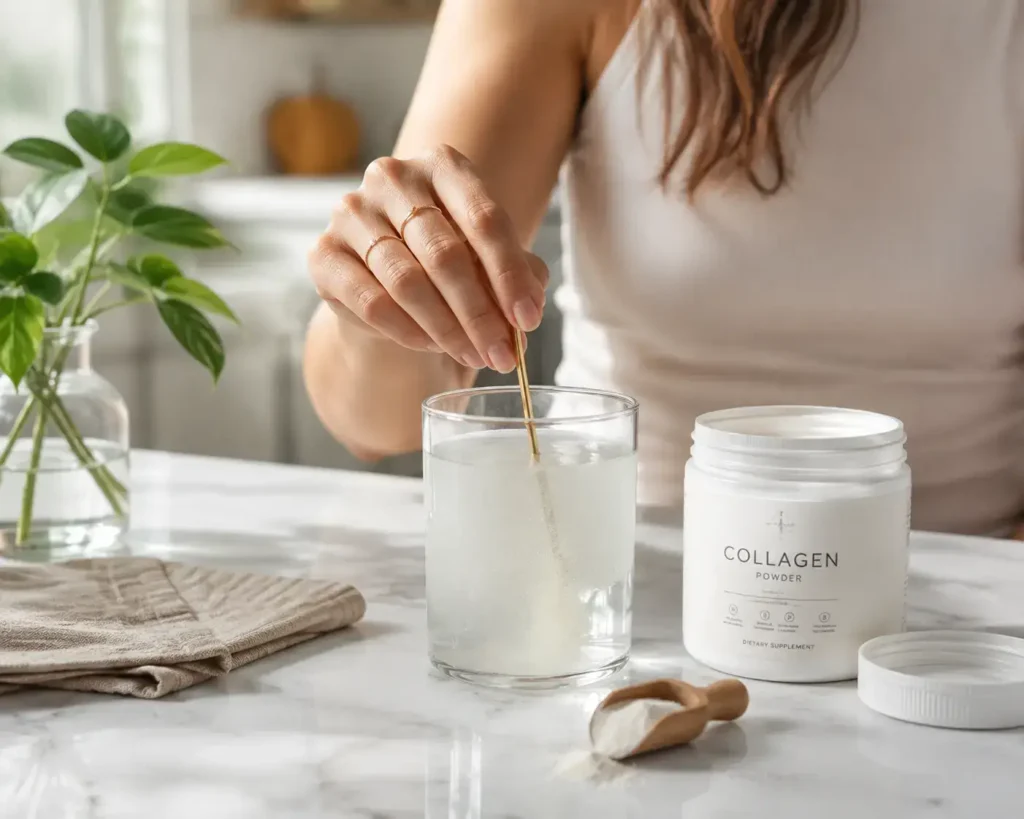
- Use powder over capsules when possible. It is easier to adjust your dose and it mixes well into coffee, smoothies, or water with no flavor impact.
Since collagen takes 8-12 weeks to show results, it’s easy to lose track of whether you’re actually being consistent — or quietly skip days without realizing it. The Supplement & Vitamin Tracker gives you a simple log to stay on top of your dose and timing, so you don’t quit right before it starts working.
💊 Get the Supplement Tracker — $15Who Should Avoid Collagen Supplements
Collagen is not for everyone. Skip it or check with a doctor if any of the following apply to you.
- Anyone allergic to fish, shellfish, eggs, or beef (always check the animal source on the label)
- Vegans and vegetarians (all standard collagen is animal-derived, no exceptions)
- People with kidney disease (the additional protein load may be a concern)
- Anyone on blood thinners or with a clotting disorder (consult a doctor first)
- Pregnant or breastfeeding women (check with your healthcare provider before starting)
Alternatives to Collagen Supplements
If collagen supplements are not right for you, or you want to combine them with other approaches, these alternatives are worth considering.
Vitamin C-rich foods. Your body needs vitamin C to produce collagen on its own. A diet high in citrus, bell peppers, and leafy greens supports natural collagen synthesis without any supplementation.
Retinol. For skin aging specifically, retinol has stronger topical evidence than oral collagen. See our full breakdown: Yes or No to Retinol.
Bone broth. A natural food-based collagen source. Lower concentration than supplements but adds other nutrients and works well for people who prefer whole food approaches.
If skin health is your main goal, also read: Yes or No to Vitamin C Serum Daily to see how topical vitamin C supports collagen from the outside.
Still undecided? Try our Yes or No Generator for a quick answer.
FAQ
Here are the questions people search most when researching collagen supplements.
Does collagen actually work?
Yes, for joint health and skin elasticity. The evidence from randomized controlled trials is consistent. It is not a miracle product, but it is one of the more credible supplements on the market when used correctly.
How long before I see results?
Give it 8 to 12 weeks minimum. Skin results can appear around 4 to 6 weeks. Joint improvements tend to take longer. Consistency matters more than timing or dose.
What type of collagen is best?
It depends on your goal. Marine collagen for skin (type I), chicken-derived for joints (type II), and hydrolyzed bovine for general use and athletes. Refer to the comparison table earlier in this post.
Can I get enough collagen from food?
Partially. Bone broth, chicken skin, and fish with skin all provide natural collagen. But hitting the doses used in clinical studies through food alone is difficult. Supplements close that gap effectively.
Are collagen supplements safe long-term?
For most healthy adults, yes. Studies running up to 12 months show no significant safety concerns. The main risks are allergy-related or from very high doses. Always check the animal source on the label before buying.
Conclusion
Yes to collagen supplements for most people, but the setup matters. Pick the right type for your goal, pair it with vitamin C, and give it at least 8 weeks before you judge the results. The science backs real benefits for skin elasticity, joint health, and athletic recovery. If you have animal allergies or follow a plant-based diet, vitamin C-rich foods and retinol are your better alternatives.
💊 Get the Supplement Tracker — $15