Flat irons, curling wands, and blow dryers are some of the most commonly used hair tools in the world, and heat damage is one of the most common causes of dry, brittle, and broken hair. Heat protectants exist specifically to reduce that damage, but a lot of people either skip them out of habit, use the wrong formula, or apply them incorrectly and wonder why their hair still looks fried. The question is whether you really need one every single time, or whether there are situations where it is fine to skip. So is it a yes or no to heat protectant every time? Here is what you need to know.
What Does Heat Protectant Actually Do?
Heat protectants are styling products formulated with ingredients that coat the hair shaft and reduce the amount of heat transferred to the inner cortex of the hair. Common active ingredients include silicones like dimethicone and cyclomethicone, which form a smooth film over the cuticle, as well as hydrolyzed proteins and polymers that help distribute heat more evenly and reduce moisture loss during styling.
Heat tools can reach temperatures between 300 and 450 degrees Fahrenheit, which is more than enough to break the protein bonds inside the hair shaft. According to the Cleveland Clinic, repeated heat exposure without protection leads to cuticle lifting, moisture loss, and progressive weakening of the hair strand over time. More hair care guides are available at YesVsNo.net.
Which Heat Protectant Formula Is Right for Your Hair?
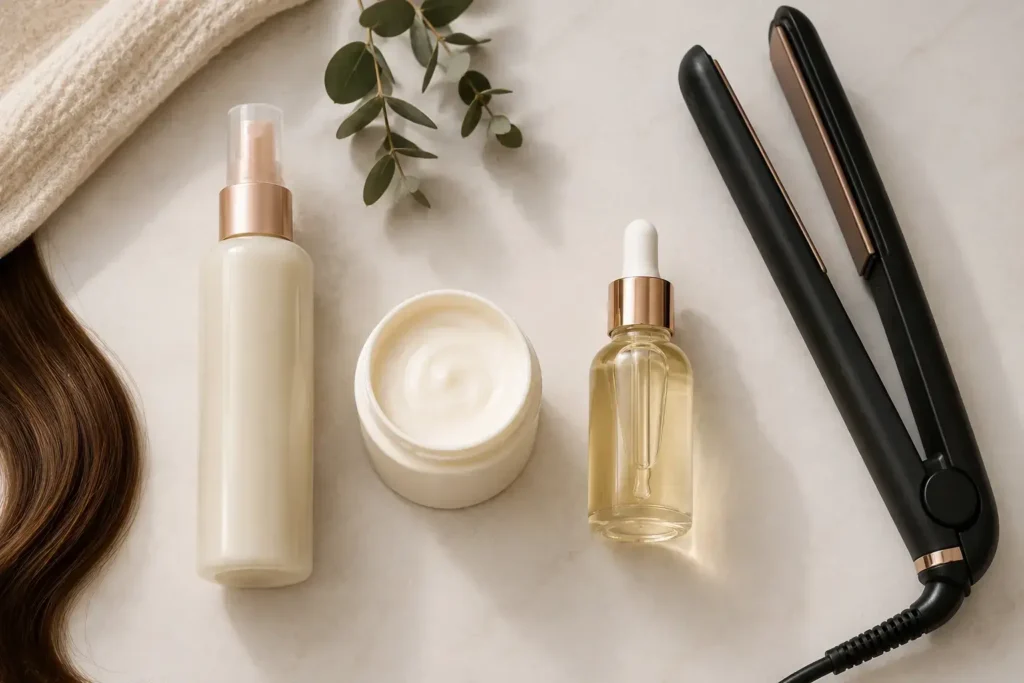
Not all heat protectants perform the same way. The right formula depends on your hair type, texture, and the temperature of your styling tools. Here is a quick reference.
| Formula Type | Best For | Max Heat Rating | Notes |
| Spray | Fine, thin hair | Up to 450F | Lightweight, even coverage |
| Cream | Thick, coarse, curly hair | Up to 450F | Adds moisture and definition |
| Serum | Color-treated, frizzy hair | Up to 450F | Smoothing, adds shine |
| Oil-based | Dry, damaged hair | Up to 400F | Rich protection, avoid roots |
| Leave-in conditioner with heat protection | All hair types | Up to 350-400F | Good for low-heat styling |
Benefits of Using Heat Protectant Every Time
There is a strong case for using heat protectant consistently whenever you use heat tools. Here is where it makes the most meaningful difference.
It Prevents Cuticle Damage and Moisture Loss
The hair cuticle is the outermost layer of the hair shaft and acts as a protective barrier for the inner cortex. High heat lifts and cracks the cuticle, allowing moisture to escape and leaving hair dry, dull, and prone to breakage. A heat protectant forms a barrier between the tool and the cuticle that reduces how much heat actually penetrates the strand. This is not just cosmetic: repeated unprotected heat styling causes cumulative structural damage that gets worse over time.
It Is Essential for Color-Treated and Chemically Processed Hair
Color-treated, bleached, permed, or relaxed hair has a compromised cuticle to begin with. The chemical processes that change hair color or texture open the cuticle intentionally, which also makes it more vulnerable to heat damage afterward. For anyone with chemically processed hair, skipping heat protectant is significantly more damaging than it would be for untreated hair. This category of hair needs protection at lower temperatures too, since it reaches its damage threshold faster.
It Works Across All Heat Tools Including Blow Dryers
Many people use heat protectant for flat irons and curling wands but skip it for blow drying, assuming lower heat means lower risk. This is a mistake. Blow drying, especially on high heat settings, still reaches temperatures that damage the cuticle. Any time a heat tool is used on the hair, a protectant should go on first. The one exception is air drying with no heat tool involved at all.
Concerns and Limitations
Heat protectants are not all created equal and using the wrong one can give false confidence without real protection. Here is what to watch for.
Not All Heat Protectants Offer Equal Protection
The market is full of products labeled as heat protectants that contain minimal active ingredients and offer little real barrier protection. A product that claims to protect up to 450 degrees Fahrenheit is only effective at that temperature if the formula actually contains enough film-forming silicones or polymers to withstand it. Lightweight sprays with mostly water and fragrance provide minimal protection at high temperatures. Always check that the product lists dimethicone, cyclomethicone, or a comparable polymer high in the ingredient list.
No Protection Needed If You Are Air Drying
Heat protectant is for heat tools only. If you wash your hair and let it air dry without any styling tools, there is no heat source to protect against. Using a heat protectant in this scenario is unnecessary and may leave a residue or buildup without any benefit. Save it for the days you actually style with heat.
So Is It a Yes or No to Heat Protectant Every Time?
The verdict: YES — every single time you use a heat tool.
There is no styling session with a heat tool where skipping protection is a good idea. The damage is cumulative and often invisible until it is already significant. Heat protectant is one of the simplest, most affordable steps you can add to a routine that makes a real long-term difference to hair health.
The conditions: choose a formula matched to your hair type and tool temperature using the table above. Apply it correctly to damp or dry hair before any heat tool touches it. Make sure the product you are using has actual film-forming ingredients rather than being mostly water and fragrance. And skip it only on days when no heat tools are involved at all.
How to Apply Heat Protectant Correctly
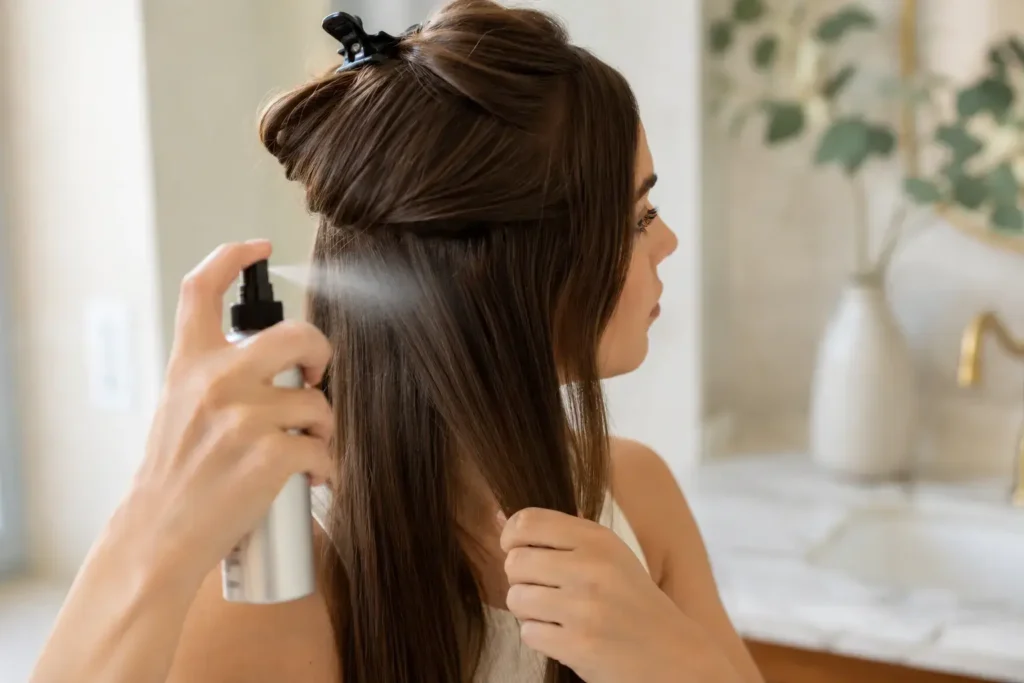
Applying heat protectant correctly makes the difference between actual protection and going through the motions. Here is the right method.
- Choose the right formula for your hair type and styling tool temperature using the table above.
- Apply to damp hair before blow drying, or to dry hair before flat ironing or curling. Most sprays work best on damp hair. Creams and serums can be applied to either.
- Section your hair and apply in sections to make sure every part of the hair that the tool will touch is covered. Unprotected sections still get damaged.
- Focus on mid-lengths and ends, which are the most damaged parts of most hair types. Avoid applying heavy products directly to roots if your hair gets greasy quickly.
- Do not apply too close to the scalp with oil-based formulas. These can clog follicles and feel greasy.
- Allow the product to absorb for 30 to 60 seconds before starting to style. Applying and immediately using a hot tool reduces the effectiveness of the protectant.
Who Should Be Extra Careful With Heat Protectants
Heat protectants are safe for most hair types, but these groups need to pay closer attention to formula choice and application.
- People with fine or low-porosity hair should avoid heavy creams and oil-based protectants that can weigh hair down or cause buildup — stick to lightweight sprays
- Anyone with scalp sensitivity should check for fragrance or alcohol-heavy formulas that may irritate
- People with very dry or high-porosity hair need a richer formula — lightweight sprays alone may not provide enough protection at high temperatures
- Anyone styling with tools above 400F should specifically check that their protectant is rated for that temperature range
Alternatives and Complements to Heat Protectant
If you want to reduce heat damage further or support hair health alongside your protectant, these options work well alongside it.
Lower your tool temperature. The single most effective way to reduce heat damage is to lower the temperature setting. Fine hair does not need 450F. Most styling can be achieved at 300 to 350F with less damage and a good protectant.
Silk pillowcase overnight. Reducing mechanical friction while you sleep helps preserve the hair integrity that heat styling taxes during the day. Read Yes or No to Silk Pillowcases for Hair Fall to understand how overnight protection complements your daytime routine.
Rosemary oil scalp treatment. If heat damage has led to thinning or reduced density over time, addressing scalp health alongside protective styling gives the best results. See Yes or No to Rosemary Oil for Hair Growth for an evidence-backed approach to hair regrowth.
Still on the fence? Try our Yes or No Generator for an instant answer.
FAQ
Here are the most common questions people search when deciding whether to use heat protectant every time they style.
What happens if I don’t use heat protectant?
Over time, repeated heat styling without protection leads to cuticle damage, moisture loss, increased frizz, split ends, and breakage. The damage is cumulative and often does not become fully visible until several months of unprotected styling have passed. By then, significant structural damage has already occurred.
Can I skip heat protectant if I use low heat?
Lower heat settings cause less damage, but they still cause some. Even blow drying on a medium setting raises the temperature of the hair shaft enough to affect the cuticle over time. The only time you can safely skip heat protectant is when you are not using any heat tools at all.
Is leave-in conditioner enough as a heat protectant?
Some leave-in conditioners contain heat-protective ingredients and are labeled as such. If the product specifically states a heat protection rating and contains silicones or protective polymers, it can work for low to medium heat styling. A basic leave-in without these ingredients does not provide meaningful heat protection, regardless of how moisturizing it is.
Do I need heat protectant for blow drying?
Yes. Blow dryers reach temperatures between 175 and 230 degrees Celsius (roughly 350 to 450 degrees Fahrenheit) on high settings, which is more than enough to damage the cuticle. Many people skip protectant for blow drying while using it for flat irons, but the risk is real with both.
How do I know if my heat protectant is actually working?
A heat protectant is working when your hair feels smoother after styling, retains more moisture, and shows less frizz and breakage over time compared to styling without one. If you are using a product but still seeing significant damage, check the ingredient list for actual film-forming ingredients like dimethicone and ensure the product is rated for your tool temperature.
Conclusion
Yes to heat protectant every time you use a heat tool, without exception. The damage from unprotected heat styling is real, cumulative, and often irreversible without cutting the hair. Choose a formula that matches your hair type and tool temperature, apply it correctly in sections before styling, and make it as automatic as plugging in the tool itself. The one time you can skip it is the day you let your hair air dry completely.