Silk pillowcases have been a beauty staple for decades, but they went mainstream recently as more people started paying attention to what happens to their hair while they sleep. The logic makes sense: you spend roughly a third of your life with your hair pressed against a pillowcase. If that pillowcase creates friction every time you move, the damage adds up. But do silk pillowcases actually reduce hair fall, or is this just an expensive upgrade with limited real-world impact? So is it a yes or no to silk pillowcases for hair fall? Here is what you need to know.
What Makes Silk Pillowcases Different?
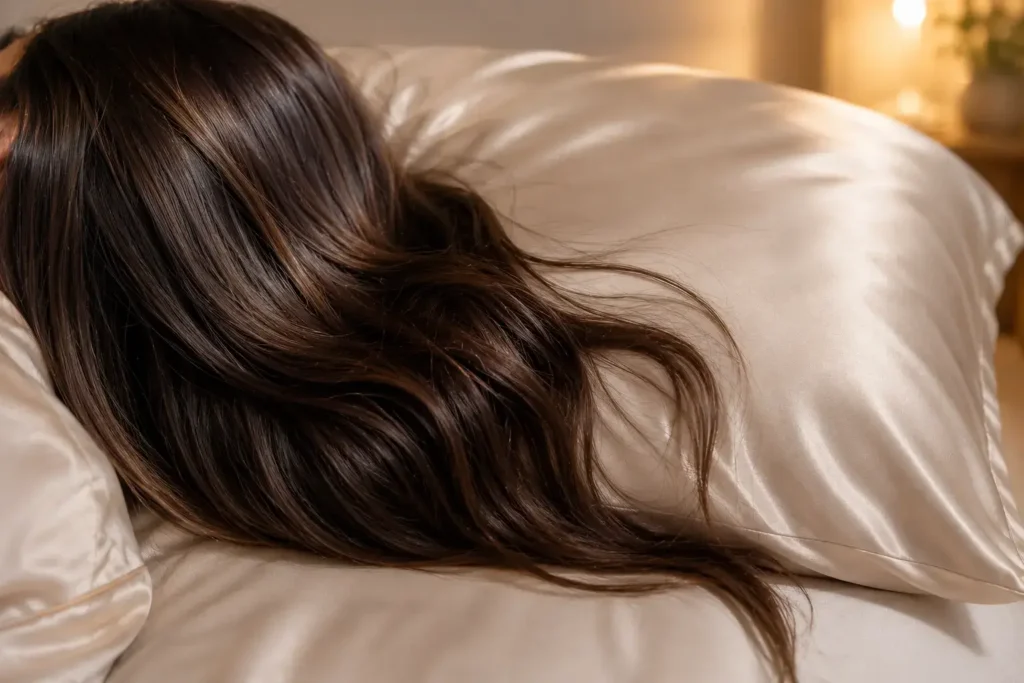
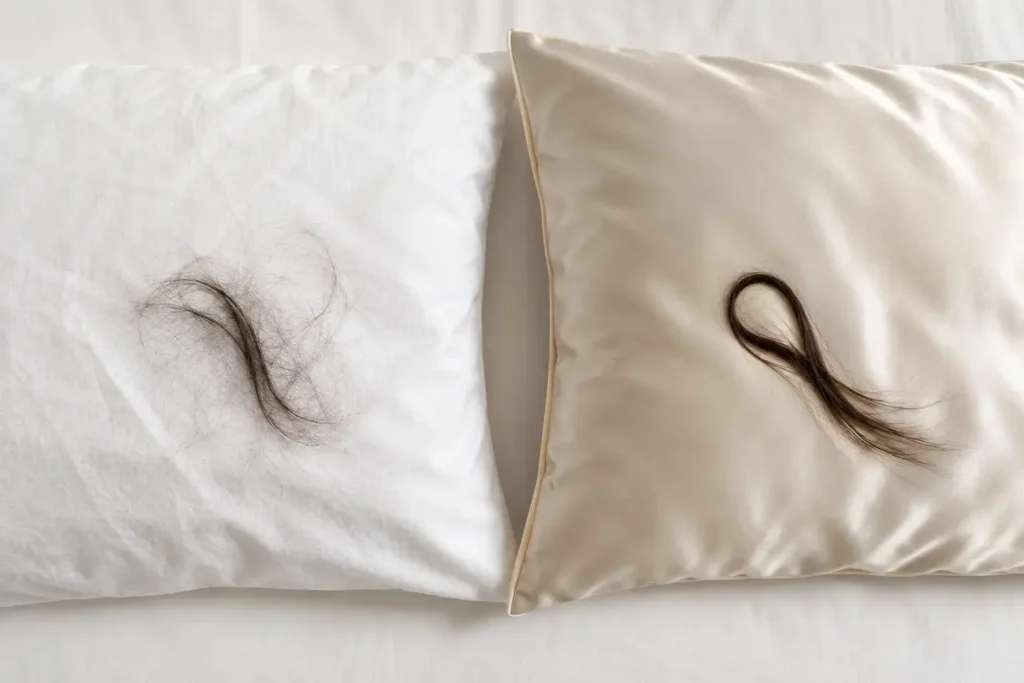
Silk is a natural protein fiber with an exceptionally smooth surface. Unlike cotton, which has a rough, absorbent weave that grips hair strands and pulls at them with every movement, silk allows hair to glide freely. This reduces the mechanical friction that causes breakage, frizz, and tangles overnight. Silk also absorbs significantly less moisture than cotton, which means your hair retains more of its natural oils and any products you applied before bed.
The key metric when choosing a silk pillowcase is momme weight, which measures fabric density. According to WebMD, a momme weight of 19 to 25 is generally recommended for hair and skin benefits, as lighter silk tends to be less durable and may not maintain the same smoothness over time. Find more hair care guides at YesVsNo.net.
Silk vs Other Pillowcase Materials for Hair
Not all smooth pillowcases are equal. Here is how silk compares to common alternatives on the factors that matter most for hair health.
| Material | Friction Level | Hair Benefit | Price Range |
| Cotton | High | None — causes most breakage | Low |
| Satin (polyester) | Low | Good friction reduction | Low to mid |
| Bamboo | Medium-low | Better than cotton | Mid |
| Silk (19 momme) | Very low | Good — lightweight option | Mid to high |
| Silk (22-25 momme) | Lowest | Best — durability and smoothness | High |
Benefits of Silk Pillowcases for Hair Fall
The case for silk pillowcases comes down to friction, moisture, and long-term hair integrity. Here is where they make a genuine difference.
They Reduce Friction and Mechanical Breakage During Sleep
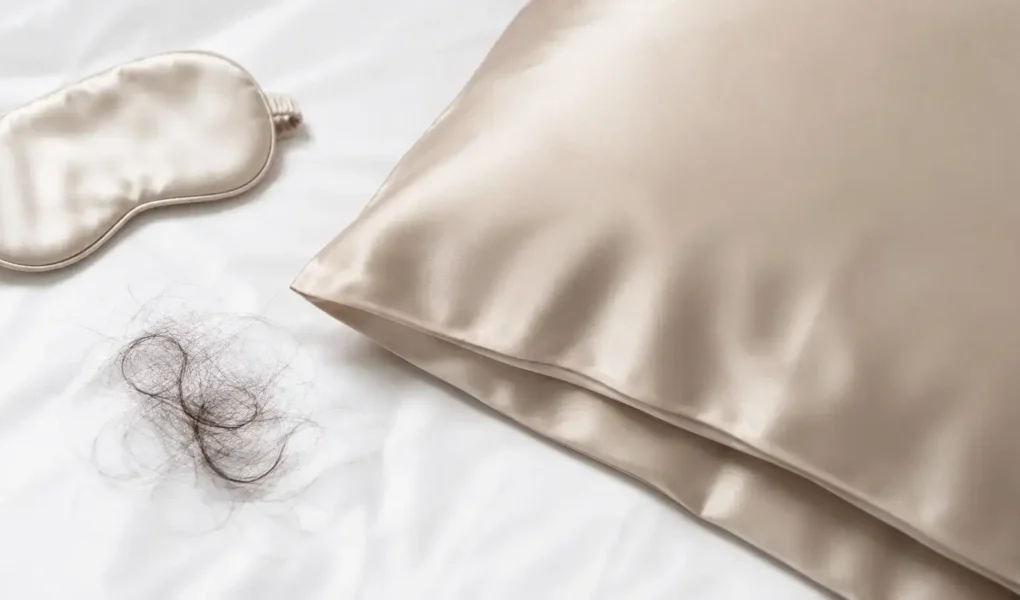
The most well-supported benefit of silk pillowcases is friction reduction. Cotton pillowcases create drag on hair strands with every movement, which pulls at the cuticle and causes breakage over time. This is particularly damaging for fine, chemically treated, or already fragile hair. Silk’s smooth surface lets hair move freely, which directly reduces the mechanical stress that leads to split ends and breakage at the roots.
They Work for All Hair Types Including Curly and Color-Treated
Curly and coily hair is especially vulnerable to overnight friction because the natural curl pattern makes strands more prone to tangling against rough surfaces. Silk pillowcases reduce that tangling significantly, which means less manipulation needed to detangle in the morning and less breakage in the process. Color-treated hair, which is more porous and fragile than virgin hair, also benefits from the reduced abrasion and moisture retention.
They Also Benefit Skin by Reducing Sleep Creases and Moisture Loss
The benefit of silk does not stop at hair. The same smoothness that reduces hair friction also prevents the repeated skin compression that leads to sleep lines over time. Silk also does not absorb skincare products the way cotton does, which means your moisturizer and serums stay on your skin overnight rather than transferring to the pillowcase. For anyone already investing in a skincare routine, this is a meaningful added value.
Concerns and Limitations
Silk pillowcases are genuinely useful for hair, but there are real limitations worth understanding before you spend the money.
They Do Not Address the Root Causes of Hair Loss
This is the most important caveat. Silk pillowcases reduce breakage from friction, but they do not address hormonal hair loss, nutritional deficiencies, scalp conditions, or genetic thinning. If you are experiencing significant hair fall beyond normal daily shedding (50 to 100 strands per day), switching pillowcases will not solve it. Think of silk as a maintenance tool for healthy hair rather than a treatment for hair loss.
Silk Requires Careful Maintenance and Comes at a Price
Genuine silk pillowcases need to be hand-washed or machine-washed on a delicate cycle with gentle detergent, dried flat, and kept away from direct heat. They are also significantly more expensive than cotton or even satin alternatives. A quality 22-momme silk pillowcase typically costs between 50 and 150 dollars. If budget is a concern, a polyester satin pillowcase at a fraction of the price delivers comparable friction reduction, though without silk’s moisture-retaining properties.
So Is It a Yes or No to Silk Pillowcases for Hair Fall?
The verdict: YES — for reducing breakage and protecting hair integrity overnight.
If your hair fall is primarily mechanical, meaning breakage from styling, friction, or rough handling, a silk pillowcase is a simple and effective upgrade. The friction reduction is real, the benefit for curly and treated hair is well supported, and the added skin benefit makes it a two-for-one investment.
The conditions: choose at least 19 momme silk for meaningful results, and go up to 22 to 25 momme if durability matters to you. If budget is a barrier, a satin pillowcase delivers most of the friction benefit at a much lower cost. And if your hair fall is more than occasional breakage, address the underlying cause rather than expecting a pillowcase to fix it.
How to Get the Most Out of a Silk Pillowcase
Getting the full benefit of a silk pillowcase comes down to a few simple habits alongside the switch.
- Choose 19 to 25 momme silk. Anything below 19 momme is too light to maintain its smoothness wash after wash. Look for Mulberry silk specifically, which is the most durable and consistent quality.
- Wash on a delicate cycle or by hand using a mild detergent. Avoid fabric softener, which breaks down silk fibers over time.
- Air dry flat away from direct sunlight. Heat degrades silk quickly and reduces its smoothness.
- Sleep with your hair loosely tied or in a protective style if you have very long or thick hair. This reduces the surface area in contact with the pillowcase and further minimizes tangling.
- Replace every 12 to 18 months. Silk loses its smoothness as the fibers break down with repeated washing. A worn silk pillowcase provides less benefit than a fresh one.
- If budget is an issue, start with a satin pillowcase. It delivers most of the friction reduction at a significantly lower price point and is easier to maintain.
Who Should Reconsider Silk Pillowcases
Silk pillowcases suit most people, but these groups may find limited benefit or have practical reasons to choose an alternative.
- Anyone with significant hormonal or genetic hair loss — a pillowcase will not address the underlying cause
- People who sweat heavily during sleep — silk does not breathe as well as cotton and can feel warm
- Anyone unwilling or unable to hand wash or use a delicate cycle — incorrect washing ruins silk quickly
- People on a tight budget who need a faster or more impactful hair health intervention first
Alternatives to Silk Pillowcases
If silk is not the right fit right now, these alternatives address overnight hair health from different angles.
Satin pillowcase. Polyester satin mimics silk’s friction-reducing surface at a fraction of the cost and is much easier to wash and maintain. For most people this is the most practical starting point before investing in silk.
Rosemary oil scalp treatment. If hair fall is your main concern rather than breakage, addressing scalp health directly is more impactful than a pillowcase switch. Read Yes or No to Rosemary Oil for Hair Growth to see if it fits your hair goals.
Collagen supplements. If nutritional deficiency is contributing to hair thinning, collagen supports the protein structure that hair depends on. Read Yes or No to Collagen Supplements for a full breakdown.
Still on the fence? Try our Yes or No Generator for an instant answer.
FAQ
Here are the questions people search most when researching silk pillowcases for hair fall.
Do silk pillowcases actually reduce hair fall?
Yes, for breakage-related hair fall. Silk reduces overnight friction, which means fewer strands are pulled, snapped, or broken during sleep. It does not reduce shedding caused by hormonal, nutritional, or genetic factors. If your hair fall includes a white bulb at the root, that is true shedding and a pillowcase will not address it.
What is the difference between silk and satin for hair?
Silk is a natural protein fiber that reduces friction and retains less moisture than cotton. Satin is a weave structure that can be made from polyester or silk. Polyester satin is affordable and provides similar friction reduction to silk but does not have the same moisture-retention properties. For hair benefits specifically, both work well. Silk offers added skin benefits and durability.
What momme weight is best for hair fall?
A momme weight of 19 to 25 is ideal for hair and skin benefits. Below 19 momme, the fabric is thinner and loses its smoothness faster with repeated washing. Above 25 momme is durable but not necessary for most people. For a first silk pillowcase, 22 momme is a solid middle ground.
Are silk pillowcases good for curly hair?
Yes, particularly for curly and coily hair types. Curly hair is more prone to overnight tangling and friction damage because of its structure. Silk allows curls to move freely without gripping or pulling, which means less frizz and less breakage by morning.
How often should I wash a silk pillowcase?
Once a week is the standard recommendation, which aligns with general pillowcase hygiene. Wash on a gentle or delicate cycle with a mild detergent, or by hand if the label recommends it. Avoid tumble drying and direct heat. Air drying flat preserves the fiber quality longest.
Conclusion
Yes to silk pillowcases for hair fall, with realistic expectations about what they can and cannot do. They reduce mechanical breakage from overnight friction, work for all hair types, and deliver added skin benefits as a bonus. Choose at least 19 momme Mulberry silk, care for it properly, and pair it with targeted hair health habits for the best results. If the price is a barrier, start with a satin pillowcase and upgrade when you are ready.