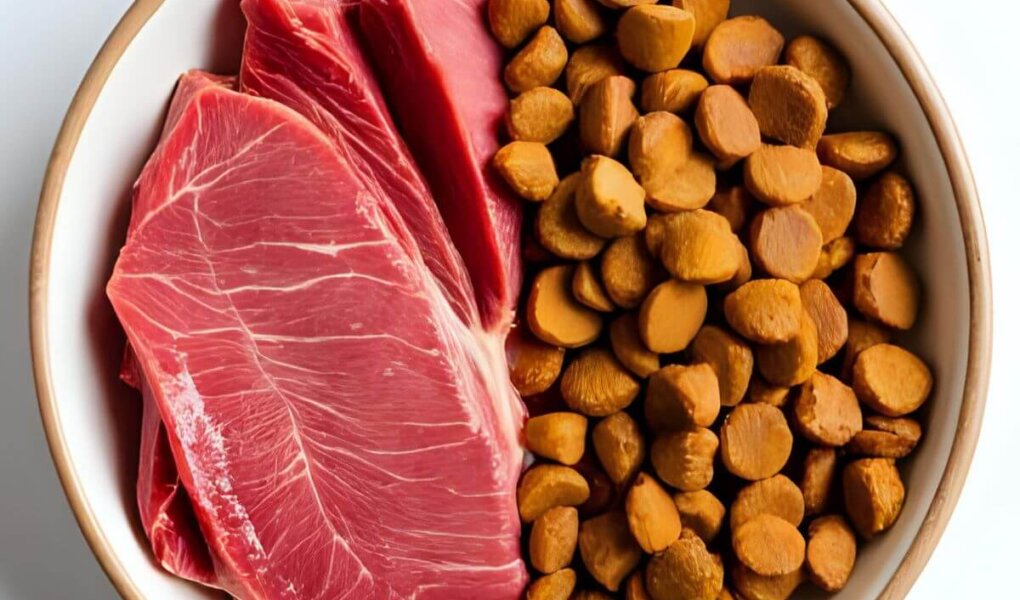
Raw feeding has one of the most divided fan bases in dog ownership. Supporters see it as the most natural way to feed a dog, closer to what wolves ate long before kibble existed. Veterinarians, on the other hand, tend to be far more cautious, and the concerns they raise are not just tradition for tradition’s sake. So is it a yes or no to raw diets for dogs? Here is what you need to know.
What Is a Raw Diet for Dogs?
A raw diet typically includes raw muscle meat, organ meats, raw meaty bones, and sometimes vegetables or supplements, built around the idea that this mirrors a dog’s ancestral diet more closely than commercial kibble. The most well-known version, the BARF diet (Biologically Appropriate Raw Food), gained popularity in the 1990s. According to the American Veterinary Medical Association, raw or undercooked animal-sourced protein can carry pathogens including Salmonella, E. coli, and Listeria, posing a risk to both pets and the people handling their food, which is the core reason most veterinary organizations recommend caution rather than outright encouragement. More pet breakdowns like this one are at YesVsNo.net.
Raw Diet vs. Kibble vs. Fresh Cooked Food
Each feeding style comes with real tradeoffs, and none of them is automatically the right answer for every dog.
| Aspect | Raw Diet | Kibble | Fresh Cooked Food |
| Nutrition | Natural, but risk of imbalance | Formulated for balance | Balanced if vet-guided |
| Pathogen safety | Higher risk | Low risk | Low risk if cooked properly |
| Dental health | Can reduce tartar (raw bones) | May increase plaque | Neutral |
| Convenience | Requires storage, prep, hygiene | Easiest | Moderate |
| Cost | Highest | Low to medium | Medium to high |
Does Raw Feeding Fit Every Household?
Whether raw feeding makes sense depends heavily on who else lives in the house, not just the dog’s health.
| Household Type | Fit | Note |
| Healthy adult dog, hygiene-conscious owner | Good fit | Lowest risk profile with proper formulation and handling |
| Household with young children or immunocompromised members | Poor fit | AVMA pathogen concerns apply to the humans in the home too |
| Puppies | Risky | Growth-stage nutrient needs are unforgiving of imbalance |
| Multi-pet household | Caution | Cross-contamination risk between pets and shared living spaces |
Benefits of Raw Diets for Dogs
Owners who feed raw report real, consistent benefits, even though the scientific evidence comparing raw to kibble overall remains mixed. Here is where it earns its following.
Owners Often Report Shinier Coats and Healthier Skin
Amino acids and fatty acids naturally present in raw meat are frequently linked to glossier coats and reduced skin irritation, a benefit many raw-feeding owners cite as one of the first changes they notice.
Raw Bones Can Support Dental Health
Chewing appropriately sized raw bones can help scrape tartar and plaque from a dog’s teeth, potentially reducing the frequency of professional dental cleanings when done safely and consistently.
Some Owners See Better Digestion and Stool Quality
Firmer, smaller stools are commonly reported by raw feeders, and some owners notice improved digestion compared to kibble, even in cases where overall health markers don’t differ dramatically between the two.
Concerns and Downsides
The concerns around raw feeding are serious enough that most veterinary organizations actively discourage it. Here is why.
Pathogen Risk Is a Real, Documented Concern
The AVMA specifically discourages feeding raw or undercooked animal-sourced protein because of documented risk from Salmonella, E. coli, Listeria, and other pathogens, which can sicken dogs and the humans who handle their food, including young children and immunocompromised family members.
Unformulated Raw Diets Can Lack Essential Nutrients
Without professional guidance, homemade raw diets can fall short on calcium, zinc, or vitamin D, which can stunt growth in puppies or gradually weaken adult dogs. This risk is one of the main reasons veterinarians recommend formulation help rather than assembling a raw diet from general online advice alone.
So Is It a Yes or No to Raw Diets for Dogs?
The verdict: DEPENDS, mainly on your household’s risk tolerance and your willingness to follow strict food safety practices.
The conditions: raw feeding is lowest-risk for healthy adult dogs in single-pet households where the owner is committed to rigorous hygiene and works with a veterinary nutritionist to formulate a balanced diet. It’s a poor fit for households with young children, immunocompromised family members, or multiple pets, where the AVMA’s pathogen concerns carry more weight.
Puppies are generally the riskiest candidates for raw feeding given how unforgiving their growth stage is to nutritional imbalance. If you’re not prepared to consistently follow strict food safety practices, a fresh cooked or high-quality commercial diet delivers many of the same benefits with meaningfully less risk.
How to Minimize Risk If You Choose Raw Feeding
If you decide raw feeding is right for your household, these steps meaningfully reduce the risks involved.
- Work with a veterinary nutritionist to formulate a balanced diet rather than assembling one from general online advice.
- Freeze raw meat until use and thaw it safely in the refrigerator, never at room temperature.
- Clean all bowls, utensils, and prep surfaces thoroughly with hot, soapy water after every meal.
- Avoid cross-contaminating human food prep areas, and wash your hands thoroughly after handling raw pet food.
- Transition gradually from any previous diet, especially for newly adopted dogs with an unknown medical history, and involve your vet in the switch.
Who Should Avoid Raw Diets
Raw feeding carries real risk for certain dogs and households. Consult a veterinarian before starting a raw diet if any of these apply to you.
- Puppies, whose growth-stage nutrient needs are especially vulnerable to imbalance
- Households with young children, elderly family members, or anyone immunocompromised
- Dogs with existing health conditions where a veterinary nutritionist’s guidance is essential before any diet change
- Owners who cannot consistently commit to strict food safety and hygiene practices
Alternatives
Raw feeding is one path to a more natural diet, but it’s not the only one worth considering.
Fresh, home-cooked food formulated with veterinary guidance delivers many of the same natural-ingredient benefits with meaningfully lower pathogen risk than raw feeding. Just as some owners consider Yes or No to Taking Daily Multivitamins for themselves, dogs on home-cooked or raw diets often need similar supplementation to stay nutritionally complete.
For newly adopted dogs specifically, switching diets too abruptly can add unnecessary stress. Is Adopting a Rescue Pet Better is worth reading alongside any decision about diet changes for a new dog.
If cost or liability around a diet-related illness is part of your decision, Yes or No to Pet Insurance covers how coverage and exclusions typically work.
Still on the fence? Try our Yes or No Generator for an instant answer.
Still not sure where you land on this? If it’s a bigger decision than a quick yes or no, The Big Decision Workbook walks you through a full framework to think it through properly.
🧭 Get the Decision Workbook — $19FAQ
Here are the questions pet owners ask most often about raw diets for dogs.
Is a raw diet safe for all dog breeds?
Not automatically. Larger breeds generally handle raw bones and portions more easily, while small or brachycephalic breeds may struggle with certain raw meaty bones. Breed size matters less than the owner’s ability to source, store, and handle raw meat safely.
Do dogs on raw diets need supplements?
Often, yes. Raw diets that are not professionally formulated can fall short on calcium, zinc, or vitamin D, so many raw-fed dogs need added supplementation to stay nutritionally balanced.
Can puppies be fed raw diets?
It’s riskier than feeding raw to an adult dog, since puppies are more vulnerable to both nutritional imbalance and pathogen exposure during a critical growth stage. Veterinary guidance on formulation is especially important.
How do I minimize risks when feeding raw?
Follow strict food safety practices: freeze meat until use, thaw it safely in the refrigerator, clean all surfaces and bowls thoroughly, and avoid cross-contamination with human food prep areas.
Will pet insurance cover raw-related illnesses?
It depends on the policy, and coverage for illnesses linked to feeding choices varies by provider. It’s worth reading a policy’s terms carefully before assuming coverage.
Conclusion
So is it a yes or no to raw diets for dogs? It depends, and that answer hinges more on your household and your commitment to food safety than on the dog itself. Raw feeding can work for a hygiene-conscious owner with a healthy adult dog and veterinary-guided formulation, but the AVMA’s pathogen concerns are real and worth taking seriously, especially in households with kids or anyone immunocompromised. If strict food safety isn’t realistic for your household, a fresh cooked or high-quality commercial diet delivers much of the same benefit with less risk.
Still not sure where you land on this? If it’s a bigger decision than a quick yes or no, The Big Decision Workbook walks you through a full framework to think it through properly.
🧭 Get the Decision Workbook — $19