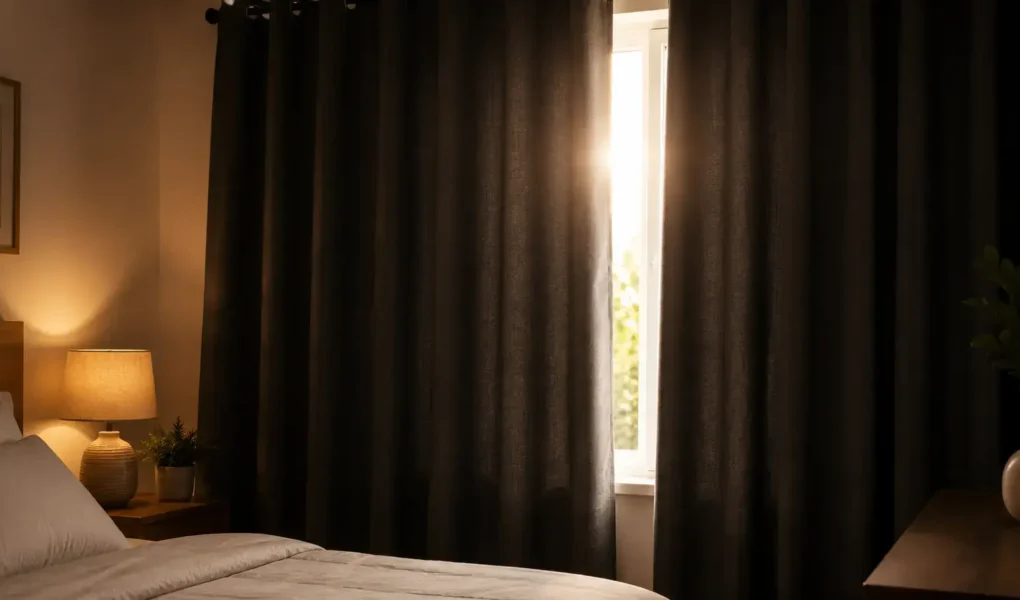
Light is one of the most powerful signals your body uses to regulate sleep. Even small amounts of light during the night can suppress melatonin, delay sleep onset, and reduce the quality of deep sleep you get. Blackout curtains promise to fix that by blocking light completely, but whether they are actually worth it depends on how much light enters your room, how sensitive you are to it, and how well you install them. So is it a yes or no to blackout curtains for sleep? Here is what you need to know.
What Are Blackout Curtains?
Blackout curtains are window treatments made with tightly woven or multi-layered fabric that blocks the majority of outside light from entering a room. Standard blackout curtains block 95 to 99 percent of light. True blackout or total blackout options can reach 100 percent with the right installation. They are different from room darkening curtains, which only block 60 to 90 percent and still allow some light through around the edges.
According to the Mayo Clinic, exposure to light at night is one of the leading environmental disruptors of healthy sleep. Even dim light suppresses melatonin production and shifts the body’s internal clock, which is why controlling your sleep environment is a key recommendation for better sleep hygiene. More practical sleep and lifestyle guides are available at YesVsNo.net.
Which Type of Curtain Is Right for Your Bedroom?
Not all window treatments offer the same level of light control. Here is how the main options compare so you can match the right curtain to your sleep situation.
| Curtain Type | Light Blocked | Best For | Price Range |
| Sheer curtains | 10-20% | Daytime privacy only | Low |
| Room darkening | 60-90% | Light sleepers, bedrooms | Low to mid |
| Blackout (standard) | 95-99% | Most sleepers, nurseries | Mid |
| Blackout (total) | 99-100% | Shift workers, light-sensitive | Mid to high |
| Thermal blackout | 95-99% | Sleep + energy saving | Mid to high |
Benefits of Blackout Curtains for Sleep
The case for blackout curtains is well-supported by sleep science. Here is where they make a real, measurable difference.
They Block Light That Disrupts Melatonin Production
Melatonin is the hormone your body produces to signal that it is time to sleep. Light, especially blue and white light from streetlights, phones, and early morning sun, suppresses melatonin and delays sleep onset. Blackout curtains eliminate that external light source entirely, which allows your body’s natural sleep signals to work without interference. For people in urban areas or light-polluted environments, this alone can meaningfully reduce the time it takes to fall asleep.
They Improve Sleep Quality for Shift Workers and Light Sleepers
For anyone who needs to sleep during daylight hours, blackout curtains are not optional, they are essential. Shift workers, night nurses, new parents sleeping in fragments, and anyone who naps regularly will see the most dramatic benefit. But even for people on a normal sleep schedule, eliminating early morning light can extend sleep by 30 to 60 minutes and prevent the fragmented, shallow sleep that comes from waking too early.
They Also Reduce Noise and Regulate Room Temperature
The dense fabric used in blackout curtains offers two additional benefits beyond light blocking. The layered material absorbs some sound from outside, which is meaningful in noisy urban environments. It also acts as insulation, reducing heat gain in summer and heat loss in winter. Thermal blackout curtains in particular can noticeably lower energy bills while also improving sleep conditions.
They Help With Daytime Sleep and Napping
Even for people who do not struggle with nighttime sleep, blackout curtains make daytime rest significantly easier. A midday nap in a dark room is more restorative than one taken in partial light because the body can reach deeper sleep stages more quickly. Parents trying to get infants or toddlers to nap consistently often find blackout curtains are one of the most effective tools in the sleep environment.
Concerns and Limitations
Blackout curtains are genuinely useful but they are not a perfect solution for everyone. Here is what to factor in before buying.
Complete Darkness Is Not Necessary for Everyone
Some people sleep perfectly well with ambient light in the room and do not notice a meaningful difference with blackout curtains. If you currently fall asleep easily, sleep through the night, and wake up feeling rested, your bedroom light environment is probably not the issue. Blackout curtains address light as a sleep disruptor. If light is not your problem, they will not solve whatever is keeping you from quality sleep.
They Can Disrupt Natural Wake Cycles Without an Alarm
Natural morning light is one of the most effective cues for waking up feeling alert. When you block it completely, you may find it harder to wake up naturally, especially in winter when mornings are darker. People who rely on light to regulate their morning routine should pair blackout curtains with a sunrise alarm clock, which simulates gradual light increase and preserves the natural wake signal even in a fully dark room.
So Is It a Yes or No to Blackout Curtains for Sleep?
The verdict: YES — for most people, especially in light-polluted environments.
If streetlights, early morning sun, or passing car headlights enter your bedroom at night, blackout curtains are one of the most impactful and immediate upgrades you can make to your sleep environment. The light suppression is real and the sleep science behind it is solid.
The conditions: installation matters as much as the curtain itself. Gaps at the sides and top let in significant light even with a high-quality blackout curtain. Use curtain rods that extend beyond the window frame and consider adding a blackout liner if your curtains still let light through at the edges. If you rely on morning light to wake up naturally, add a sunrise alarm clock to compensate.
How to Get the Most Out of Blackout Curtains
Buying blackout curtains is only half the job. Installation makes the difference between true darkness and just slightly dimmer light leaking in from every edge.
- Choose a curtain rod that extends at least 6 inches beyond the window frame on each side. This prevents side light bleed, which is the most common complaint with blackout curtains.
- Hang the rod as close to the ceiling as possible. Light from the top gap is significant in rooms with bright streetlights outside.
- Use curtain rings or grommets rather than a rod pocket, which pulls the fabric away from the wall and creates gaps.
- If your curtains still let light in at the edges, add adhesive blackout strips along the window frame as a seal.
- For rental properties where permanent installation is not possible, tension rods and blackout fabric panels are a damage-free alternative.
- Pair with a sunrise alarm clock if you rely on natural light to wake up, so you do not lose the natural morning wake signal that complete darkness removes.
Who Might Not Need Blackout Curtains
Blackout curtains suit most people but are not necessary for everyone. Skip them or try a lighter option first if any of the following apply.
- People who already sleep well and do not notice light disturbance during the night
- Anyone living in a very dark environment with minimal light pollution outside their windows
- People who rely heavily on natural morning light to regulate their mood and circadian rhythm
- Anyone in a bedroom that faces away from streetlights or gets very little outside light
Alternatives to Blackout Curtains
If full blackout curtains are not practical or not right for you, these options address sleep environment in other ways.
Sleep mask. A well-fitted sleep mask blocks light directly at the eye level and works in any environment without any installation. It is the most portable and affordable option for light-sensitive sleepers who travel or cannot install curtains.
Room darkening curtains. If total blackout feels too extreme, room darkening curtains blocking 60 to 90 percent of light may be all you need. They are usually less expensive and easier to find in more styles. See our summer skincare guide at Skincare Routine for Summer for another example of how environment affects your daily habits.
Cutting caffeine after 2 PM. Light environment is one part of sleep hygiene. Caffeine timing is another. If you are optimizing your sleep environment, read Yes or No to Caffeine After 2 PM for the full picture on how afternoon caffeine affects sleep quality.
Magnesium glycinate before bed. For people whose main issue is falling asleep rather than staying asleep, magnesium glycinate supports deeper sleep from the inside. Read Yes or No to Magnesium Glycinate for Sleep for a full breakdown.
For a broader look at sleep-supporting habits, How to Become a Morning Person covers how adjusting your environment and routine together produces better results than any single change.
Still on the fence? Try our Yes or No Generator for an instant answer.
FAQ
Here are the questions people search most when researching blackout curtains for sleep.
Do blackout curtains actually improve sleep?
Yes, for most people in light-polluted environments. Blocking external light at night supports melatonin production and reduces nighttime waking. The effect is most pronounced for shift workers, light sleepers, and people in urban areas with significant streetlight exposure.
What is the difference between blackout and room darkening curtains?
Room darkening curtains block 60 to 90 percent of light and still allow some ambient light through, especially around edges. True blackout curtains block 95 to 100 percent when properly installed. For most people who struggle with light during sleep, standard blackout curtains are sufficient. Total blackout options are primarily needed for shift workers or people with extreme light sensitivity.
Do blackout curtains help with insomnia?
They help if light is a contributing factor to your insomnia. If you struggle to fall asleep because of light from windows or wake up too early due to morning sun, blackout curtains can make a meaningful difference. They will not address insomnia caused by anxiety, pain, or other non-light factors.
Can blackout curtains help with daytime sleep?
Yes, and this is where they are most impactful. Sleeping during daylight hours goes against the body’s natural light cues. Blackout curtains create the darkness the body needs to produce melatonin even during the day, making daytime sleep significantly more restorative for shift workers and new parents.
Do blackout curtains also block noise?
Partially. The dense, layered fabric in blackout curtains absorbs some sound and can reduce noise from outside. They are not soundproof panels and will not eliminate loud noise, but they provide a noticeable reduction in ambient street noise that can help create a quieter sleep environment.
Conclusion
Yes to blackout curtains for most people, especially if light pollution or early morning sun is affecting your sleep. The science is clear on light as a sleep disruptor and blackout curtains are one of the simplest fixes available. Install them correctly with no gaps, pair with a sunrise alarm clock if you need natural light to wake up, and combine with other sleep hygiene habits for the best results. If light is not your issue, a sleep mask or room darkening curtains may be all you need.