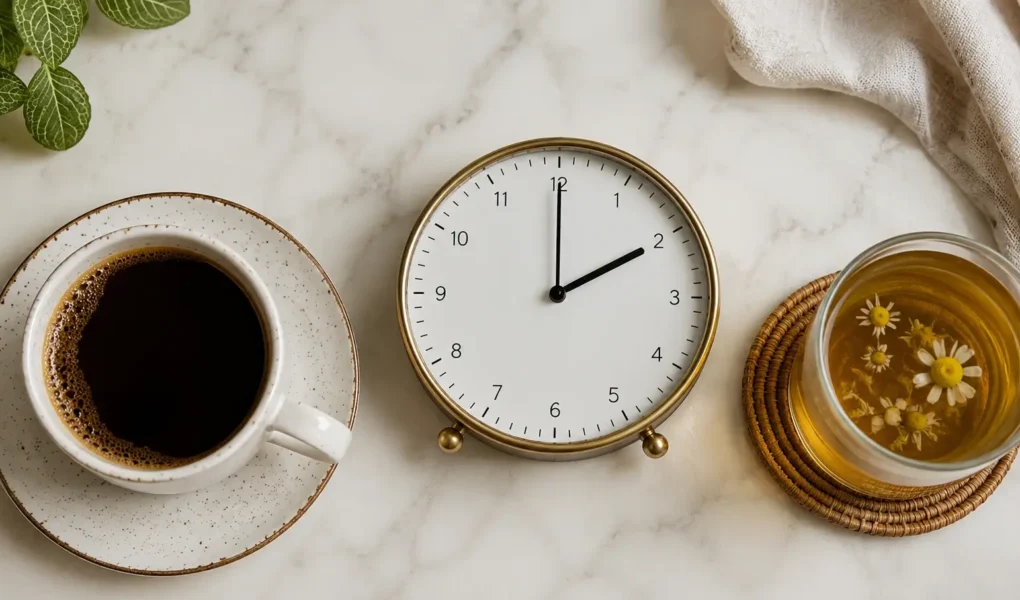
The 2 PM caffeine cutoff is one of those health rules that gets repeated constantly but rarely explained properly. Some people swear by it. Others drink coffee at 5 PM and sleep fine. The truth is more nuanced than a blanket rule, but the science behind it is solid enough to take seriously. If you have been waking up at 3 AM or struggling to fall asleep, your afternoon coffee might be more involved than you think. So is it a yes or no to caffeine after 2 PM? Here is what you need to know.
Why Does Caffeine Timing Matter?
Caffeine is a stimulant that works by blocking adenosine receptors in the brain. Adenosine is the chemical that builds up throughout the day and makes you feel sleepy. When caffeine blocks those receptors, you feel alert — but the adenosine keeps building up behind the block. When the caffeine clears, it hits all at once, which is why the energy crash can feel sudden.
The critical issue is caffeine’s half-life. According to the NIH, caffeine has an average half-life of 5 to 6 hours in healthy adults. That means a coffee drunk at 2 PM still has half its caffeine active in your system at 8 PM. For most people who aim to sleep by 10 to 11 PM, that is directly in the window when your body needs to wind down. More guides on sleep and daily habits are at YesVsNo.net.
Caffeine Content by Drink and Risk After 2 PM
Not all afternoon caffeine carries the same risk. Here is a breakdown of common drinks, their caffeine content, and how much they are likely to affect your sleep.
| Drink | Caffeine Content | Risk After 2 PM | Safer Alternative |
| Espresso (1 shot) | 63mg | High | Decaf espresso |
| Drip coffee (8oz) | 95mg | High | Decaf coffee |
| Energy drink (8oz) | 80-150mg | Very high | Sparkling water |
| Black tea (8oz) | 47mg | Moderate | Herbal tea |
| Green tea (8oz) | 28mg | Low-moderate | Chamomile tea |
| Dark chocolate (1oz) | 12-25mg | Low | Milk chocolate or carob |
When Caffeine After 2 PM Can Be Fine
The evidence leans against afternoon caffeine for most people, but there are real exceptions worth knowing.
High Caffeine Tolerance Can Reduce the Impact
Regular caffeine consumers develop a tolerance that changes how strongly the stimulant affects them. Someone who drinks coffee daily may metabolize it faster and experience less sleep disruption from an afternoon cup than an occasional drinker who has the same amount. That said, even habitual drinkers show measurable sleep quality reductions from late caffeine in sleep studies, even when they report feeling unaffected.
Low-Caffeine Options Like Green Tea Are Less Disruptive
A cup of green tea at 3 PM delivers around 28mg of caffeine compared to 95mg in a drip coffee. At that level, the impact on sleep architecture is significantly lower for most people. If you genuinely need something warm and slightly stimulating in the afternoon, switching from coffee to green tea or a light herbal blend with a small amount of caffeine is a reasonable middle ground.
Concerns About Caffeine After 2 PM
For most people the risks of afternoon caffeine are real, measurable, and often underestimated. Here is the evidence.
Caffeine Disrupts Sleep Quality Even When You Feel Unaffected
This is the most important point. Studies using sleep monitoring have consistently shown that people who consume caffeine in the afternoon spend less time in deep, slow-wave sleep, even when they report falling asleep easily and feeling rested. Deep sleep is where the body does most of its recovery work. Reduced deep sleep compounds over time into fatigue, reduced cognitive performance, and weakened immune function, even without obvious insomnia.
Energy Drinks and Espresso After 2 PM Carry the Highest Risk
A single energy drink in the afternoon can deliver 80 to 150mg of caffeine, which combined with its 5 to 6 hour half-life means significant stimulant activity well into the night. Espresso shots are similarly concentrated. These are the worst offenders for sleep disruption and should be cut off earlier than other caffeine sources, ideally by noon for people sensitive to stimulants.
Afternoon Caffeine Is Directly Linked to Insomnia
Multiple clinical studies have confirmed the link between afternoon and evening caffeine consumption and difficulty falling asleep, nighttime waking, and reduced total sleep time. For people who already struggle with sleep quality, caffeine after 2 PM is one of the most impactful variables to address, often before other sleep hygiene changes.
So Is It a Yes or No to Caffeine After 2 PM?
The verdict: NO for most people — but the type and amount matter.
If you sleep well, fall asleep easily, and wake up feeling rested, your afternoon caffeine habit may not be significantly affecting you. But for most adults, especially those with any sleep complaints, cutting caffeine off at or before 2 PM is one of the simplest changes you can make to measurably improve sleep quality.
The conditions: if you want to keep something in the afternoon, switch to green tea or herbal options rather than coffee or energy drinks. Your individual metabolism, body weight, and sensitivity all affect how quickly caffeine clears your system, so some people need a cutoff closer to noon while others can go to 3 PM without issue.
How to Cut Off Caffeine Without Feeling It
Going cold turkey on afternoon caffeine often leads to headaches and energy crashes. Here is how to make the switch gradually without suffering through it.
- Move your last coffee 30 minutes earlier each week. If you currently drink coffee at 4 PM, shift to 3:30 PM for a week, then 3 PM, then 2 PM. Your body adjusts to each change before the next one.
- Replace afternoon coffee with green tea first. The lower caffeine content bridges the gap without a full withdrawal experience.
- Then replace green tea with herbal tea. Chamomile, peppermint, and rooibos are all caffeine-free and give you the warm drink ritual without the stimulant.
- Stay hydrated in the afternoon. Dehydration mimics fatigue and often triggers the reach for coffee. A large glass of water around 2 PM can reduce the urge significantly.
- Eat a protein-rich snack if you hit an energy dip. A blood sugar crash is often the real driver of the 3 PM slump, not a caffeine deficit.
- Give it two weeks. Caffeine withdrawal symptoms peak at 1 to 2 days and largely resolve within a week. The 3 PM energy dip usually improves significantly once sleep quality improves.
Who Should Be Especially Careful About Afternoon Caffeine
Some groups are more vulnerable to the effects of late caffeine and should cut off earlier rather than later.
- People with anxiety disorders — caffeine amplifies anxiety symptoms and disrupts the nervous system’s wind-down process
- Anyone with diagnosed insomnia or chronic sleep problems
- Pregnant women — caffeine metabolism slows significantly during pregnancy
- People over 60 — caffeine metabolism slows with age, extending its half-life beyond the average
- Anyone taking medications that interact with caffeine, including certain antidepressants and antibiotics
Alternatives to Afternoon Caffeine
These options address the afternoon energy dip without the sleep cost of caffeine.
Herbal tea. Chamomile, peppermint, and rooibos give you the ritual of a warm drink without any stimulant effect. They also support relaxation, which primes your body for better sleep later.
A short walk. Even 10 minutes of light movement in the afternoon raises alertness more effectively than a cup of coffee for most people, without any of the sleep disruption.
A better morning routine. If afternoon caffeine is propping up energy lost to poor sleep, addressing the root cause delivers better results. A structured morning routine that includes light exposure and movement sets your circadian rhythm for the day. Read Yes or No to Morning Routines for a practical guide to building one.
Magnesium glycinate. If falling asleep is your main struggle, magnesium glycinate taken in the evening supports deeper sleep without any daytime drowsiness. See Yes or No to Magnesium Glycinate for Sleep for the full breakdown.
Still on the fence? Try our Yes or No Generator for an instant answer.
If you’re swapping afternoon caffeine for something like magnesium glycinate, it helps to actually track whether the change is working — better sleep, less of an energy dip, or no difference at all. The Supplement & Vitamin Tracker gives you a simple log to note what you’re taking and how it’s affecting your sleep.
💊 Get the Supplement Tracker — $15FAQ
Here are the most common questions people search when deciding whether to cut off caffeine at 2 PM.
Is it bad to drink caffeine after 2 PM?
For most people, yes. Caffeine’s 5 to 6 hour half-life means an afternoon coffee is still active in your system during the hours your body needs to wind down for sleep. Even if you fall asleep easily, studies show afternoon caffeine reduces deep sleep quality measurably.
What happens if I drink coffee after 2 PM?
Depending on your sensitivity, you may notice nothing, struggle to fall asleep, wake during the night, or sleep the full night but wake up less rested. The effects are not always obvious because caffeine’s impact on sleep architecture happens below the level of conscious awareness.
Can I drink decaf coffee after 2 PM?
Yes, decaf is a good option. It still contains a small amount of caffeine, typically 2 to 15mg per cup, but that is low enough that it is unlikely to affect sleep for most people. It preserves the coffee ritual without the stimulant load.
Is green tea okay after 2 PM?
For most people, yes, especially earlier in the afternoon. Green tea contains around 28mg of caffeine per cup, which is significantly less than coffee. Earlier in the afternoon, say 2 to 3 PM, this is unlikely to meaningfully affect sleep for most adults with average caffeine sensitivity.
How long does caffeine stay in your system?
The average half-life is 5 to 6 hours, meaning half the caffeine from a 3 PM coffee is still active at 9 PM. Full clearance takes around 10 to 12 hours. Individual metabolism, body weight, age, and genetics all affect this timeline, with some people clearing caffeine much more slowly than average.
Conclusion
No to caffeine after 2 PM for most people, especially if sleep quality is already a concern. The science on caffeine’s half-life and its impact on deep sleep is clear and consistent. If you need something in the afternoon, green tea earlier in the window is a reasonable compromise, and herbal tea is a full replacement that supports sleep rather than working against it. Fix the sleep environment and the energy dip usually takes care of itself within a couple of weeks.
💊 Get the Supplement Tracker — $15