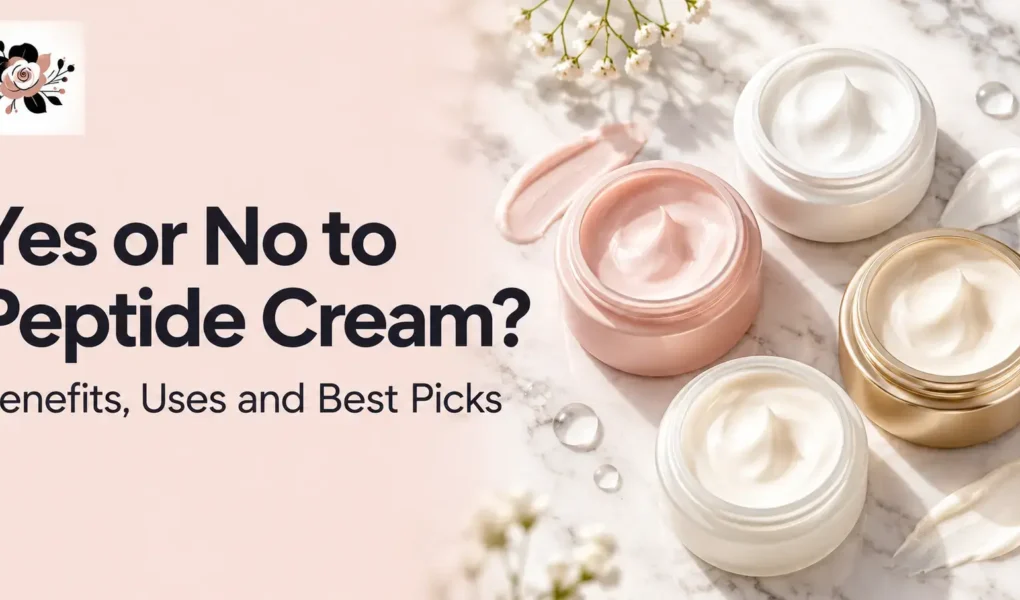
Peptide cream is everywhere right now. Search any skincare aisle or shopping site and you will find hundreds of jars promising firmer, smoother, younger-looking skin, all thanks to peptides.
But peptides are also one of the most confusing ingredients out there. Are they a real anti-aging tool or just a trendy word on the label? With prices from $15 to well over $100, picking the right one matters.
Here at YesVsNo.net, we break down what peptide cream actually does, who benefits most, how to use it, and which formulas are worth a look.
So is it a yes or no? Here is what you need to know.
What Is Peptide Cream?
Peptides are short chains of amino acids. They are the building blocks of proteins like collagen and elastin, which keep your skin firm, bouncy, and smooth.
As you age, your skin makes less collagen. Peptides in skincare act like messengers. Some signal your skin to support its own collagen, while others help calm, hydrate, or strengthen the skin barrier.
A peptide cream is simply a moisturizer built around one or more of these peptides. You will also see them sold as a peptide moisturizer, peptide lotion, peptide serum, or peptide treatment. The main difference is texture and concentration.
So what is peptide cream made of? Most formulas pair peptides with hydrators like hyaluronic acid, ceramides, niacinamide, and glycerin. That combination is why peptide-infused skincare products tend to feel soothing rather than harsh.
Not every jar is equal, though. A peptide-rich cream lists peptides fairly high on the ingredient label, while some cheaper peptide-based creams include only a trace amount.
You may also spot collagen peptide cream on the shelf. Whole collagen molecules are too large to sink into skin, so these creams mostly work as moisturizers. If you want collagen from the inside, read Yes or No to Collagen Supplements for the full breakdown.
For a dermatologist-backed overview, Cleveland Clinic has a helpful guide on how peptides work in skincare.
Types of Peptides in Skincare
Not all peptides do the same job. That is why two peptide creams can feel and perform completely differently. Here are the four main types you will see on labels.
| Peptide Type | What It Does | Names on the Label |
| Signal peptides | Tell skin to support collagen and elastin production | Palmitoyl pentapeptide-4 (Matrixyl), palmitoyl tripeptide-1, palmitoyl tetrapeptide-7 |
| Carrier peptides | Deliver trace minerals like copper that help skin repair | Copper tripeptide-1 (GHK-Cu) |
| Neurotransmitter-inhibiting peptides | Help soften the look of expression lines | Acetyl hexapeptide-8 (Argireline), pentapeptide-18 |
| Enzyme-inhibiting peptides | Help slow the breakdown of existing collagen | Soybean, rice, and silk peptides |
Many of the best anti-aging creams with peptides combine two or more types. A multi-peptide formula simply covers more ground than a cream built around one peptide.
Argireline is often called “Botox in a jar,” but that nickname oversells it. A cream cannot relax muscles the way injections do. At best, it makes expression lines look a little softer.
Benefits of Peptide Cream
What are the benefits of peptide cream? Here is what this ingredient can realistically do for your skin.
It Supports Firmer, More Elastic Skin
Signal peptides encourage your skin to keep making collagen and elastin. Over time, this can help skin feel firmer and bounce back better.
That is why top peptide creams for skin elasticity are so popular with people in their 30s, 40s, and beyond. The change is gradual, but it builds with steady use.
It Softens the Look of Fine Lines
An anti-aging peptide cream will not erase deep wrinkles. It can make fine lines around the eyes, forehead, and mouth look smoother as your skin becomes plumper and better hydrated.
In any anti-aging skincare routine, peptides work best as a long-term support player rather than a quick fix.
It Strengthens Your Skin Barrier
Peptides help reinforce your skin’s protective outer layer. A stronger barrier holds onto moisture better and handles irritation more easily.
This makes peptide cream for dry skin a smart choice, especially in winter or if your face feels tight after cleansing.
It Is Gentle Enough for Sensitive Skin
Unlike retinol or exfoliating acids, peptides rarely cause peeling, stinging, or redness. Most people can use them morning and night from day one.
That makes peptide cream for sensitive skin types one of the easiest anti-aging upgrades, as long as the formula is fragrance-free.
It Plays Well With Other Ingredients
Peptides pair nicely with hyaluronic acid, ceramides, and niacinamide. If you already use niacinamide for oily skin, a peptide cream can go right on top without any conflict.
You can also use peptide cream with retinol. The peptides help buffer dryness while the retinol does the heavy lifting on texture and lines.
Concerns and Side Effects
Peptides are low risk, but they are not magic. Here are the honest downsides to know before you spend money.
Results Are Slow and Subtle
Most people need 8 to 12 weeks of daily use before they notice a real difference. If you expect overnight changes, you will likely be disappointed.
Peptides also cannot match prescription retinoids or in-office treatments for deep wrinkles.
Not Every Peptide Cream Has Enough Peptides
Some brands add a tiny amount of peptides just to put the word on the jar. If peptides sit at the very end of the ingredient list, you are mostly buying a basic moisturizer.
Price is not a reliable guide either. A luxury peptide cream is not automatically more effective than a $20 drugstore option.
Limited Proof for Acne Scars and Dark Spots
You will see peptide cream for acne scars and peptide cream for dark spots marketed online. The evidence for both is thin.
For pigmentation, ingredients like vitamin C, niacinamide, and azelaic acid have stronger research behind them.
Fragrance and Heavy Textures Can Cause Problems
Peptides themselves rarely irritate, but added fragrance, essential oils, or rich butters can. Thick creams may also feel greasy or clog pores on oily skin.
So Is Peptide Cream a Yes or No?
The verdict: It depends. Peptide cream is a yes for most people who want gentle, long-term anti-aging support, but it will not replace stronger actives.
The conditions: Say yes if you are in your late 20s or older, have dry, sensitive, or mature skin, or simply cannot tolerate retinol. A well-made peptide moisturizer is one of the safest ways to support firmness and hydration.
Think twice if you want fast results for deep wrinkles, acne scars, or dark spots. In that case, peptides work better as a supporting step next to a proven active, not as your main treatment.
Texture matters too. Use this table to match the right formula to your skin type.
| Skin Type | Best Texture | What to Look For | When to Use |
| Dry | Rich cream | Peptides plus ceramides or shea butter | Morning and night |
| Oily | Gel cream or light lotion | Oil-free, non-comedogenic formula | Morning and night |
| Combination | Lightweight cream | Peptides plus niacinamide | Morning and night |
| Sensitive | Simple cream | Fragrance-free, short ingredient list | Morning and night |
| Mature | Rich night cream | Multi-peptide formula with hyaluronic acid | Night, plus a lighter day cream with SPF |
| Acne-prone | Gel or lotion | Non-comedogenic, no heavy oils | Night |
How to Use Peptide Cream
- Start with a clean face. Wash with a gentle cleanser and pat your skin dry.
- Apply thin layers first. Serums, including a peptide serum, go on before your cream. The general rule is thinnest to thickest.
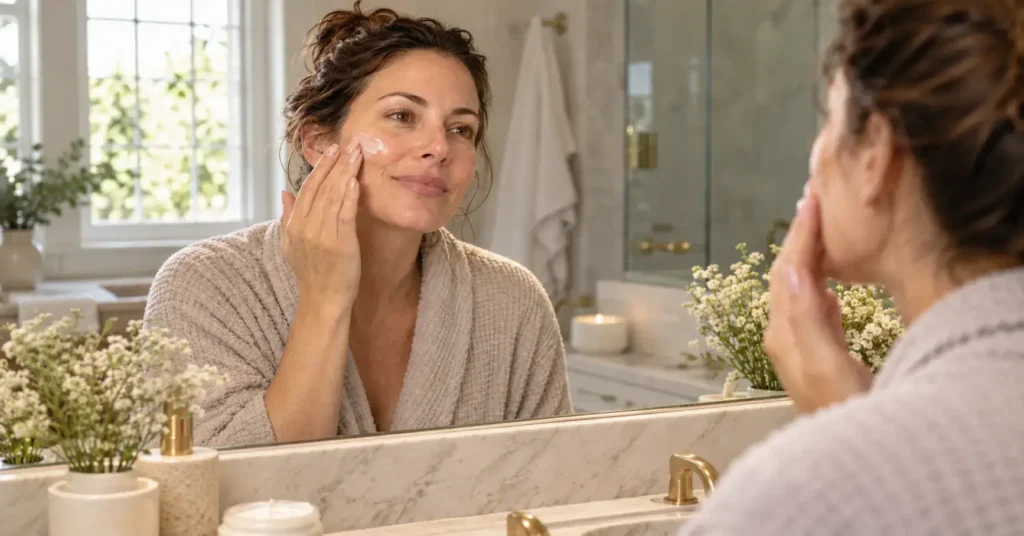
- Use a pea-size to nickel-size amount. Warm the cream between your fingertips and press it into your face and neck.
- Use it morning and night. A day peptide cream should always be followed by SPF 30 or higher. A night peptide cream can be richer since it does not need to sit under makeup.
- Pair with retinol carefully. At night, apply retinol first, then peptide cream on top to reduce dryness. Keep copper peptides and strong acids in separate routines.
- Do not forget your eyes. A peptide eye cream is lighter and made for the thin skin under your eyes. Tap it on gently with your ring finger.
- Give it time. Use it daily for at least 8 to 12 weeks before judging results. Take a photo on day one so you can compare.
Best Peptide Creams to Consider
Here are a few well-known peptide creams for different needs and budgets. We were not paid to include any of them. Always check the current ingredient list before buying, since brands update their formulas.
Best Drugstore Pick
Olay Regenerist Micro-Sculpting Cream is a long-running favorite that pairs peptides with niacinamide and hyaluronic acid. It is easy to find, comes in a fragrance-free version, and makes a solid starting point if you are new to peptides.
Best for Beginners on a Budget
The Inkey List Peptide Moisturizer is a no-fuss, affordable option that fits easily into any routine. If your skin is reactive, check the label for fragrance before you buy.
Best Night Cream
CeraVe Skin Renewing Night Cream combines a peptide complex with ceramides and niacinamide. Its richer texture suits dry and mature skin overnight.
Best Korean Pick
medicube PDRN Pink Peptide Cream pairs peptides with PDRN, a salmon-DNA-derived ingredient that is popular in Korean skincare. It is a good fit if you already follow a K-beauty routine.
Best Luxury Pick
Drunk Elephant Protini Polypeptide Cream is built around a blend of signal peptides and amino acids. It is pricey, so it makes the most sense once you have tried a budget formula and want to upgrade.
Looking for an organic or vegan peptide cream? Check the packaging for certifications like USDA Organic, Certified Vegan, or Leaping Bunny (cruelty-free). Words like “clean” and “natural” are not regulated in the US, so they do not guarantee much on their own.
Who Should Avoid Peptide Cream
- Anyone with a known allergy to an ingredient in the formula. Patch test on your inner arm for 24 to 48 hours first.
- People in the middle of an eczema, rosacea, or dermatitis flare. Let your skin calm down and check with a dermatologist first.
- Pregnant or breastfeeding women using products that also contain retinol. Ask your doctor before starting any new anti-aging product.
- Anyone using prescription skin treatments, such as tretinoin or hydroquinone, without checking with their prescriber.
- Anyone expecting dramatic, fast results. Peptides are a slow and steady ingredient.
Alternatives to Peptide Cream
Retinol is the most researched anti-aging ingredient for fine lines and uneven texture. It is stronger than peptides but can irritate, so read Yes or No to Retinol to see if it suits your skin.
Vitamin C serum is a better pick if dark spots and dullness bother you more than wrinkles. It also adds antioxidant protection when worn under sunscreen.
Daily sunscreen is the most underrated anti-aging step of all. No cream can undo daily sun damage, so SPF 30 or higher every morning comes first.
Still not sure where you land on this? If it’s a bigger decision than a quick yes or no, The Big Decision Workbook walks you through a full framework to think it through properly.
🧭 Get the Decision Workbook – $19Or try our Yes or No Generator for a quick instant answer.
Frequently Asked Questions
What is peptide cream?
Peptide cream is a moisturizer made with peptides, which are short chains of amino acids. These peptides help support collagen, hydration, and the skin barrier. Most peptide creams also include hydrators like hyaluronic acid or ceramides. People mainly use them for gentle, everyday anti-aging care.
Does peptide cream really work?
Yes, but the results are gradual and subtle. Peptides can improve the look of fine lines, firmness, and hydration when you use them consistently. They will not match prescription retinoids or professional treatments for deep wrinkles. Think of them as a steady support ingredient, not a miracle fix.
Can I use peptide cream every day?
Yes, peptide cream is gentle enough for daily use, morning and night. Most people do not experience peeling or stinging. If you apply it in the morning, always follow with sunscreen. Stop using it and see a dermatologist if you notice redness, itching, or a rash.
Can you use peptide cream with retinol?
Yes, peptides and retinol work well together. At night, apply your retinol first, then layer peptide cream on top to help with dryness. Some products already combine both ingredients in one formula. Introduce retinol slowly, two or three nights a week, to avoid irritation.
How long does peptide cream take to work?
Most people notice softer, more hydrated skin within a few weeks. Changes in firmness and fine lines usually take 8 to 12 weeks of daily use. Results build over time and fade if you stop using it. Taking a before photo helps you track real progress.
Conclusion
So, yes or no to peptide cream? For most people, it is a yes, with realistic expectations. Peptides are gentle, easy to add to any routine, and great for supporting firmness, hydration, and your skin barrier.
They work best as a long-term habit rather than a quick fix. Pick a formula with peptides high on the ingredient list, match the texture to your skin type, and pair it with daily sunscreen.
If you need faster results for deep wrinkles or dark spots, let peptides support a stronger active instead of replacing it. Your skin, your call.
Still not sure where you land on this? If it’s a bigger decision than a quick yes or no, The Big Decision Workbook walks you through a full framework to think it through properly.
🧭 Get the Decision Workbook – $19Or try our Yes or No Generator for a quick instant answer.