That satisfying peel, the little black dots left behind on the strip, it is the single most addictive five minutes in skincare. Pore strips have been a bathroom-counter staple for decades, but dermatologists have gotten a lot more vocal lately about what that peel is actually doing to your skin, and whether the dots you are looking at are even the problem you think they are.
That gap between what feels effective and what is actually effective is exactly why pore strips keep coming up as a genuine yes-or-no decision rather than an easy default. If you are weighing this against other skincare habits, YesVsNo.net runs the same honest breakdown on plenty of others. So is it a yes or no to pore strips? Here is what you need to know.
What Are Pore Strips?
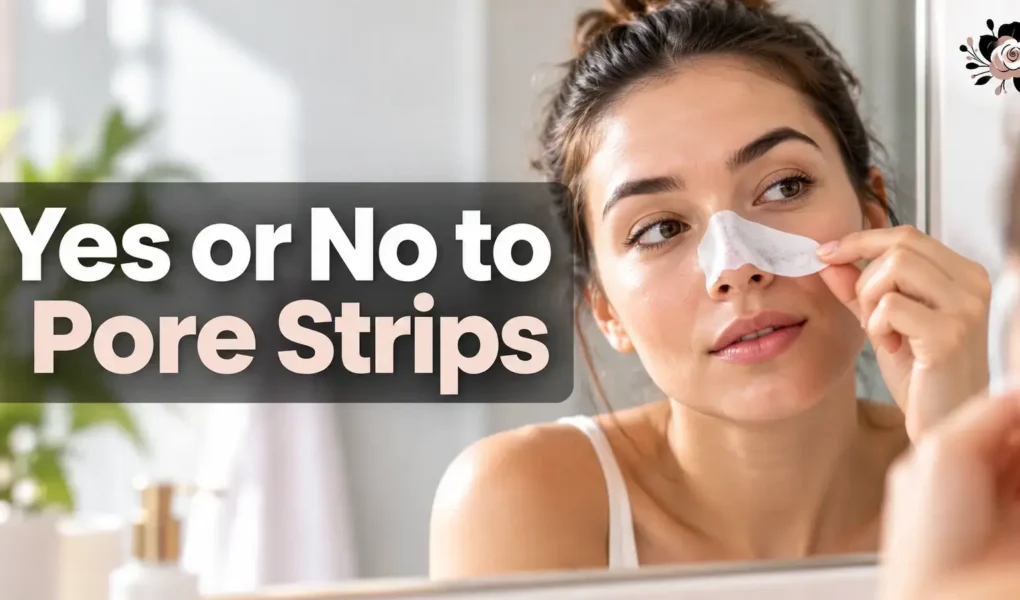
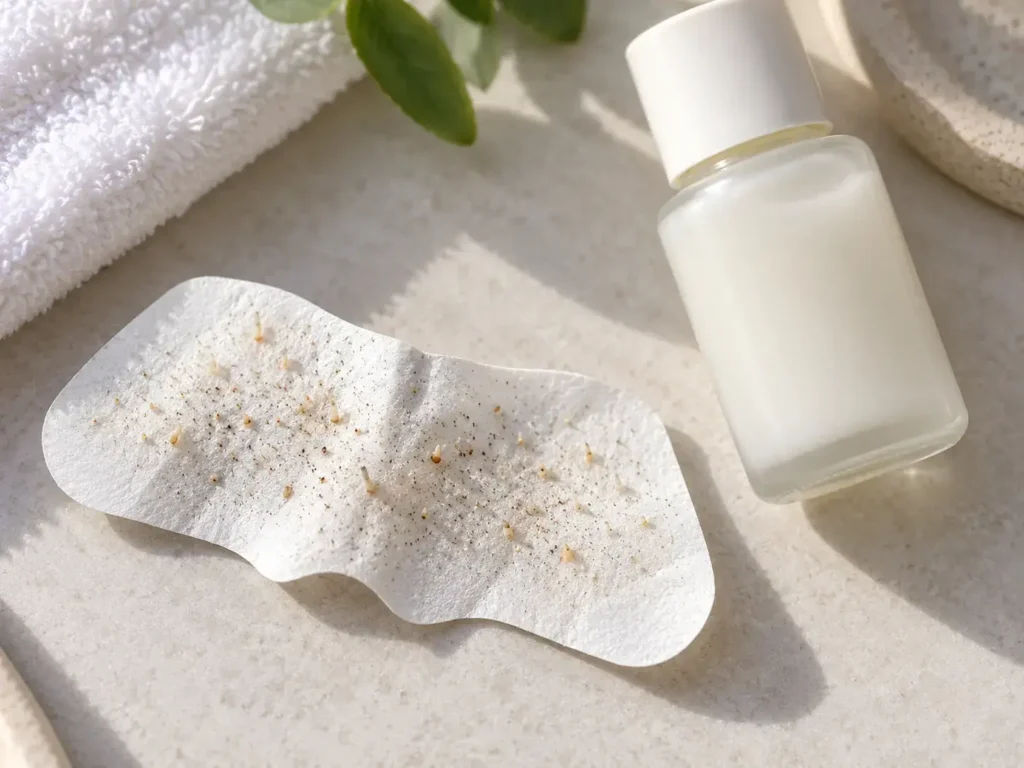
Pore strips are small adhesive patches, usually shaped for the nose, that you apply to damp skin and peel off once dry. The adhesive grabs onto oil, dead skin cells, and debris sitting at the surface of your pores and pulls it out with the strip. NBC Select’s reporting on the trend includes board-certified dermatologists confirming the strips genuinely remove surface material, but describe the effect as temporary since pores refill with oil almost immediately after.
How Do Pore Strips Actually Work?
The mechanism is purely physical, not chemical. Once the strip dries, the adhesive bonds to whatever is sitting on the surface of your skin, oil, dead skin cells, and the oxidized debris that forms visible blackheads, and pulls it away when you peel the strip off. That is also why placement matters so much: the strip has to lie completely flat and fully dry against the skin to grip evenly, which is harder to achieve on a curved or textured nose than it looks on the box. Because the strip only reaches what is sitting at the very top of the pore, it does nothing to the oil production happening underneath, which is why the same spots tend to look clogged again within a day or two.
Benefits of Pore Strips
They would not have stayed a bathroom-cabinet staple for this long without real upsides. Here’s where they actually earn their place:
They Give You Instant, Visible Results
Few skincare products show proof of what they removed the way a pore strip does. That immediate, visual payoff is part of why they remain so popular, especially compared to treatments that take weeks to show any difference.
They’re Cheap and Widely Available
A pack of pore strips costs a few dollars and is sold at nearly every drugstore, making them one of the lowest-commitment skincare products you can try without any real financial risk.
They Work Well As an Occasional Quick Fix
Dermatologist Dr. Mona Gohara, a clinical professor at Yale quoted in NBC Select’s reporting, says strips can be useful before a specific event when you want your nose to look clearer right away, even though the effect does not last.
They Require No Routine or Learning Curve
Unlike actives that need to be introduced slowly and paired correctly with the rest of a routine, a pore strip is a single step with a clear start and end point, which makes it approachable for skincare beginners.
Pore Strips vs. Other Blackhead Treatments
Pore strips are one tool among several, and they are not interchangeable with the others. Here is how they stack up:
| Method | How It Works | Best For |
| Pore strips | Physically pulls surface debris out with adhesive | A quick, visible fix before an event |
| AHA or BHA cleanser | Chemically loosens buildup inside the pore over time | Ongoing prevention, not a one-time fix |
| Retinol serum | Speeds up cell turnover so pores clog less often | Long-term texture and pore appearance |
| Mechanical exfoliant | Physically dislodges surface oil with light friction | Gentle, regular upkeep between treatments |
Concerns and Side Effects
The downsides are specific, not vague trend backlash, and they are worth taking seriously. A few points stand out:
They Can Irritate Your Skin
Dr. Blair Murphy-Rose, a board-certified dermatologist at the Laser & Skin Surgery Center of New York, told NBC Select that pore strips can irritate skin and often do more harm than good, since the adhesive grabs the skin around a pore just as readily as the debris inside it.
Many Contain Drying Astringents
Dr. Gohara notes that a number of strip formulas include astringent ingredients that can dry out and further irritate skin, particularly with repeated use.
They’re Not Safe for Everyone
Murphy-Rose specifically advises against using pore strips if you have sensitive skin or eczema, since the adhesive and any astringent ingredients are more likely to trigger a flare-up or reaction in already-reactive skin.
So Is It a Yes or No to Pore Strips?
The verdict: it depends.
Using a pore strip occasionally, on oilier skin, before a specific event, and without layering it on top of other strong actives that same day, is a reasonable yes. Reaching for one every week expecting it to actually shrink your pores or fix an ongoing blackhead problem is a weaker idea, since the effect is temporary by nature and the adhesive carries real irritation risk with repeated use. If you have sensitive skin, eczema, rosacea, or broken capillaries, this is closer to a straightforward no, the dermatologist consensus is specific and consistent on that point.
How to Use Pore Strips Safely
- Start with a clean face and wet your nose with warm water so the skin is fully damp, since the adhesive needs moisture to activate properly.
- Press the strip on firmly and smooth it from the center outward so it lies completely flat against the skin, with no air pockets or wrinkles.
- Leave it on for the time stated on the packaging, usually 10 to 15 minutes, until it feels fully dry and rigid.
- Peel it off slowly starting from the outer edges, rather than yanking it off in one motion, to reduce irritation.
- Follow with a gentle, fragrance-free moisturizer, and skip other active ingredients like retinol or exfoliating acids for the rest of that day.
- Limit use to once a week at most, and stop immediately if you notice redness, stinging, or visible irritation.
Who Should Avoid It
- Anyone with sensitive skin or eczema, per dermatologist guidance
- Anyone with rosacea or a tendency toward broken capillaries
- Anyone with active breakouts, open blemishes, or irritated skin in the area
- Anyone planning to use other strong actives, like retinol or acids, on the same day
Pore Strips: When They’re a Yes vs. When They’re a No
| Good fit for a pore strip | Better to skip it |
| Oily or combination skin before a specific event | Sensitive skin, eczema, or rosacea |
| Occasional use, no more than once a week | Weekly or more frequent use |
| No other strong actives planned that day | Already using retinol or acids that same day |
| Want a quick, visible result | Looking for a long-term fix for clogged pores |
Alternatives
If pore strips do not sound like the right fit, or you want something that addresses the pore itself rather than just the surface, a few other approaches are worth considering.
For an ongoing approach instead of a one-time pull, Yes or No to AHA Exfoliation Twice a Week covers the chemical exfoliation route dermatologists mentioned as a steadier alternative.
If your skin leans sensitive and a strip feels too aggressive, Yes or No to Salicylic Acid for Sensitive Skin breaks down a gentler option for the same blackhead-prone areas.
For the longer-term texture and pore-appearance angle dermatologists pointed to, Yes or No to Retinol is the natural next read.
Still on the fence? Try our Yes or No Generator for an instant answer, or use the Decision Wheel if you are torn between a strip and a gentler routine.
Still not sure where you land on this? If it’s a bigger decision than a quick yes or no, The Big Decision Workbook walks you through a full framework to think it through properly.
🧭 Get the Decision Workbook — $19FAQ
How do pore strips work?
They use an adhesive that bonds to oil, dead skin, and debris sitting on the surface of your pores once the strip dries. Peeling it off pulls that surface material away with it, which is why you see visible dots on the strip afterward.
Are pore strips effective?
They are effective at removing visible surface debris, dermatologists confirm that much, but the effect is temporary. Since they do not address the oil production happening underneath the skin, pores typically look clogged again within a day or two.
Can pore strips damage your skin?
Used occasionally, they are generally considered low-risk for most skin types. Used frequently, the adhesive can irritate the skin around your pores, and strips with astringent ingredients can be drying with repeated use. People with sensitive skin or eczema are advised to avoid them altogether.
How often can you use pore strips?
Dermatologists generally recommend limiting use to occasional, special-occasion use rather than a weekly habit. Using them too frequently raises the risk of irritation without adding any lasting benefit.
Do pore strips work on whiteheads?
Not well. Pore strips are designed to pull surface-level debris out of open pores, which is why they work best on blackheads. Whiteheads are closed beneath the skin’s surface, so a strip has nothing to grip onto and will not remove them.
What are the alternatives to pore strips?
Dermatologists point to AHA or BHA cleansers for ongoing chemical exfoliation, retinol serums for long-term cell turnover and pore appearance, and gentle mechanical exfoliants like a textured washcloth for regular, lower-impact upkeep.
Conclusion
Pore strips genuinely earn an it depends. Used occasionally, on the right skin type, and without stacking other actives on the same day, they are a reasonable quick fix with real, if temporary, results. Used often, or on sensitive, eczema-prone, or rosacea-prone skin, the irritation risk outweighs a result that was never going to last anyway. Treat the satisfying peel as an occasional extra, not your actual pore-care routine.
Still not sure where you land on this? If it’s a bigger decision than a quick yes or no, The Big Decision Workbook walks you through a full framework to think it through properly.
🧭 Get the Decision Workbook — $19