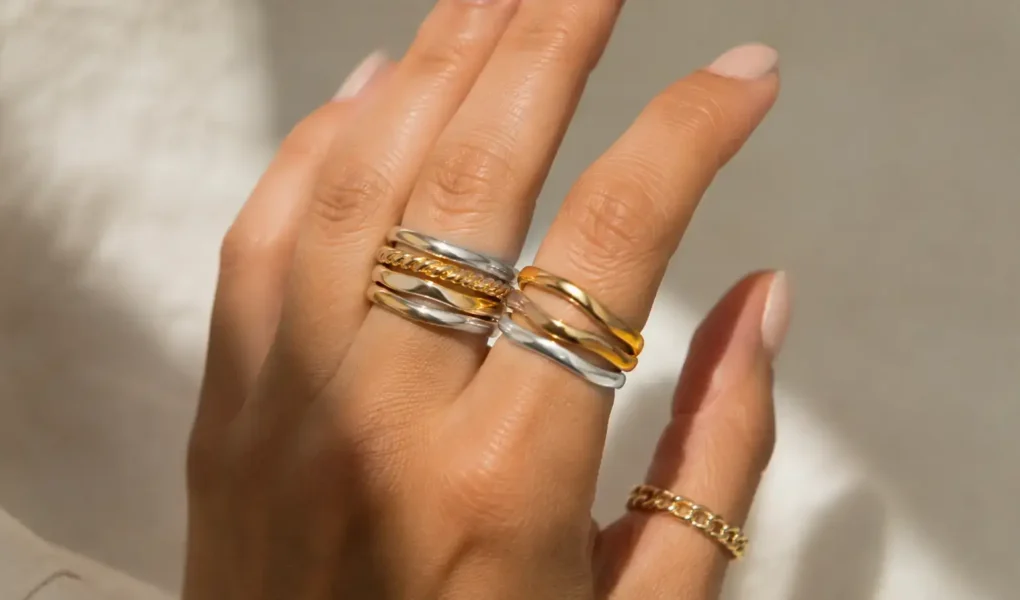
There used to be an unwritten rule that your jewelry had to match: all gold or all silver, no exceptions. That rule has quietly fallen apart over the last few years, but plenty of people still hesitate before reaching for a silver ring alongside their gold necklace, worried it’ll look like they got dressed in the dark. So is it a yes or no to mixing gold and silver jewelry? Here is what you need to know.
What Does Mixing Gold and Silver Jewelry Mean?
Mixing metals simply means wearing gold and silver pieces together, whether that’s a two-tone watch, a stack of rings in different metals, or layered necklaces that don’t match. It’s a shift away from the older rule of picking one metal and matching every piece to it. Part of what makes people hesitant is not fully understanding how the metals themselves differ. According to the Gemological Institute of America, white gold and silver look similar but differ meaningfully in composition, durability, and how they age over time, which is worth knowing before you start combining pieces regularly. More fashion breakdowns like this one are at YesVsNo.net.
How Should You Mix Metals for Different Occasions?
The right approach changes depending on where you’re wearing it, not just personal taste. Here’s a general guide.
| Occasion | Approach | Note |
| Everyday / casual | Mix freely, layer without overthinking it | The most forgiving setting for mixed metals |
| Work / office | Pick one dominant metal, use the other as an accent | Reads more polished and intentional |
| Formal / black tie | Lean toward one matched metal | Traditional settings still favor consistency |
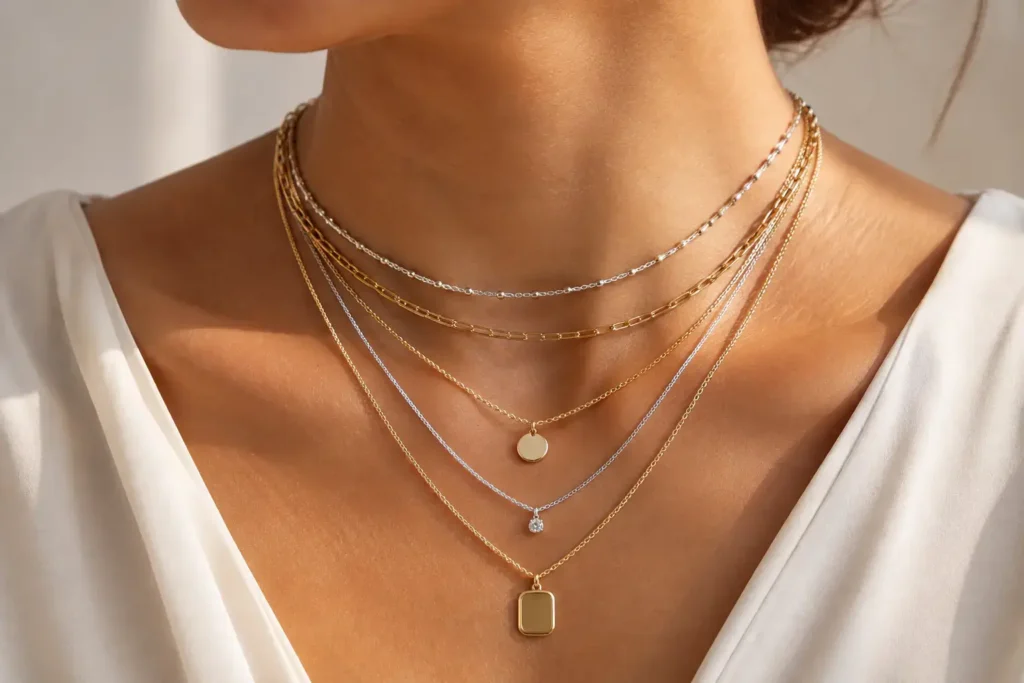
| Layered necklaces or stacked rings | Repeat each metal at least twice | Repetition reads as styled rather than random |
Benefits of Mixing Gold and Silver Jewelry
Mixed metals earned their spot as a mainstream trend for real, practical reasons beyond just being fashionable. Here is where it pays off.
It’s Fully Mainstream Now, Not a Faux Pas
What used to be considered a styling mistake has become one of the more common looks in modern jewelry, showing up everywhere from casual layering to red carpet styling. The old strict-matching rule simply doesn’t hold the weight it used to.
You Can Wear Everything You Own
Instead of maintaining two separate, fully matched jewelry sets, mixing metals means every piece in your collection is fair game on any given day, which makes getting dressed genuinely simpler.
It Flatters a Wider Range of Skin Tones
Committing to only gold or only silver means picking a lane that may not always flatter your undertone, while a mixed approach gives you more flexibility to lean warm or cool depending on the piece and the day.
Concerns and Downsides
Mixing metals isn’t automatically foolproof, and a few things can work against you. Here is where it tends to go wrong.
An Unintentional Mix Can Look Cluttered
Throwing on every piece you own without any anchor point or repetition tends to read as disorganized rather than styled. The difference between a mixed-metal look and a mismatched one usually comes down to whether there’s any visible intention behind it.
Metals Can Scratch or Tarnish Each Other in Storage
Harder and softer metals stored together can scratch one another, and silver tarnishes faster than gold when exposed to air, which can transfer discoloration to nearby pieces if they’re tossed into the same pouch or drawer.
So Is It a Yes or No to Mixing Gold and Silver Jewelry?
The verdict: YES for nearly every casual and everyday setting, with a lighter touch for formal occasions.
The conditions: pick a dominant metal and treat the other as an accent rather than splitting everything evenly, and repeat each metal at least twice in a stacked or layered look so it reads as intentional. Everyday and work settings are the most forgiving places to mix freely, while formal or fine jewelry occasions still lean toward one matched metal. Store pieces separately regardless of how you wear them, since the care difference between metals is real even when the styling rules have relaxed.
How to Start Mixing Metals
A few simple habits make mixed metals look deliberate instead of accidental.
- Start small with one mixed piece, like a two-tone bracelet, before combining multiple standalone items.
- Choose a dominant metal for the outfit and let the second metal show up in just one or two accent pieces.
- Repeat each metal at least twice when layering necklaces or stacking rings, rather than using just one of each.
- Let a two-tone piece, like a watch or a ring with both metals built in, act as the bridge between the two.
- Store pieces in separate pouches or a compartmentalized box to avoid scratching or accelerated tarnish.
Who Should Approach This Differently
Mixing metals works for nearly everyone, but a few situations call for a lighter touch.
- Anyone dressing for a formal event or workplace with a traditional dress code, where one matched metal still reads more polished
- People with metal sensitivities, who should check the base composition of mixed pieces rather than assuming all metals are equally skin-friendly
- Those just starting out with mixed metals, who may want to begin with a single two-tone piece before combining several standalone items
- Anyone storing fine or valuable pieces long-term, where separate storage matters more than everyday costume jewelry
Alternatives
Mixing metals is one way to modernize your jewelry, but it’s not the only styling decision worth thinking through.
If you’re rethinking your jewelry collection as part of a broader wardrobe simplification, Yes or No to Capsule Wardrobe for Students covers the same paring-down approach applied to clothing.
For more on building a versatile collection of core pieces, 5 Essential Wardrobe Items for a Versatile Capsule Wardrobe touches on how accessories fit into a smaller, more intentional wardrobe.
Can’t decide which pieces to wear together? Try our Decision Wheel, or use our Random Name Picker as a playful way to pick from your jewelry box.
Still on the fence? Try our Yes or No Generator for an instant answer.
Still not sure where you land on this? If it’s a bigger decision than a quick yes or no, The Big Decision Workbook walks you through a full framework to think it through properly.
🧭 Get the Decision Workbook — $19FAQ
Here are the questions people ask most often about mixing gold and silver jewelry.
Should I mix gold and silver jewelry?
Yes, for most people and most occasions. Mixed metals have moved firmly into mainstream styling rather than being considered a mistake, especially for everyday and layered looks. The main exception is formal or fine jewelry settings.
What are the benefits of mixing gold and silver jewelry?
Mixing metals lets you wear every piece you already own instead of maintaining two separate, fully matched jewelry sets. It also gives you more flexibility with skin undertone than committing entirely to one metal.
Are there any risks in mixing gold and silver jewelry?
The main risk is styling, not safety: an unintentional, random mix without any anchor point can look cluttered rather than curated. There’s also a practical care consideration, since different metals can scratch or tarnish at different rates if stored together carelessly.
How do I style mixed gold and silver jewelry?
Pick one metal to be dominant and use the other as an accent, rather than splitting everything evenly, which tends to read as more intentional. Repetition also helps signal a deliberate choice rather than a random mismatch.
Can gold and silver jewelry be stored together?
They can, but it’s not ideal for the long run. Harder pieces can scratch softer ones, and silver tarnishes faster than gold, which can transfer discoloration to nearby pieces over time. Separate soft pouches keep everything in better shape.
Conclusion
So is it a yes or no to mixing gold and silver jewelry? Yes, for almost every everyday and casual setting, as long as there’s a little intention behind it. Pick a dominant metal, repeat pieces rather than scattering one of everything, and save the fully matched look for formal occasions where tradition still holds more weight. The old rule about matching metals has mostly faded, and there’s little reason to hold onto it in daily life.
Still not sure where you land on this? If it’s a bigger decision than a quick yes or no, The Big Decision Workbook walks you through a full framework to think it through properly.
🧭 Get the Decision Workbook — $19