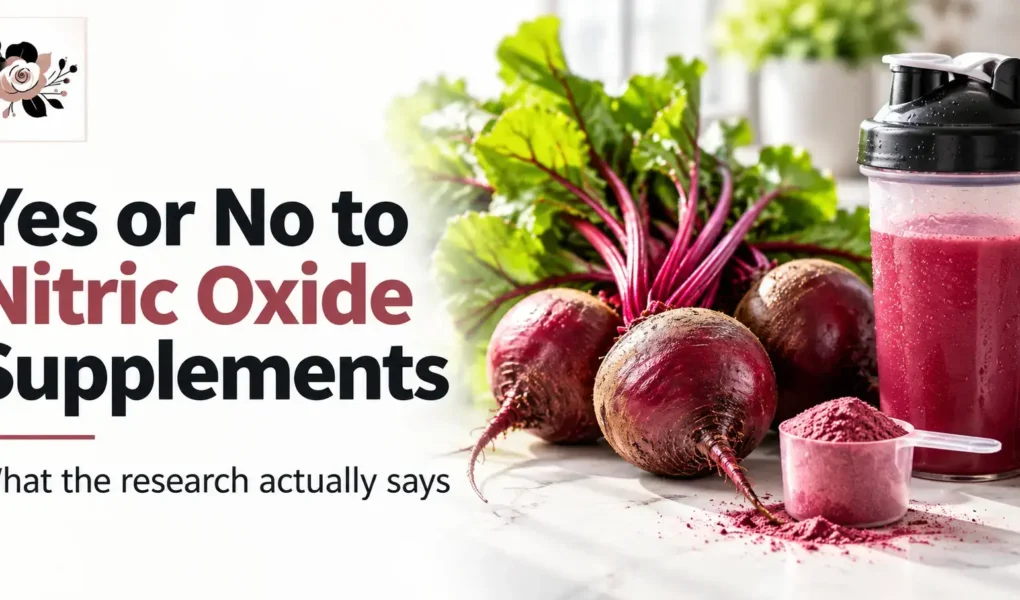
Walk into any supplement shop and you’ll find a wall of “nitric oxide” boosters promising bigger pumps, faster recovery, and better blood flow. Some of the claims on those labels are backed by real research. A lot of them aren’t, and it’s genuinely hard to tell which is which from the packaging alone.
That gap between marketing and evidence is exactly why nitric oxide supplements deserve an honest yes or no instead of a hype-driven one. For more on cutting through supplement marketing, YesVsNo.net runs the same honest breakdown across the supplement aisle. So is it a yes or no to nitric oxide supplements? Here is what you need to know.
What Are Nitric Oxide Supplements?
Nitric oxide supplements don’t actually contain nitric oxide, it’s a gas your body produces on its own. What these dietary supplements contain are compounds your body uses to make more of it, things like L-arginine, L-citrulline, and dietary nitrate from beetroot. Healthline’s reviewed breakdown of nitric oxide supplements explains that nitric oxide itself relaxes blood vessels and supports blood flow, which is the mechanism behind most of what these products claim to do, better workouts, better circulation, and in some cases better blood pressure.
Nitric Oxide Precursors: What’s Actually in These Supplements?
Nitric oxide health supplements aren’t one single ingredient, they’re a category built around a handful of different precursors, each converted to nitric oxide through a slightly different pathway in the body.
| Ingredient | What it does | Typical dose in research |
| L-arginine | Amino acid the body converts to nitric oxide; most studied for mild to moderate erectile dysfunction | 1,500 to 5,000 mg |
| L-citrulline (citrulline malate) | Converts to arginine in the body; commonly used as a pre-workout ingredient | Around 6 to 8 g, timing-dependent |
| Dietary nitrate (beetroot, leafy greens) | Converts to nitric oxide via a separate pathway from arginine | Food-based or juice, varies by product |
| Pycnogenol (pine bark extract) | May help the arginine-to-nitric-oxide conversion when paired with arginine | Typically combined, rarely sold standalone |
Most commercial nitric oxide workout supplements blend two or more of these together, which is part of why isolating exactly which ingredient is doing the work in any given study is genuinely difficult.
Benefits of Nitric Oxide Supplements
The research backing nitric oxide performance supplements is real, if narrower than the marketing suggests. Here’s what actually holds up:
It May Improve Exercise Performance
A 2025 umbrella review cited by Healthline found dietary nitrate may improve time to exhaustion, muscular endurance, and peak power output, making this the best-supported use case for nitric oxide energy supplements. Evidence quality was still described as limited, and citrulline studies often combine it with other ingredients, which makes isolating its individual effect difficult.
It May Help With Mild to Moderate Erectile Dysfunction
A 2019 review of 10 trials suggested L-arginine doses of 1,500 to 5,000 mg may help with mild to moderate ED, and a 2020 study found 2,500 mg of L-arginine combined with 5 mg of tadalafil worked better than either alone. This is a medical use case worth discussing with a doctor rather than self-treating.
It May Modestly Lower Blood Pressure
Dietary nitrate, the kind found in beetroot and leafy greens, may modestly lower blood pressure in healthy young adults and in older adults having a higher weight or prehypertension, according to the research Healthline cites.
It Supports General Blood Flow
The core mechanism behind every product in this category is the same: supporting the body’s production of nitric oxide, which relaxes blood vessels. That’s the shared thread across the exercise, blood pressure, and circulation claims, even where the individual evidence for each is stronger or weaker.
Concerns and Side Effects
Before spending money on nitric oxide nutrition supplements, it’s worth knowing where the evidence is thin. A few things to know:
Evidence Quality Is Often Limited or Mixed
Results for muscle soreness are a good example: one review found 8 g of citrulline reduced soreness after bicep curls but not leg extensions, with effects depending heavily on timing and exercise type. A 2019 review of flavonoid-rich fruits for blood pressure found no significant effect either, so ‘nitric oxide supplement’ covers a wide range of actual evidence quality, not one consistent result.
It Can Interact With Blood Pressure or Medication
Because these supplements work by relaxing blood vessels, they can push blood pressure too low in people who already run on the lower end, or interact with blood pressure medication. Anyone on medication should check with a doctor or pharmacist before adding one in.
Mild Digestive Side Effects Are Common
Nausea and diarrhea show up most often with L-arginine specifically. Beetroot-based products can also turn urine or stool a harmless dark red, which is unsettling the first time but not dangerous on its own.
So Is It a Yes or No to Nitric Oxide Supplements?
The verdict: YES, but with conditions.
The conditions: this is worth it when you’re training for a specific performance goal, endurance or peak power, and you’re using a correctly dosed ingredient like citrulline malate or dietary nitrate, not a vague proprietary blend. It’s not worth it if you’re hoping for general vague health benefits, since whole foods deliver the same nitrate most products are selling. If you’re genuinely torn between spending on a supplement versus just eating more beets and leafy greens, our Pros and Cons Calculator is built for exactly that kind of weigh-up.
| Situation | What it suggests |
| Training for endurance or power output and want a measurable edge | Good candidate, this is where the research is strongest |
| Hoping for vague “better overall health” | Food-based nitrate sources do the same job for less money |
| On blood pressure medication, or prone to low blood pressure | Talk to a doctor before adding one in |
| Looking into it for mild erectile dysfunction | Discuss arginine specifically with a doctor rather than a generic blend |
How to Use Nitric Oxide Supplements
- Pick based on your actual goal. Citrulline malate (around 6 to 8 g) for a pre-workout boost, or dietary nitrate from beetroot juice if blood flow or blood pressure is the focus.
- Time it to the research. Citrulline’s effects on soreness were timing-dependent, so check the product’s own guidance rather than guessing.
- Try food sources first. Beets, spinach, and arugula provide the same dietary nitrate most products are built around, often cheaper and with no dosing guesswork.
- Check for medication interactions before starting, especially blood pressure medication, with a doctor or pharmacist.
- Give it a few consistent weeks before judging results, the same way it’s worth sticking with any supplement routine long enough to tell if it’s doing anything, see our
Yes or No to Creatine post for a comparison case where consistency matters just as much as the dose.
- Reassess after that window. Given how mixed some of this evidence is, if you’re not noticing a difference, it’s reasonable to stop rather than keep paying for it.
Who Should Avoid Them
- Anyone with hypotension (low blood pressure), since these supplements can push it lower
- Anyone on blood pressure medication, without checking with a doctor or pharmacist first
- Anyone expecting a dramatic, fast transformation, the actual research supports modest, use-case-specific effects, not an overnight change
- Pregnant or breastfeeding individuals, since most of the research behind these ingredients doesn’t include this population, consult a doctor first
Alternatives
If a nitric oxide supplement doesn’t feel like the right fit, a few related approaches are worth considering instead.
If your actual goal is workout performance rather than blood flow specifically, Yes or No to Pre-Workout for Fat Loss covers a different angle on pre-training supplementation.
Recovery and muscle support matter more to you than the pump itself? Yes or No to Protein Shakes Daily is worth reading before adding another supplement to your stack.
Still on the fence? Try our Yes or No Generator for an instant answer, or use the Decision Wheel if you’re weighing this against a different supplement entirely.
Still not sure where you land on this? If it’s a bigger decision than a quick yes or no, The Big Decision Workbook walks you through a full framework to think it through properly.
🧭 Get the Decision Workbook — $19FAQ
What is nitric oxide?
Nitric oxide is a gas your body produces naturally that relaxes blood vessels and supports blood flow. Nitric oxide supplements don’t contain the gas itself, they contain compounds like L-arginine, L-citrulline, or dietary nitrate that your body uses to produce more of it.
What are the benefits of nitric oxide supplements?
Research points most clearly to improved exercise performance, time to exhaustion, endurance, and peak power output, along with a possible modest reduction in blood pressure and help with mild to moderate erectile dysfunction specifically from L-arginine. Evidence varies in strength across these uses.
Are nitric oxide supplements safe to use?
Generally considered safe for healthy adults at appropriate doses. The most common side effects are mild, nausea and diarrhea with L-arginine, and harmless dark red urine or stool with beetroot-based products. People with low blood pressure or on blood pressure medication should check with a doctor first.
What is the difference between nitric oxide supplements with L-arginine and with beetroot?
L-arginine is an amino acid the body converts directly into nitric oxide, and it has the most evidence specifically for erectile dysfunction. Beetroot supplies dietary nitrate, which converts to nitric oxide through a separate pathway and has more evidence tied to exercise performance and blood pressure. Products often combine the two rather than using just one.
Can nitric oxide supplements help with workouts?
This is where the evidence is strongest among the category’s claims. A 2025 umbrella review found dietary nitrate may improve endurance and peak power output, though citrulline is frequently studied in combination with other ingredients, which makes isolating its individual effect difficult.
Conclusion
Nitric oxide supplements earn a genuine yes, with conditions. The research supports real, if modest, benefits for exercise performance and specific uses like mild ED, as long as you’re choosing a correctly dosed ingredient for an actual goal rather than a vague blend promising everything at once. For general health, the same nitrate is sitting in your produce aisle for a fraction of the cost.
Still not sure where you land on this? If it’s a bigger decision than a quick yes or no, The Big Decision Workbook walks you through a full framework to think it through properly.
🧭 Get the Decision Workbook — $19