One-pot pasta shows up in every quick-dinner roundup for a reason: it promises a full meal with a fraction of the cleanup. The tradeoff people don’t always mention is texture. Cooking pasta directly in the sauce instead of boiling it separately changes the process enough that it’s worth knowing what you’re actually trading away. So is it a yes or no to one-pot pasta for weeknight dinners? Here is what you need to know.
What Actually Happens When You Cook Pasta in the Sauce?
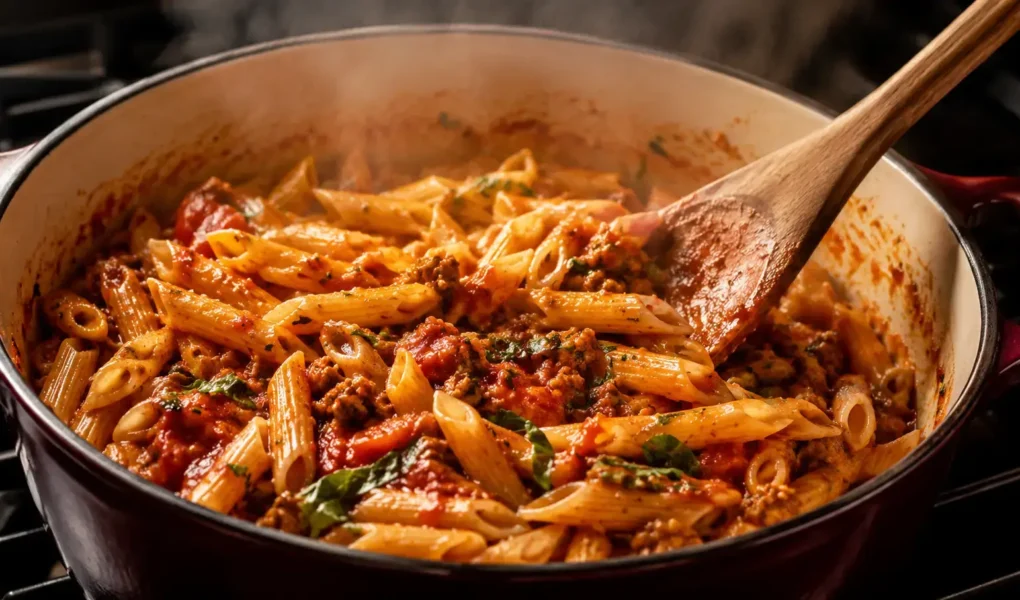
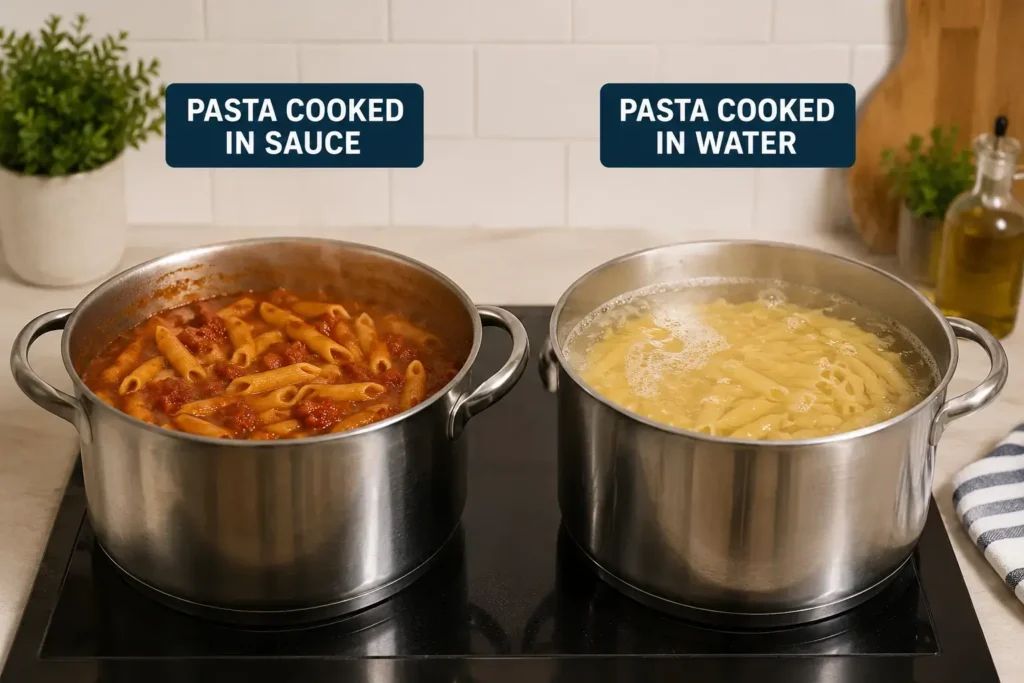
Instead of boiling pasta separately and combining it with a finished sauce, one-pot pasta cooks the dried noodles directly in a measured amount of liquid alongside the other ingredients, so the starch the pasta releases thickens the sauce as it goes. According to America’s Test Kitchen, cooking noodles directly in the sauce lets the pasta absorb flavor as it cooks while the released starch thickens the sauce at the same time, which is the real mechanism behind why the method works, not just a shortcut for fewer dishes. More food breakdowns like this one are at YesVsNo.net.
One-Pot vs. Traditional Pasta Cooking
The two methods trade off time and cleanup against precision, and neither one wins on every front.
| Method | Time and Cleanup | Texture Control |
| One-pot pasta | Faster overall, minimal cleanup, one pot | Less precise, needs closer attention near the end |
| Traditional (boil, drain, combine) | Slightly longer, more dishes to wash | Easier to hit exact al dente every time |
Benefits of One-Pot Pasta for Weeknights
For a busy weeknight specifically, the method earns its popularity for real, practical reasons. Here is where it delivers.
It’s Genuinely Faster With Far Less Cleanup
Skipping the separate pot for boiling means one less thing to wash and one less step between starting dinner and sitting down to eat, which matters most on the nights you have the least energy to cook.
The Sauce Thickens Naturally From the Pasta Itself
The starch released as the pasta cooks integrates directly into the sauce, creating a cohesive, well-bound result without needing a separate thickening step or reserved pasta water added back in afterward.
It’s Easy to Customize With What You Already Have
Vegetables, proteins, and pantry staples can be swapped in and out freely, which makes one-pot pasta a flexible base for whatever needs using up in the fridge on any given night.
Concerns and Downsides
The convenience comes with a real tradeoff in control, and it’s worth knowing where things can go wrong. Here is what to watch for.
Texture Control Is Trickier
Since the pasta cooks directly in the liquid rather than being drained at a precise moment, it’s easier to overshoot al dente and end up with something softer than intended if you’re not checking toward the end of cooking.
Not Every Pasta Shape Holds Up Equally Well
Delicate, long noodles like angel hair are more prone to clumping or turning gluey in a one-pot method, while sturdier shapes handle the process far more gracefully.
So Is It a Yes or No to One-Pot Pasta for Weeknight Dinners?
The verdict: YES for most weeknights, as long as you match the pasta shape and liquid ratio to the method.
The conditions: stick to sturdy shapes like penne, rotini, or shells rather than delicate long noodles, since they hold up far better to cooking directly in liquid. Check for doneness a minute or two early, since pasta continues cooking in residual heat even off the burner. Expect the first attempt or two to take some calibration on liquid ratio, since it varies by pasta type and quantity, and don’t be discouraged if the first try isn’t perfectly dialed in.
How to Get Better Results With One-Pot Pasta
A few technique adjustments make the method far more reliable.
- Choose a sturdy pasta shape like penne, rotini, or shells rather than delicate long noodles.
- Use a heavy-bottomed pot or Dutch oven to distribute heat evenly and avoid scorching.
- Stir occasionally throughout cooking to prevent sticking, especially in the final few minutes.
- Start checking for doneness a minute or two before the package time suggests.
- Remove the pot from heat as soon as the pasta hits al dente, since it keeps cooking in residual heat afterward.
Who Should Stick to Traditional Cooking
One-pot pasta works well for most everyday meals, but a few situations call for the traditional method instead.
- Anyone making a delicate, light sauce where precise texture control matters more than convenience
- Cooks working with angel hair or other very thin, delicate noodle shapes prone to clumping
- Large batch cooking, where even heat distribution is harder to manage in a single pot
- Anyone still getting a feel for liquid ratios, who may want a tested recipe rather than improvising the first few times
Alternatives
Comfort food is one way to build flexibility into your eating habits, but it’s not the only one.
If comfort food as a regular habit is really about not wanting to feel restricted, Yes or No to Cheat Meals Weekly looks at a more structured way to build that same flexibility into a diet.
For the nights comfort food is really just a stand-in for not having anything else ready, Meal Prep Magic: 2 Effortless Eats for the Time-Crunched Crowd covers a different approach to solving that problem.
If you’re weighing comfort food against a broader eating pattern rather than a single habit, Is Intermittent Fasting Worth It breaks down another framework worth considering.
Still on the fence? Try our Yes or No Generator for an instant answer.
Still not sure where you land on this? If it’s a bigger decision than a quick yes or no, The Big Decision Workbook walks you through a full framework to think it through properly.
🧭 Get the Decision Workbook — $19FAQ
Here are the questions people ask most often about one-pot pasta for weeknight dinners.
Is one-pot pasta actually good for weeknight dinners?
Yes, for most weeknights. It’s genuinely faster and easier to clean up than boiling pasta separately, and the starch released into the sauce creates a naturally well-integrated result.
Does one-pot pasta taste as good as traditionally cooked pasta?
For most sauces, yes, and some cooks argue it tastes even better, since the pasta absorbs flavor from the sauce as it cooks rather than being seasoned only after the fact.
What pasta shapes work best for one-pot cooking?
Sturdy shapes like penne, rotini, shells, and farfalle hold up best, since they’re less prone to clumping or turning gluey. Delicate long noodles are more likely to stick together.
How do I keep one-pot pasta from getting mushy?
Start checking for doneness a minute or two before the package time suggests, since pasta continues cooking in residual heat even off the burner.
How much liquid do I need for one-pot pasta?
This varies by pasta type and quantity, so it typically takes following a tested recipe once or twice to get a feel for the right ratio for your stove and pot.
Conclusion
So is it a yes or no to one-pot pasta for weeknight dinners? Yes, for most nights and most sauces, as long as you match the pasta shape to the method and keep an eye on doneness near the end. The convenience is real, and so is the texture tradeoff, but a sturdy pasta shape and a bit of attention close that gap almost entirely.
Still not sure where you land on this? If it’s a bigger decision than a quick yes or no, The Big Decision Workbook walks you through a full framework to think it through properly.
🧭 Get the Decision Workbook — $19