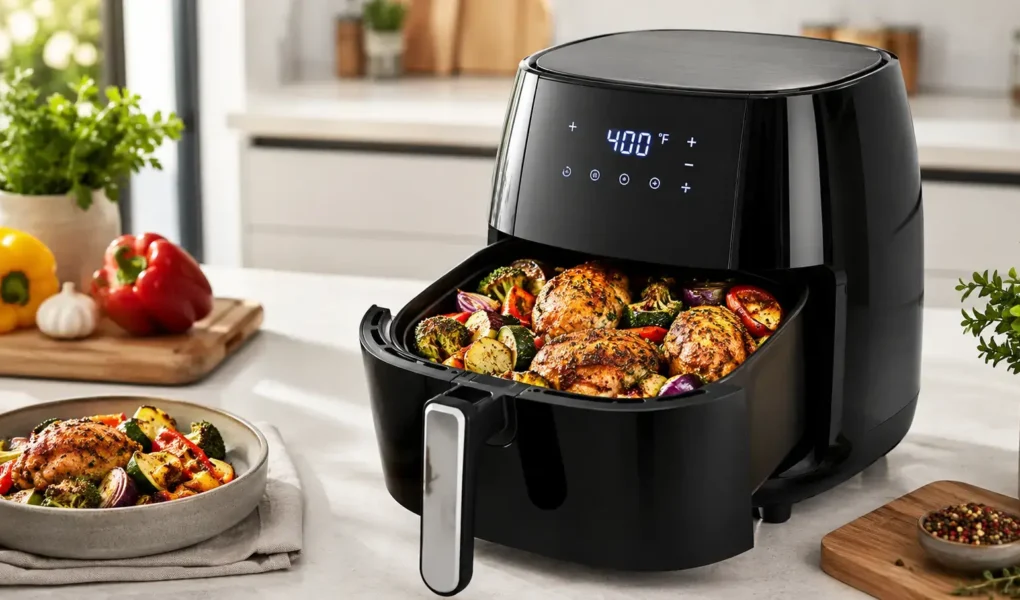
Air fryers took over kitchens for a simple reason: they promise the crunch of fried food without the guilt. But ‘healthier than deep frying’ and ‘genuinely healthy’ are not automatically the same claim, and the honest answer depends on what you’re cooking and how you use the appliance. So is it a yes or no to air fryers for healthy eating? Here is what you need to know.
What Is an Air Fryer?
An air fryer is a compact countertop appliance that cooks food by circulating very hot air at high speed around it, creating a crisp exterior similar to deep frying but using little to no oil. According to Cleveland Clinic, air frying essentially eliminates the need for added oils while still producing the texture people associate with fried food. The appliance works like a small, high-powered convection oven, and most models let you set both a temperature and a timer, similar to a standard oven. More food and lifestyle breakdowns like this one are available at YesVsNo.net.
How Does Air Frying Compare to Other Cooking Methods?
Whether air frying counts as a healthy upgrade depends entirely on what you’re comparing it to. Here is how it stacks up against the most common alternatives.
| Cooking Method | Typical Oil Used | Fat/Calorie Impact | Texture |
| Deep frying | 1-3 cups | Highest fat and calories | Crispiest, heaviest |
| Air frying | 0-1 tablespoon | Significantly reduced fat | Crispy, close to fried |
| Oven baking | 0-1 tablespoon | Similar to air frying | Less crispy, slower |
| Microwaving | None | Lowest fat, but no browning | Soft, sometimes soggy |
Does an Air Fryer Fit Your Diet?
If you’re following a specific eating plan, an air fryer can genuinely support it, though the fit varies by diet type.
| Diet Type | Air Fryer Fit | Notes |
| Keto / low-carb | Good fit | Works well for meat, eggs, and low-carb vegetables without added carb-heavy breading |
| Low-sodium | Good fit | You control seasoning directly, unlike pre-fried or restaurant versions |
| Vegan | Good fit | Excellent for crisping tofu, chickpeas, and vegetables without oil-heavy frying |
| Diabetic-friendly | Depends | Great for protein and vegetables, but starchy foods like fries still raise blood sugar regardless of cooking method |
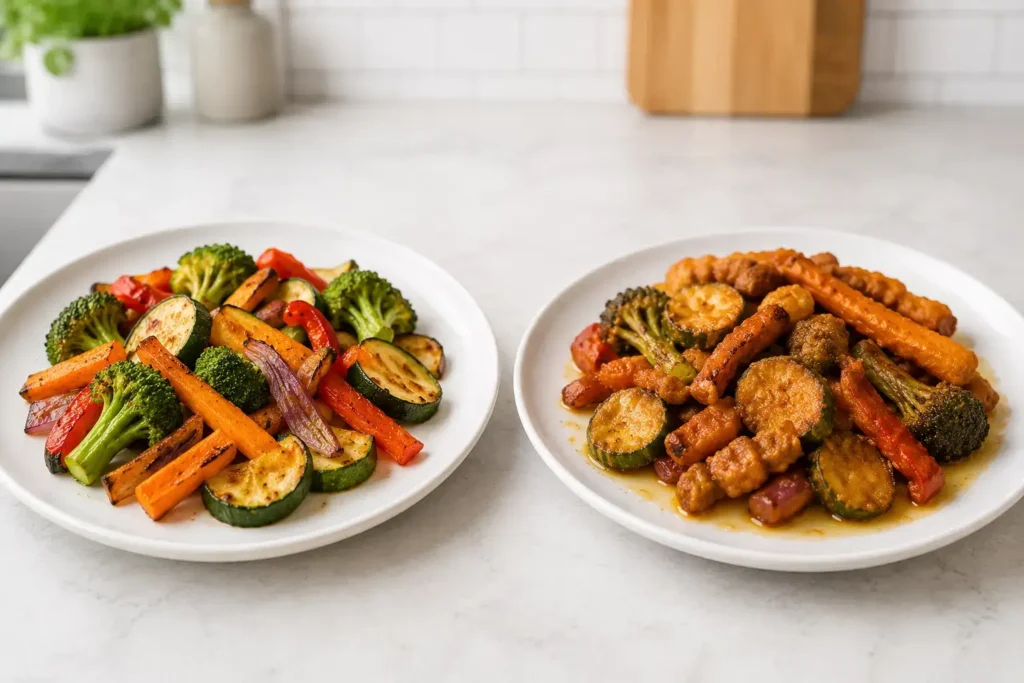
Benefits of Air Fryers for Healthy Eating
For most home cooks, an air fryer delivers real, measurable advantages over traditional frying. Here is where it earns its reputation.
It Cuts Fat and Calories Compared to Deep Frying
Deep frying requires food to be submerged in oil, which gets absorbed into the food as it cooks. Air frying uses a fraction of that oil, sometimes none at all, which meaningfully reduces the fat and calorie content of the finished dish without eliminating the crispy texture people are after.
It Fits a Wide Range of Diet Plans
Because you control exactly what goes into the basket, an air fryer adapts easily to keto, low-sodium, or vegan eating patterns in a way that pre-fried or restaurant food generally cannot. Crisping tofu, chickpeas, or vegetables without oil is one of the appliance’s strongest use cases.
It Reduces Kitchen Mess and Cooking Time
Beyond the nutrition angle, air fryers cook significantly faster than a conventional oven and eliminate the splatter and cleanup that comes with a pot of hot oil. Faster, easier cooking makes healthier home meals more realistic on busy weeknights, which is its own kind of practical health benefit.
Concerns and Downsides
An air fryer is not automatically healthy just because it uses less oil. Here is where the health claims need a closer look.
Starchy Foods Can Still Form Acrylamide
Acrylamide is a compound that forms in starchy foods, like French fries and other breaded items, when they’re cooked at high heat, and air frying does not eliminate this risk the way some marketing implies. High exposure to acrylamide has been linked to health concerns, so cooking method alone does not make a starchy, breaded food a health food.
Non-Stick Coatings Can Raise Safety Questions
Cheaper air fryer baskets often use non-stick coatings that can degrade over time, especially with metal utensils or heavy scratching, and older models manufactured before stricter material standards may contain compounds worth avoiding. Choosing a well-reviewed model and replacing a scratched basket addresses most of this concern.
So Is It a Yes or No to Air Fryers for Healthy Eating?
The verdict: YES, but the health benefit depends entirely on what you’re cooking and comparing it to.
The conditions: an air fryer is a genuine health upgrade when it replaces deep frying, since the oil reduction is substantial and measurable. Compared to baking, the health difference is minor, and the real advantage there is speed and texture rather than nutrition. Starchy, breaded foods still carry an acrylamide risk regardless of the cooking method, so an air fryer does not turn fries into a health food just because it uses less oil. Choose a well-reviewed model with an intact non-stick surface, and think about what you’re cooking, not just the appliance itself.
How to Air Fry for Maximum Health Benefit
Getting the health benefits of an air fryer comes down to technique and food choice as much as the appliance itself.
- Prioritize whole foods like vegetables, lean protein, and fish over heavily breaded or pre-packaged items.
- Use a light spray of oil rather than none at all; a small amount improves texture without meaningfully adding back the calories you’re trying to cut.
- Avoid overcrowding the basket, since air needs to circulate freely around the food to cook evenly and crisp properly.
- Keep starchy, breaded foods as an occasional choice rather than a daily habit, since the cooking method does not offset the acrylamide or carbohydrate content.
- Inspect your basket regularly for scratches or peeling, and replace it if the non-stick coating starts to degrade.
Who Should Be Cautious With Air Fryers
Air fryers are low-risk for most households, but a few groups should approach certain uses with more care. Consult a doctor or registered dietitian if you have a diagnosed condition before changing your cooking habits.
- People managing diabetes who assume air-fried starchy foods are automatically safe for blood sugar; portion and food choice still matter most
- Anyone using an older air fryer model with a scratched or peeling non-stick basket
- People relying on an air fryer to replace whole categories of vegetables or protein rather than adding variety to their diet
- Anyone expecting significant weight loss from the appliance alone without changes to overall calorie intake
Alternatives
An air fryer is one tool for healthier cooking, not the only one. A few other habits and choices work alongside it toward the same goal.
Oven baking achieves a similar fat and calorie reduction to air frying, just with a longer cook time and a slightly less crispy result, and requires no new appliance if you already have a working oven.
If you’re using an air fryer to build lower-fat snacks or a lighter evening plate, Yes or No to Eating Fruit at Night looks at another common food choice people second-guess after dinner.
Healthier cooking often goes hand in hand with what you drink alongside it, and Yes or No to Sugar-Free Drinks breaks down whether that swap is actually worth making.
If your main goal is weight management rather than a specific cooking method, Yes or No to Pre-Workout for Fat Loss looks at another popular tool people use toward the same goal.
If protein intake is your main concern alongside healthier cooking, Yes or No to Protein Shakes Daily covers whether that habit is worth adding to your routine.
Still on the fence? Try our Yes or No Generator for an instant answer.
Still not sure where you land on this? If it’s a bigger decision than a quick yes or no, The Big Decision Workbook walks you through a full framework to think it through properly.
🧭 Get the Decision Workbook — $19FAQ
Here are the questions people ask most often about whether air fryers are actually healthy.
What are the health benefits of air fryers?
Air fryers use a fraction of the oil that deep frying requires, which cuts fat and calories while still delivering a crispy texture. They also reduce your exposure to the compounds that form when large amounts of oil are heated repeatedly at high temperatures. For people managing weight or heart health, replacing deep-fried meals with air-fried versions is one of the more practical swaps available.
Are air fryers healthier than ovens?
Not dramatically. Both methods use little to no oil, so the health difference between air frying and baking is usually small. Air fryers cook faster and produce a crispier texture because of the rapid air circulation, which is really a convenience and texture advantage rather than a major nutritional one.
Can air fryers help with weight loss?
They can support weight loss goals indirectly by making lower-fat versions of foods people already enjoy, which can make a calorie deficit easier to stick to. An air fryer alone will not cause weight loss, since the total calories in your diet still matter more than the cooking method. It works best as one tool within a broader eating pattern.
What foods are best cooked in an air fryer?
Vegetables, chicken, fish, tofu, and foods that are traditionally breaded or fried tend to work best, since the rapid air circulation crisps their exterior effectively. Foods with wet batters, like tempura, generally do not work well since the batter needs oil to set properly. Frozen foods designed for oven baking also tend to air fry successfully with less cooking time.
Are there any downsides to using an air fryer?
Starchy foods cooked at high heat, including French fries and other breaded items, can still form acrylamide, a compound linked to health concerns at high exposure levels, even in an air fryer. Cheaper models with non-stick coatings can also raise safety questions if the coating degrades over time, especially in older units made before stricter material standards. Choosing a well-reviewed model and avoiding scratched baskets addresses most of this risk.
Conclusion
So is it a yes or no to air fryers for healthy eating? Yes, especially if you’re replacing deep frying, since the oil and calorie reduction is real and measurable. The appliance is not a magic health fix on its own, and starchy, breaded foods do not become health foods just because they were air fried instead of deep fried. Use it as one part of a broader approach to how you cook, and the health benefits hold up.
Still not sure where you land on this? If it’s a bigger decision than a quick yes or no, The Big Decision Workbook walks you through a full framework to think it through properly.
🧭 Get the Decision Workbook — $19