Minimalism sounds a lot simpler when it is just you and your own closet. Add kids, and suddenly there are toys, school papers, hand-me-downs, and gifts from relatives arriving faster than anyone can sort through them. That gap between the minimalist ideal and the reality of a house with children is exactly why so many parents wonder if the whole approach is even realistic for a family. So is it a yes or no to minimalism for families? Here is what you need to know.
What Is Minimalism for Families?
Minimalism for families takes the core idea of owning less and prioritizing what matters, and applies it to a household where more than one person is generating stuff, mess, and decisions. According to Harvard Health, clutter that builds up unchecked can interfere with daily function and add real stress to a household. In practice, minimalism for families usually means fewer toys in active rotation, simpler routines, and more intentional decisions about what enters the home, rather than a strict standard. More lifestyle breakdowns like this one are at YesVsNo.net.
What Does It Actually Look Like at Different Family Stages?
What’s realistic changes a lot depending on the ages of your kids and your household setup. Here’s a general guide.
| Family Stage | Realistic Approach | Watch Out For |
| Toddlers / babies | Rotate toys instead of owning fewer at once | Gifts from relatives arriving faster than you can declutter |
| School-age kids | Set a system for school papers and art before it piles up | Sentimental guilt over tossing kids’ creations |
| Teens | Let them own the decision for their own space | Forcing minimalism on a teen tends to backfire |
| Single-parent households | Focus on time and mental load, not just physical stuff | Less bandwidth to maintain a strict system alone |
Benefits of Minimalism for Families
When it fits the household, minimalism delivers real, day-to-day advantages for parents and kids alike. Here is where it pays off.
It Reduces Clutter-Driven Stress for Parents
Fewer toys, clothes, and papers to manage means less time spent searching for things, tidying up, and making decisions about where everything goes. For parents already stretched thin, cutting down on the sheer volume of stuff to manage is one of the more practical stress reducers available.
It Teaches Kids to Value Experiences Over Things
Growing up around a simpler, more intentional relationship with belongings tends to shape how kids think about consumption later on. Families who prioritize outings, time together, and fewer but more meaningful gifts often see that mindset carry into how their kids make choices as they get older.
It Makes Daily Routines Faster
Getting out the door, cleaning up after dinner, and packing for school all take less time when there is simply less stuff in the way. This is one of the more immediate, tangible benefits parents notice once toy rotation or a simpler wardrobe system is in place.
Concerns and Downsides
Minimalism does not automatically fit a household with kids the same way it fits one adult’s life. Here is where it tends to break down.
Kids Accumulate Items Faster Than You Can Declutter
Birthdays, holidays, school art projects, and hand-me-downs bring new items into the house constantly, often faster than a strict standard can keep up with. This is the biggest reason families abandon rigid minimalism within the first few months.
It Can Create Tension If a Partner Isn’t on Board
Minimalism works best when the whole household is aligned. One parent pushing for it while the other resists tends to create ongoing friction rather than a calmer home, and kids can feel caught in the middle.
So Is It a Yes or No to Minimalism for Families?
The verdict: YES, but a flexible version works far better for families than a strict one.
The conditions: systems like toy rotation, a capsule wardrobe for kids, and a simple plan for school papers deliver most of the stress-reduction benefit without the constant fight against how fast kids accumulate things. Get buy-in from every adult in the household before starting, since a one-sided push tends to fail. Large families and single-parent households especially benefit from focusing on manageable systems rather than a strict item count, since the goal is less stress, not a specific number of belongings.
How to Start Minimalism as a Family
A gradual, system-based approach tends to stick better than an aggressive one-weekend purge.
- Start with one category, like toys, rather than trying to declutter the entire house at once.
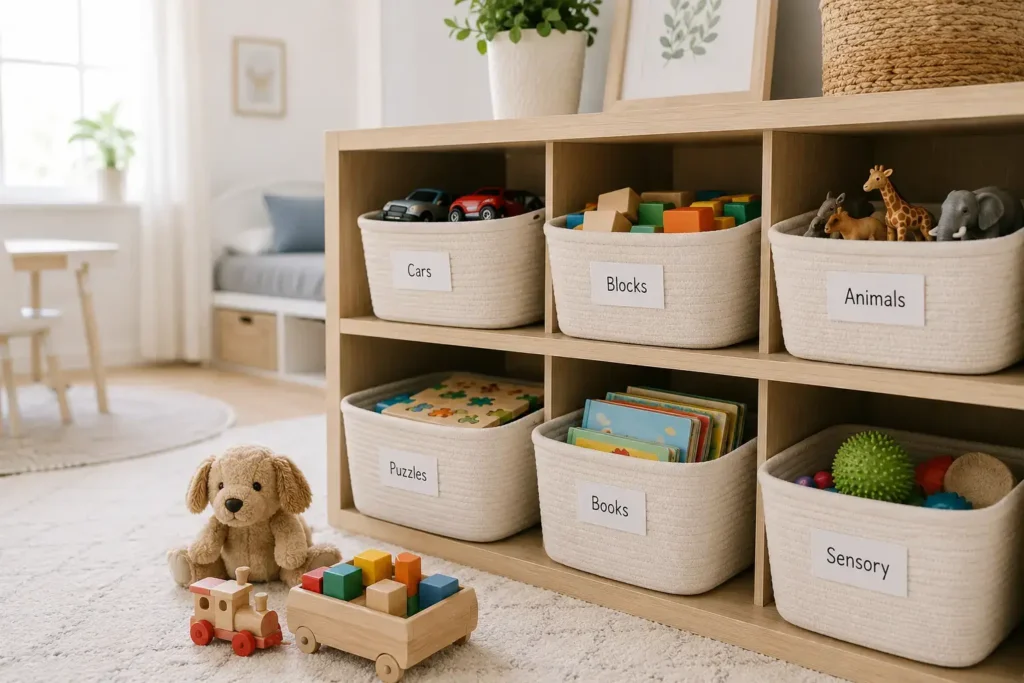
- Set up a toy rotation system so kids still have variety without everything being out and accessible at the same time.
- Create a simple system for school papers and art, like a designated bin that gets reviewed and thinned monthly.
- Involve kids in age-appropriate decisions about their own belongings instead of deciding entirely for them.
- Revisit the system every few months, since what works for a toddler will not work once they’re school-age.
Who Should Approach This Differently
Minimalism is flexible enough for most families, but a few situations call for a different pace or approach.
- Families where one partner is strongly opposed; start smaller and build agreement before making bigger changes
- Households with very young children, where toy rotation works better than strict decluttering
- Single-parent households with limited time; prioritize systems that reduce daily mental load over aesthetic minimalism
- Families dealing with a recent major life change, where added structure may feel overwhelming rather than calming right now
Alternatives
Minimalism is one path to a calmer household, not the only one. A few related approaches might fit your family better.
If minimalism as a broader personal philosophy interests you beyond the family angle, Yes or No to Minimalist Living covers the general, individual-focused version of the approach.
For a more structured, step-by-step starting point, Minimalist Living: How to Declutter Your Home in 5 Easy Steps walks through the process in more practical detail.
If evening chaos is a bigger issue than physical clutter in your house, Sunday Night Routine for a Great Start to the Week tackles the routine side of family overwhelm.
Still on the fence? Try our Yes or No Generator for an instant answer.
Still not sure where you land on this? If it’s a bigger decision than a quick yes or no, The Big Decision Workbook walks you through a full framework to think it through properly.
🧭 Get the Decision Workbook — $19FAQ
Here are the questions parents ask most often about whether minimalism actually works with kids in the house.
What are the benefits of minimalism for families?
Families who adopt minimalism often see less time spent on cleanup, lower stress around clutter, and kids who learn to value experiences over accumulating things. It also tends to make daily routines faster since there is less to manage, find, and put away. The benefit scales with how consistently the whole household participates, not just one parent.
Should families choose minimalism?
It depends on the family. A flexible version built around systems like toy rotation and a capsule wardrobe works well for most households, while an all-or-nothing approach is harder to sustain with young kids. Families with a partner who is not on board tend to struggle more than families who ease into it together.
Is minimalism suitable for large families?
Yes, though the systems matter more than the philosophy itself at scale. Larger families tend to do better with shared storage rules and regular decluttering sessions than with strict item limits per child. The goal is manageable, not minimal for its own sake, once you have more than one or two kids generating stuff.
What is minimalism for families?
Minimalism for families applies the core idea of owning less and prioritizing what matters to a household with kids, rather than just one adult’s belongings. In practice, it usually means fewer toys and clothes in active rotation, simpler routines, and more intentional decisions about what enters the home in the first place.
Are there downsides to minimalism for families?
Yes. Kids naturally accumulate items fast through gifts, school projects, and hand-me-downs, which makes a strict minimalist standard hard to maintain. It can also create friction if one parent embraces it and the other does not, or if kids feel like their belongings are being decided for them without input.
Conclusion
So is it a yes or no to minimalism for families? Yes, as long as the version you adopt bends around the reality of raising kids rather than fighting it. A flexible system beats a strict rule almost every time in a household with children. Start small, get everyone on board, and expect the approach to change as your kids grow, and minimalism can genuinely make family life calmer rather than becoming one more thing to manage.
Still not sure where you land on this? If it’s a bigger decision than a quick yes or no, The Big Decision Workbook walks you through a full framework to think it through properly.
🧭 Get the Decision Workbook — $19