
Morning routines get sold as a life hack, the one habit standing between you and a more productive, less stressed version of yourself. Scroll far enough and you’ll find routines with ten steps before 7am, and it starts to feel less like self-care and more like a second job. Somewhere between skipping mornings entirely and running a rigid checklist is where most people actually land, and figuring out where you fall matters more than copying anyone else’s routine. So is it a yes or no to morning routines? Here is what you need to know.
What Counts as a Morning Routine?
A morning routine is simply a consistent set of actions you do most mornings, whether that’s a single habit like drinking water first thing or a longer sequence involving movement, journaling, and planning. The key word is consistent, not elaborate. A large review of studies conducted during COVID-19, published via PubMed Central, found that disruptions to daily routines were associated with worse psychiatric symptoms across nearly a million people studied, which suggests the consistency itself, not any specific activity, is doing a lot of the work. More lifestyle breakdowns like this one are at YesVsNo.net.
Does a Morning Routine Work the Same for Everyone?
What’s realistic depends a lot on your schedule and natural sleep tendencies. Here’s a general guide.
| Situation | Best Approach | Watch Out For |
| Early riser by nature | A structured routine fits easily | Don’t assume everyone needs to match your schedule |
| Natural night owl | Build a shorter routine at your natural wake time | Forcing an early start often backfires as sleep debt |
| Parent of young kids | Keep it flexible and short, not elaborate | A rigid routine breaks the first time a kid wakes up early |
| Shift worker | Build a routine around your actual wake time, not the clock | A routine tied to 6am is useless if you wake at 2pm |
Benefits of Morning Routines
A well-fitted morning routine delivers real, research-backed advantages. Here is where it earns the hype.
It Reduces Decision Fatigue
When your morning is already decided, you skip dozens of small choices before you’ve even had coffee, which frees up mental energy for decisions that actually matter later in the day. This is a well-documented psychological effect, not just a productivity buzzword.
It’s Linked to Better Mood and Lower Stress
Research on daily routine consistency has repeatedly connected predictable schedules to better mental health outcomes, including lower rates of depressive and anxiety symptoms. The predictability itself appears to matter, independent of what specific habits are involved.
It Creates a Sense of Control Before the Day Starts
Starting the day with a plan, rather than reacting to notifications or immediate demands, gives many people a feeling of calm and agency that tends to carry into the rest of the day. That psychological head start is often more valuable than any single habit in the routine.
Concerns and Downsides
A morning routine is not automatically a positive addition to your life. Here is where it can work against you.
A Rigid Routine Can Create Pressure and Guilt
An elaborate, ten-step routine sounds great until you miss it once and feel like the whole day is already off track. That guilt undermines the actual point of a routine, which is supposed to reduce stress, not add another source of it.
It Doesn’t Fit Every Schedule
Parents of young kids, shift workers, and anyone with an unpredictable schedule often find a fixed routine breaks the first time life doesn’t cooperate. For these situations, a flexible framework tends to hold up better than a strict checklist tied to a specific clock time.
So Is It a Yes or No to Morning Routines?
The verdict: YES, but the routine should be short and flexible rather than long and rigid.
The conditions: aim for a few consistent habits rather than a long list, since a routine you can’t realistically sustain provides no benefit at all. Build it around your actual wake time and lifestyle rather than an idealized early-riser schedule, especially if you’re a natural night owl, a parent of young kids, or work irregular hours. The goal is predictability most mornings, not perfect execution every single day.
How to Build a Realistic Morning Routine
Starting small and building gradually works far better than adopting someone else’s ten-step routine overnight.
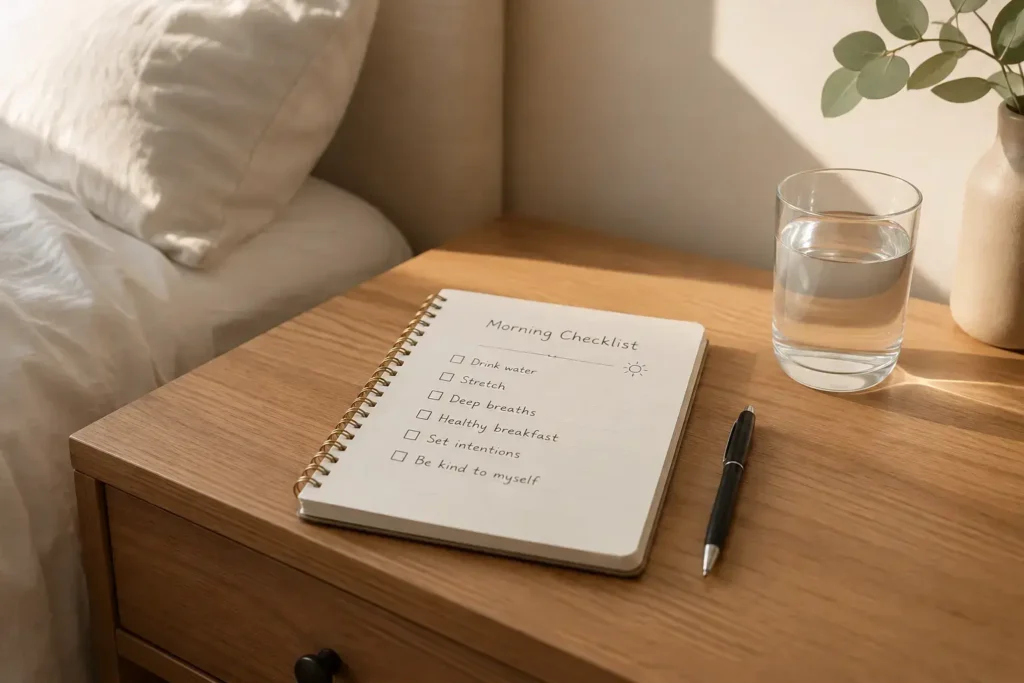
- Pick one or two habits to start, like drinking water or five minutes without your phone, rather than overhauling your whole morning at once.
- Anchor the routine to your actual wake time rather than an idealized early hour that doesn’t match your schedule.
- Keep it short enough that you can realistically do it on your busiest, most tired mornings, not just your best ones.
- Add one new habit only after the first ones feel automatic, instead of stacking everything at once.
- Expect to miss it sometimes, and treat that as normal rather than a sign the whole routine has failed.
Who Should Approach This Differently
A morning routine is flexible enough for most people, but a few situations call for a different version of the approach.
- Parents of young children, where a short, adaptable routine works better than a fixed sequence
- Shift workers, who should build a routine around their actual wake time rather than a conventional morning hour
- Natural night owls, who tend to do better aligning a routine with their own chronotype instead of forcing an early start
- Anyone who has tried an elaborate routine before and found it added stress rather than reducing it; a shorter version is worth trying instead of giving up on the idea entirely
Alternatives
A structured morning routine is one way to start the day well, not the only one. A few related approaches might fit better.
If waking up earlier specifically is more your question than routine structure, How to Become a Morning Person According to Science focuses on that angle in more depth.
Setting things up the night before can do a lot of the same work as a morning routine, and Sunday Night Routine for a Great Start to the Week covers how to build that habit.
If sleep quality is the bigger issue behind a rough morning, Yes or No to Caffeine After 2pm looks at one common culprit worth ruling out first.
Still on the fence? Try our Yes or No Generator for an instant answer.
Still not sure where you land on this? If it’s a bigger decision than a quick yes or no, The Big Decision Workbook walks you through a full framework to think it through properly.
🧭 Get the Decision Workbook — $19FAQ
Here are the questions people ask most often about whether a morning routine is actually worth building.
Should I have a morning routine?
For most people, yes, though it doesn’t need to be elaborate to be effective. A short, consistent set of habits tends to help more than a long, ambitious routine you can’t realistically keep up.
What are the benefits of morning routines?
A consistent morning routine reduces decision fatigue by automating small daily choices, which frees up mental energy for the rest of the day. Research also links consistent daily routines to better mood and lower stress.
Morning routine pros and cons: what should I know?
The main benefits are reduced decision fatigue, better mood, and a calmer start to the day. The main downside is that a rigid, elaborate routine can create pressure and guilt when life inevitably disrupts it.
What should be included in a morning routine?
There’s no universal list, but common evidence-backed elements include a consistent wake time, some form of movement, hydration, and a few minutes without screens. The most effective routines are short and realistic.
Is a morning routine necessary for everyone?
No. People with unpredictable schedules, like parents of young children or shift workers, often do better with a flexible framework instead of a fixed routine.
Conclusion
So is it a yes or no to morning routines? Yes, as long as the version you build is short enough to actually stick to and flexible enough to survive a bad night’s sleep or an unexpected morning. The research points to consistency, not complexity, being what actually helps. Start small, build around your real schedule instead of an idealized one, and let go of the guilt on the mornings it doesn’t happen exactly as planned.
Still not sure where you land on this? If it’s a bigger decision than a quick yes or no, The Big Decision Workbook walks you through a full framework to think it through properly.
🧭 Get the Decision Workbook — $19