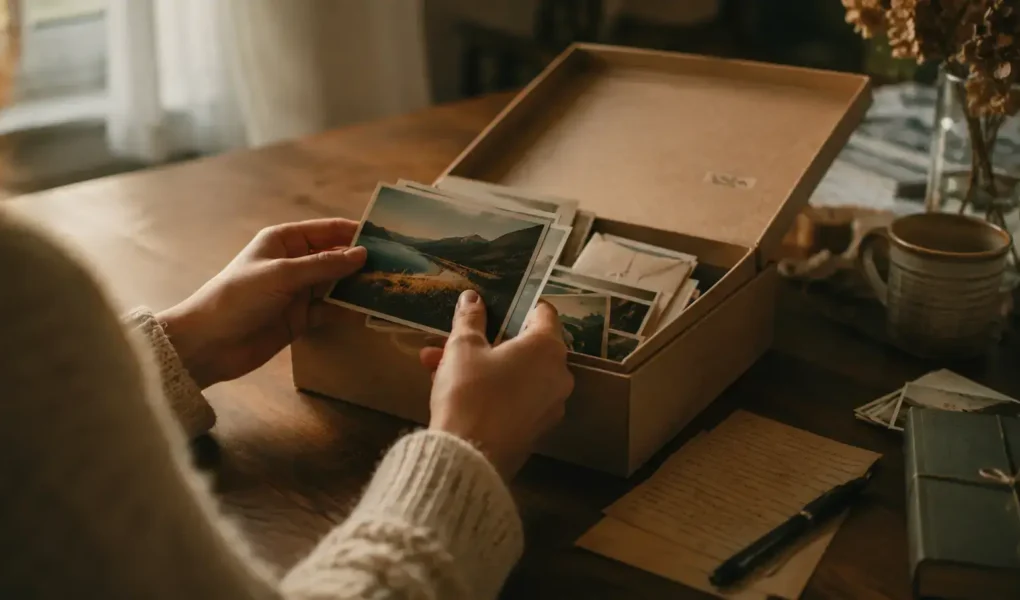
A drawer of old birthday cards. A box of childhood toys nobody plays with anymore. A sweater that belonged to someone you loved. Sentimental items sit in a strange category, not quite useful, not quite disposable, and deciding what to do with them rarely feels as simple as a normal decluttering task. So is it a yes or no to keeping sentimental items? Here is what you need to know.
Why Are Sentimental Items So Hard to Part With?
Sentimental items carry weight that goes beyond their practical use, tying directly into memory, identity, and relationships. That’s not a character flaw; it’s a well-documented part of how people process meaning. According to research published in the Journal of Personality and Social Psychology, nostalgia genuinely bolsters a person’s sense of meaning in life, partly by strengthening feelings of social connectedness. Sentimental objects are one of the most common triggers for that kind of reflection, which is part of why letting go of them can feel like more than just decluttering. More home breakdowns like this one are at YesVsNo.net.
A Simple Way to Sort Through Sentimental Items
Not every sentimental item calls for the same decision, and a little structure makes the process less overwhelming.
| Situation | Approach | Note |
| Item brings genuine joy or connection when you see it | Keep | Display it or store it somewhere you’ll actually revisit |
| Item kept mostly out of guilt or obligation | Consider letting go | Photograph it first if you want a record without the object |
| Duplicate or overlapping keepsakes | Curate to favorites | Digitize the rest rather than keeping every single one |
| Item tied to a significant loss | No fixed timeline | Decide in your own time; there’s no universal ‘should’ here |
Benefits of Keeping Sentimental Items
Keeping a thoughtful set of sentimental items serves a real purpose beyond just holding onto stuff. Here is where it genuinely helps.
It Preserves Real Emotional Connection
A curated set of genuinely meaningful items keeps you connected to memories, relationships, and milestones in a way that’s hard to replicate through memory alone.
A Memory Box Keeps Sentiment From Becoming Clutter
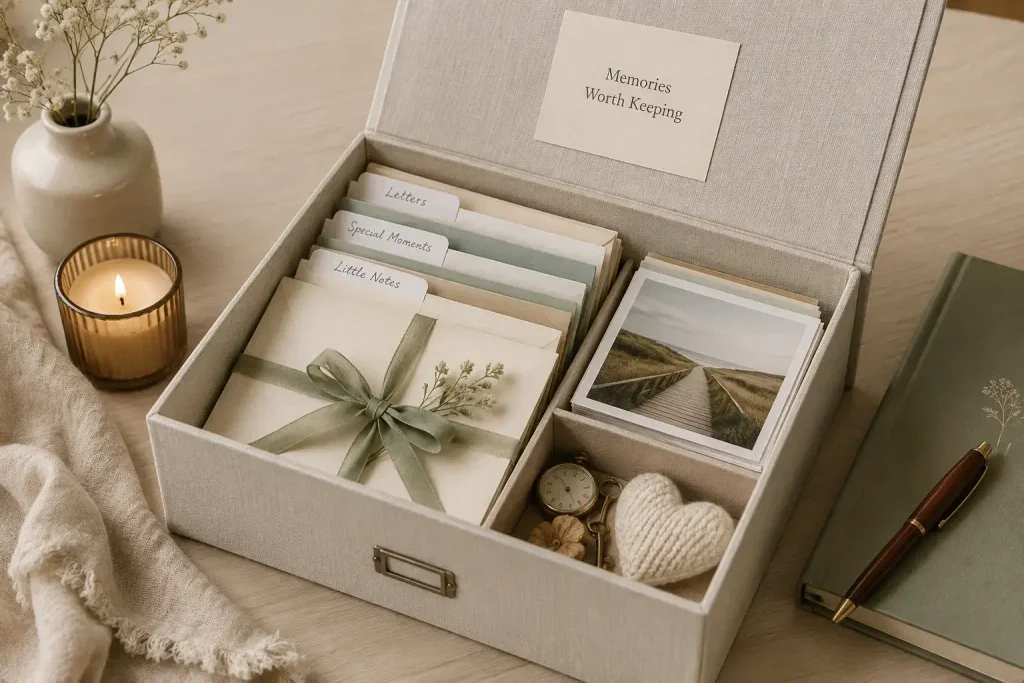
Designating a specific box or small display area for sentimental items lets you honor them intentionally, without letting them spread across every drawer and closet in the house.
Digitizing Preserves the Memory Without the Physical Object
Scanning photos, letters, or a child’s artwork keeps the memory itself intact even after the physical version is gone, which can make letting go of the object feel far less final.
Concerns and Downsides
Keeping sentimental items isn’t automatically the right call for everything, and it’s worth being honest about where it backfires. Here is what to watch for.
Keeping Everything Indiscriminately Creates Real Clutter
When every item gets labeled sentimental regardless of how much it actually means to you, the collection grows unmanageable and becomes its own source of stress rather than comfort.
Guilt Is a Different Reason to Keep Something Than Attachment
Holding onto a gift you never liked, or an item tied to a sense of obligation rather than genuine feeling, can keep you tied to something that isn’t actually serving you.
So Is It a Yes or No to Keeping Sentimental Items?
The verdict: YES for the items that genuinely matter to you, but not everything needs to be kept just because it’s tied to a memory.
The conditions: keep the items that bring real connection or joy when you see them, and consider photographing or digitizing the rest before letting them go. Guilt is worth separating from genuine attachment; an item kept mostly out of obligation rarely serves you the way a truly cherished one does. Items tied to a significant loss deserve their own timeline, and there’s no universal rule for how long is too long to hold onto something like that.
How to Decide What to Keep
A little structure makes sorting through sentimental items feel more manageable.
- Handle each item individually and notice your genuine reaction, rather than sorting by category alone.
- Set aside items you’re unsure about rather than forcing an immediate decision on everything at once.
- Photograph or scan items you’re on the fence about before deciding whether to keep the physical object.
- Designate a specific, limited space, like one box or shelf, for the items you do keep.
- Give yourself permission to take breaks; sorting through meaningful items doesn’t have to happen in one sitting.
A Note on Items Tied to Loss
Sentimental items connected to the death of a loved one deserve a different pace than ordinary decluttering. There is no required timeline, and no specific number of items you’re supposed to keep or let go of. Consulting a grief counselor or therapist can help if sorting through these particular items feels overwhelming, and that’s a reasonable step to take rather than something to push through alone.
Who Might Want to Approach This Differently
Sorting through sentimental items works differently depending on the situation.
- Anyone processing a recent loss, who should take this at their own pace without any external pressure
- People with limited storage space, who may benefit from prioritizing digitization over keeping physical items
- Households merging belongings, like moving in together, where sentimental items from both sides need thoughtful, mutual decisions
- Anyone who notices sentimental clutter is genuinely affecting daily life or causing ongoing distress, who may benefit from talking to a professional organizer or therapist
Alternatives
Keeping or discarding isn’t the only choice available for sentimental items.
For the broader decluttering process beyond sentimental items specifically, Minimalist Living: How to Declutter Your Home in 5 Easy Steps covers the practical steps in more detail.
If sentimental clutter is part of a bigger question about how you process and hold onto memories, Yes or No to Daily Journaling looks at a different way to preserve what matters without keeping every physical object.
Still on the fence? Try our Yes or No Generator for an instant answer.
Still not sure where you land on this? If it’s a bigger decision than a quick yes or no, The Big Decision Workbook walks you through a full framework to think it through properly.
🧭 Get the Decision Workbook — $19FAQ
Here are the questions people ask most often about keeping sentimental items.
Should I keep sentimental items?
Yes, for items that genuinely bring you a sense of connection or meaning, keeping a curated set is a healthy way to preserve memories. The concern is keeping everything indiscriminately, which can turn into overwhelming clutter.
How do I let go of sentimental items without guilt?
Photographing an item before letting it go preserves the memory without keeping the physical object. It also helps to separate genuine attachment from a sense of obligation.
How many sentimental items should I keep?
There’s no fixed number, and it depends on your available space and what genuinely matters to you. A small, curated collection you actually see and enjoy tends to hold more meaning than a large volume stored away.
What should I do with sentimental items I don’t have room for?
Digitizing photos, letters, or artwork preserves the memory even after letting go of the physical item. For larger keepsakes, passing them to a family member who would treasure them can feel better than simply discarding them.
Is it okay to get rid of gifts I don’t like?
Yes. Keeping a gift purely out of guilt ties you to something that isn’t actually serving you. The sentiment behind a gift usually lives in the relationship and the gesture, not in holding onto the object indefinitely.
Conclusion
So is it a yes or no to keeping sentimental items? Yes, for the items that genuinely hold meaning for you, and no to keeping everything simply because it’s tied to a memory. A curated collection, backed up by photos where it makes sense, preserves what actually matters without letting sentiment turn into clutter. Give yourself permission to go at your own pace, especially with items tied to real loss.
Still not sure where you land on this? If it’s a bigger decision than a quick yes or no, The Big Decision Workbook walks you through a full framework to think it through properly.
🧭 Get the Decision Workbook — $19