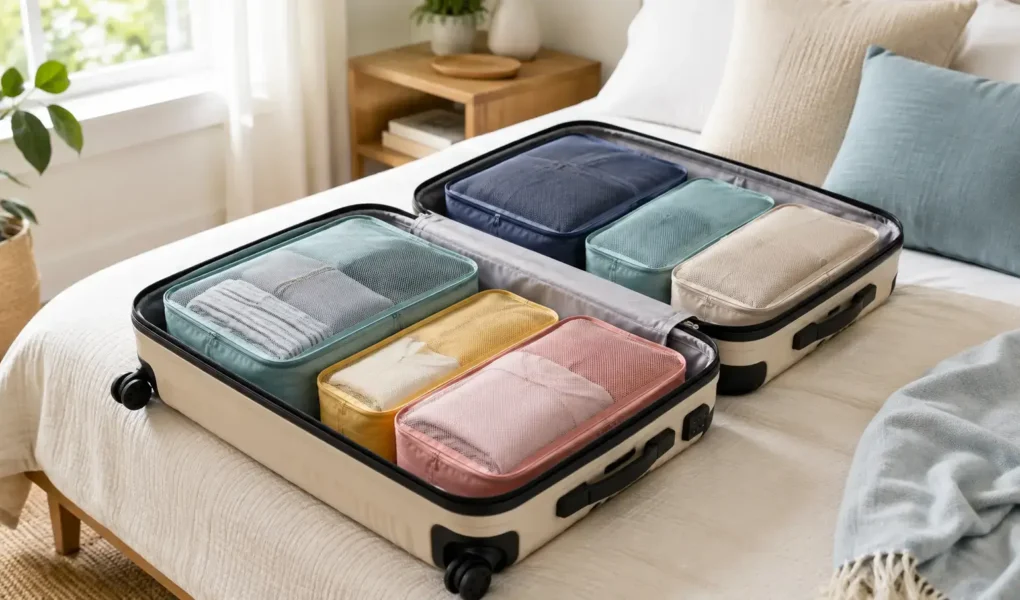
Packing cubes have gone from a niche travel hack to something everyone seems to own, but not everyone agrees they’re worth the extra items in your bag. So is it a yes or no to packing cubes for travel? Here is what you need to know.
What Do Packing Cubes Actually Do?
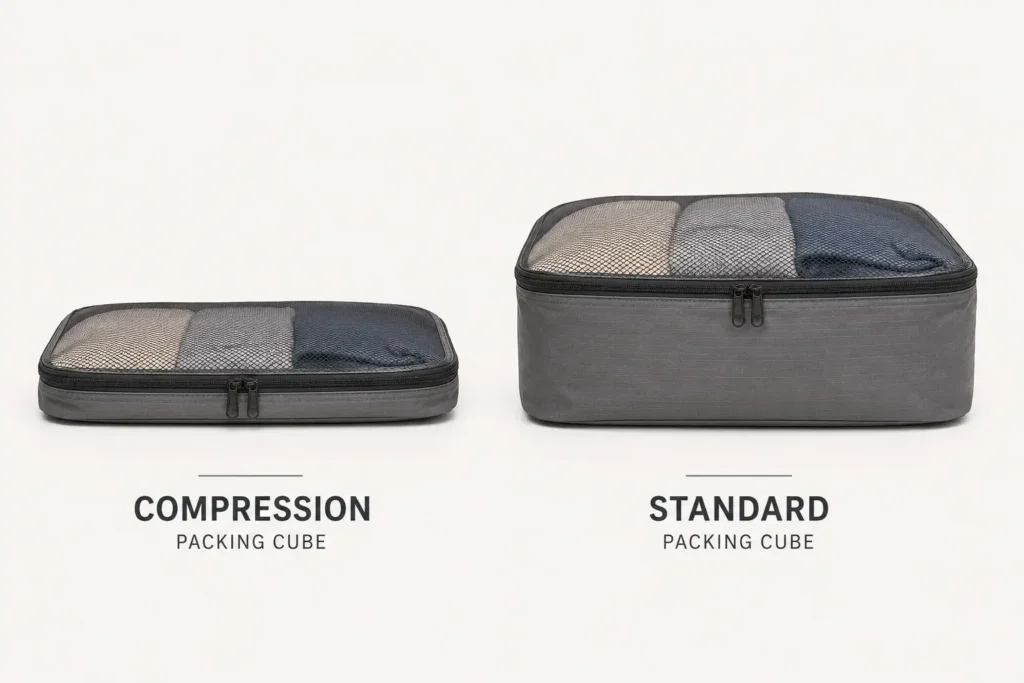
Packing cubes are small, zippered fabric pouches that sort clothing into separate compartments inside a suitcase, and compression versions can also squeeze out excess air to reduce how much space clothes take up. According to Consumer Reports, the best packing cubes make it easier to fit everything you need for a trip while keeping items organized and easy to access without unpacking your whole bag, which is really the two-part appeal: more space, and less digging around to find things. More travel breakdowns like this one are at YesVsNo.net.
Which Type of Packing Cube Fits Your Trip?
Not all packing cubes serve the same purpose, and picking the wrong type can leave you disappointed either way.
| Type | Best For | Tradeoff |
| Standard cubes | Organization, keeping outfits separate | Some space savings, but not the maximum possible |
| Compression cubes | Fitting the most into a carry-on | Can tempt you into overpacking past a comfortable weight |
| Mesh or see-through cubes | Finding items quickly without unpacking everything | Slightly less compression than solid fabric |
| Multi-size sets | Family trips or longer trips | More pieces to keep track of and wash |
Benefits of Packing Cubes for Travel
For most travelers, packing cubes solve real, everyday packing frustrations. Here is where they earn their popularity.
They Can Genuinely Save Space
Compression cubes squeeze out excess air, which can meaningfully reduce how much room clothing takes up, making it realistic to fit more into a carry-on-sized bag than packing loosely allows.
They Make Finding and Repacking Things Faster
Sorting clothes by category or by day means you can grab exactly what you need without digging through a jumbled suitcase, and repacking at each stop on a trip takes a fraction of the time.
They Simplify Packing for Families and Group Trips
Using a different color or labeled set of cubes per person keeps everyone’s belongings separate inside one shared suitcase, which cuts down on the number of separate bags a family trip would otherwise need.
Concerns and Downsides
Packing cubes aren’t a universal upgrade, and for some travelers they add more hassle than benefit. Here is where they fall short.
Compression Can Encourage Overpacking
Squeezing more clothing into the same space doesn’t change how much it actually weighs, so compression cubes can tempt travelers into packing past a bag’s comfortable or airline-compliant weight limit.
They Add Extra Items to Manage for Short Trips
For a quick weekend trip or minimalist packers who travel light already, cubes are one more thing to buy, wash, and keep track of, without much real benefit over simply rolling clothes directly into the bag.
So Is It a Yes or No to Packing Cubes for Travel?
The verdict: YES for most trips, but match the cube type to your actual packing style.
The conditions: compression cubes earn their keep on longer trips or carry-on-only travel where maximizing space genuinely matters, while standard cubes are enough if organization, not space savings, is your main goal. Families and multi-person trips benefit especially from color-coded or labeled sets. If you’re a minimalist packer or heading out for just a night or two, cubes are optional rather than essential, and skipping them is a perfectly reasonable choice.
How to Use Packing Cubes Effectively
A few habits make packing cubes actually pay off rather than becoming clutter.
- Sort clothing by category (tops, bottoms, underwear) or by day, whichever matches how you actually pack.
- Use compression cubes only for items you’re comfortable squeezing tightly, since delicate fabrics can wrinkle more under pressure.
- Place cubes upright in your suitcase rather than stacked flat, so you can see and access everything at a glance.
- Reserve one cube specifically for dirty laundry to keep it separate from clean clothes as the trip goes on.
- Weigh your packed bag before leaving if using compression cubes, since space saved doesn’t mean weight saved.
Who Might Not Need Packing Cubes
Packing cubes work well for most travelers, but a few packing styles don’t benefit as much.
- Minimalist packers already comfortable rolling clothes directly into a small bag
- Travelers on very short trips where the extra organization step isn’t worth the setup
- Anyone prone to overpacking, who may want to be cautious with compression cubes specifically
- Frequent light packers who already have a system that works well without added gear
Alternatives
Packing cubes are one way to make packing easier, but they’re not the only piece of trip prep worth thinking through.
If you’re still working out how much to plan before you even start packing, Yes or No to Planning Every Detail of Your Trip in Advance looks at that broader decision.
For trips where accommodation is the bigger question than what’s in your suitcase, Yes or No to All-Inclusive Resorts for Family Vacations covers a related travel-style decision.
If protecting the trip itself matters as much as what you pack, Yes or No to Travel Insurance for Short Trips is worth a look before you go.
Still on the fence? Try our Yes or No Generator for an instant answer.
Still not sure where you land on this? If it’s a bigger decision than a quick yes or no, The Big Decision Workbook walks you through a full framework to think it through properly.
🧭 Get the Decision Workbook — $19FAQ
Here are the questions travelers ask most often about packing cubes.
Are packing cubes worth it?
Yes, for most travelers, especially on trips longer than a few days or ones involving a carry-on-only strategy. They make packing faster, keep clothes organized, and can meaningfully reduce how much space clothing takes up.
How do you use packing cubes for travel?
Sort clothing by category or by day into separate cubes, and use compression cubes if you need to save the most space. Placing cubes upright rather than stacked flat makes it easier to access everything.
Can packing cubes save space in a carry-on?
Yes, particularly compression cubes, which squeeze out excess air and can noticeably reduce the volume clothing takes up. This doesn’t change the bag’s actual weight, which still matters for airline limits.
What size packing cubes do I need?
Most travelers do well with a set covering small, medium, and large sizes, using smaller cubes for items like underwear and larger ones for bulkier clothing. A multi-size set tends to be more flexible than uniform cubes.
Are compression packing cubes worth it?
For travelers trying to maximize carry-on space or pack for longer trips in a small bag, yes. The tradeoff is that compression makes it easier to overpack past a comfortable or compliant weight.
Conclusion
So is it a yes or no to packing cubes for travel? Yes, for most trips, especially longer ones or anything packed carry-on only, as long as you choose the type that matches your actual packing habits. Minimalist packers on short trips can reasonably skip them, but for most travelers, the extra organization and space savings are worth the small investment.
Still not sure where you land on this? If it’s a bigger decision than a quick yes or no, The Big Decision Workbook walks you through a full framework to think it through properly.
🧭 Get the Decision Workbook — $19