Buying travel insurance can feel like paying for a safety net you’ll probably never use. Setting that money aside yourself, or trusting the coverage that came free with your credit card, seems like the smarter move on paper. So is it a yes or no to self-insuring instead of buying travel insurance? Here is what you need to know.
What Does Self-Insuring for Travel Actually Mean?
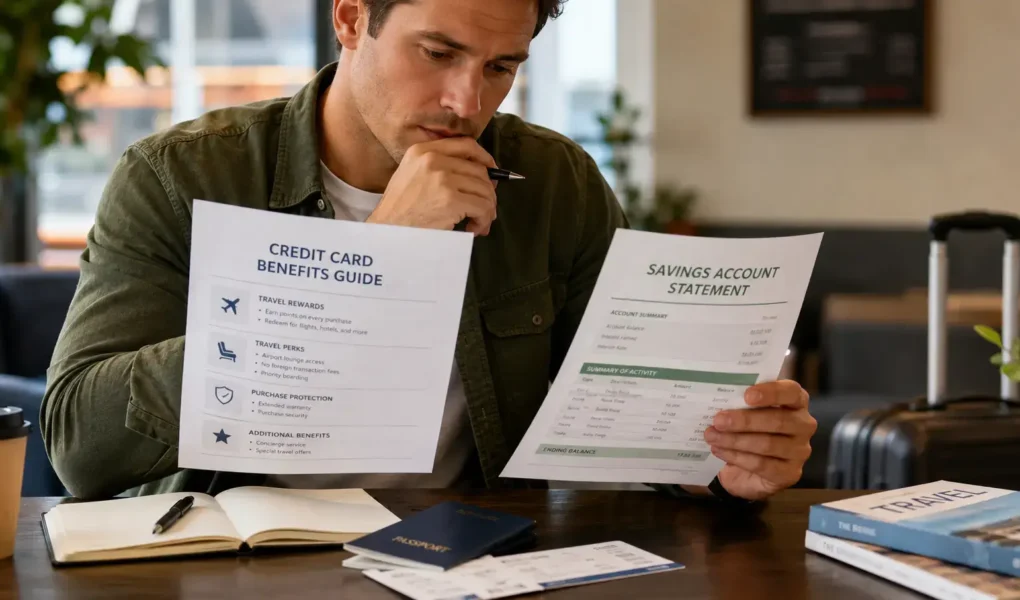
Self-insuring means skipping a dedicated travel insurance policy and instead relying on your own savings, existing health insurance, or the travel benefits already included with a credit card to cover anything that goes wrong. It’s a real strategy, not just skipping insurance carelessly, but the numbers matter more than the concept. According to U.S. News, credit card travel coverage typically excludes pre-existing medical conditions and often limits emergency evacuation coverage to a set number of days per trip, gaps that are easy to overlook until you actually need to file a claim. More travel breakdowns like this one are at YesVsNo.net.
When Does Self-Insuring Actually Make Sense?
The right answer depends heavily on your trip type and your actual ability to absorb a worst-case cost.
| Scenario | Self-Insuring Viable? | Why |
| Short, low-cost, fully refundable domestic trip | Yes | Financial risk is small either way |
| International trip, cruise, or remote/adventure destination | No | Medical evacuation alone can exceed $100,000 |
| Traveler with a large emergency fund and no dependents relying on it | Sometimes | Can genuinely absorb worst-case costs |
| Traveler relying only on credit card coverage | Risky | Real gaps around medical evacuation and pre-existing conditions |
Benefits of Self-Insuring Instead of Buying Travel Insurance
For the right traveler and trip, skipping a dedicated policy is a genuinely reasonable choice. Here is where it holds up.
It Can Work for Travelers With Real Financial Cushion
If you have enough savings to comfortably absorb a worst-case cost, including a serious medical emergency, without meaningful financial strain, self-insuring is a legitimate strategy rather than a gamble.
Credit Cards Already Include Some Real Coverage
Many premium cards include genuine trip cancellation, delay, and baggage protection at no extra cost, which means part of your self-insurance strategy may already be paid for through an annual fee you’re covering anyway.
It’s Reasonable for Short, Low-Cost, Refundable Trips
A weekend domestic trip with flexible bookings carries a small enough financial downside that self-insuring, or simply accepting the risk, is a sensible choice rather than an unnecessary gamble.
Concerns and Downsides
The risks here are more severe than they first appear, and the evidence on this is unusually consistent across sources. Here is where self-insuring falls short.
Medical Evacuation Costs Can Exceed What Most People Can Absorb
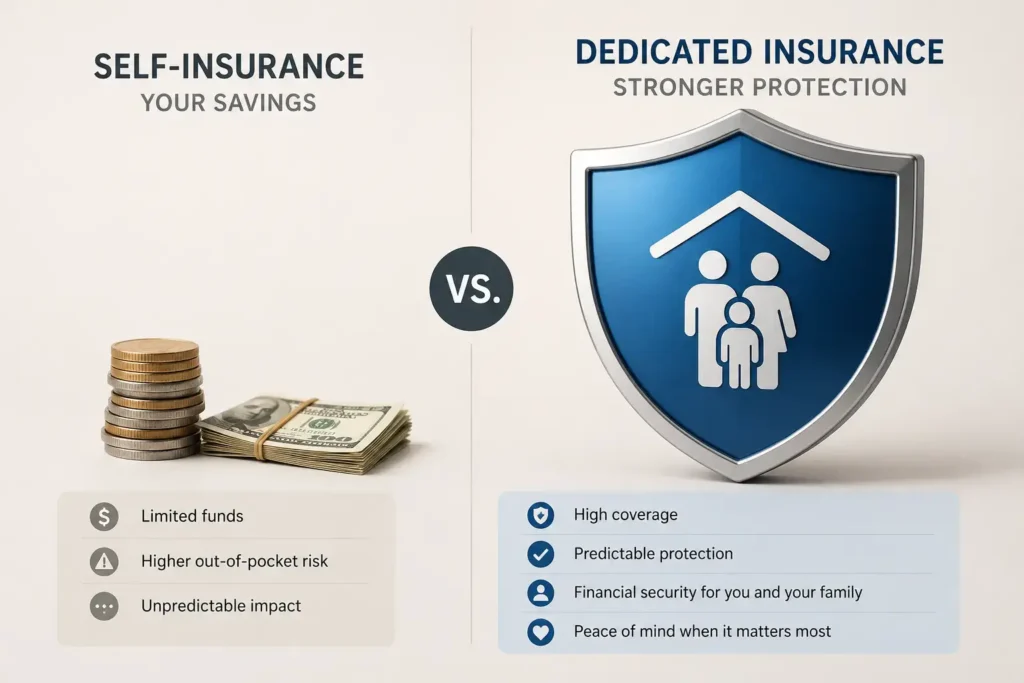
Emergency medical evacuation abroad can run well over 100,000 dollars, and even travelers with meaningful savings could find that amount genuinely devastating, especially combined with the medical costs themselves.
Credit Card Coverage Has Real, Well-Documented Gaps
Multiple independent reviews consistently find that credit card travel coverage excludes or severely limits pre-existing conditions, adventure activities, and emergency medical expenses, with evacuation coverage capped far below what dedicated policies offer.
So Is It a Yes or No to Self-Insuring Instead of Buying Travel Insurance?
The verdict: DEPENDS, mainly on how much you could genuinely afford to lose and where you’re actually traveling.
The conditions: self-insuring holds up reasonably well for short, low-cost, fully refundable domestic trips, and for travelers with a real financial cushion who understand exactly what their existing coverage does and doesn’t include. It becomes genuinely risky for international travel, cruises, remote destinations, or adventure activities, where a medical evacuation alone could exceed what most people could comfortably absorb. Relying on credit card coverage alone for a higher-risk trip is the riskiest version of this strategy, given how consistently its gaps show up across independent reviews.
How to Decide If Self-Insuring Is Right for Your Trip
A few concrete steps make this decision less about gut feeling and more about actual numbers.
- Check your credit card’s benefits guide directly for medical evacuation limits and exclusions, rather than assuming coverage exists.
- Estimate your trip’s full non-refundable cost plus a realistic medical emergency buffer, especially for international travel.
- Honestly assess whether losing that full amount would cause real financial strain, not just inconvenience.
- For international, remote, or adventure travel, treat a dedicated policy as the default rather than the exception.
- If self-insuring, set the funds aside specifically for travel risk rather than counting on a general emergency fund already earmarked for other things.
Who Should Buy a Dedicated Policy Instead
Self-insuring isn’t the right fit for every traveler, and a few situations call for standalone coverage instead.
- Anyone traveling internationally, on a cruise, or to a remote destination where medical evacuation costs could be catastrophic
- Travelers without enough savings to comfortably absorb a five- or six-figure emergency cost
- Anyone with a pre-existing medical condition, which credit card coverage typically excludes or limits significantly
- Adventure travelers planning activities like scuba diving, skiing, or mountaineering, which most credit card policies exclude
Alternatives
Self-insuring is one option among several when weighing how to protect a trip.
If a shorter trip is what you’re actually planning, Yes or No to Travel Insurance for Short Trips looks specifically at that lower-stakes scenario.
For the broader risks of skipping coverage altogether, Yes or No to Planning Every Detail of Your Trip in Advance looks at another way travelers try to manage risk before a trip.
Still on the fence? Try our Yes or No Generator for an instant answer.
Still not sure where you land on this? If it’s a bigger decision than a quick yes or no, The Big Decision Workbook walks you through a full framework to think it through properly.
🧭 Get the Decision Workbook — $19FAQ
Here are the questions travelers ask most often about self-insuring instead of buying a policy.
Is self-insuring for travel worth it?
It depends on your trip and your finances. For short, low-cost, refundable domestic trips, self-insuring is usually reasonable. For international travel, cruises, or remote destinations, the risk of a six-figure medical evacuation bill makes it a lot riskier than it first appears.
What are the risks of not buying travel insurance?
The biggest risk is medical, since emergency evacuation abroad can cost well over 100,000 dollars, an amount few self-insured travelers could comfortably absorb. Trip cancellation and lost luggage are lower-stakes risks self-insuring handles more reasonably.
Can credit card travel insurance replace a standalone policy?
Rarely for higher-risk trips. Most credit card coverage excludes or severely limits emergency medical expenses, evacuation, and pre-existing conditions, often applying only for a limited number of days per trip.
How much money should I set aside to self-insure a trip?
There’s no fixed number, but it should cover the trip’s full non-refundable cost plus a meaningful buffer for a medical emergency, realistically tens of thousands of dollars for international travel.
When is travel insurance not necessary?
For short, inexpensive, fully refundable trips close to home, the potential loss from skipping insurance is often small enough that self-insuring is reasonable. As trip cost and distance increase, the case for a policy gets much stronger.
Conclusion
So is it a yes or no to self-insuring instead of buying travel insurance? It depends, and the honest answer hinges on real numbers rather than a gut feeling about your own luck. Short, cheap, refundable trips can reasonably go without dedicated coverage. International travel, cruises, and remote or adventure destinations carry a level of financial risk that self-insuring rarely covers as well as people assume. Check what your credit card actually offers, be honest about what you could absorb, and let those numbers make the call.
Still not sure where you land on this? If it’s a bigger decision than a quick yes or no, The Big Decision Workbook walks you through a full framework to think it through properly.
🧭 Get the Decision Workbook — $19