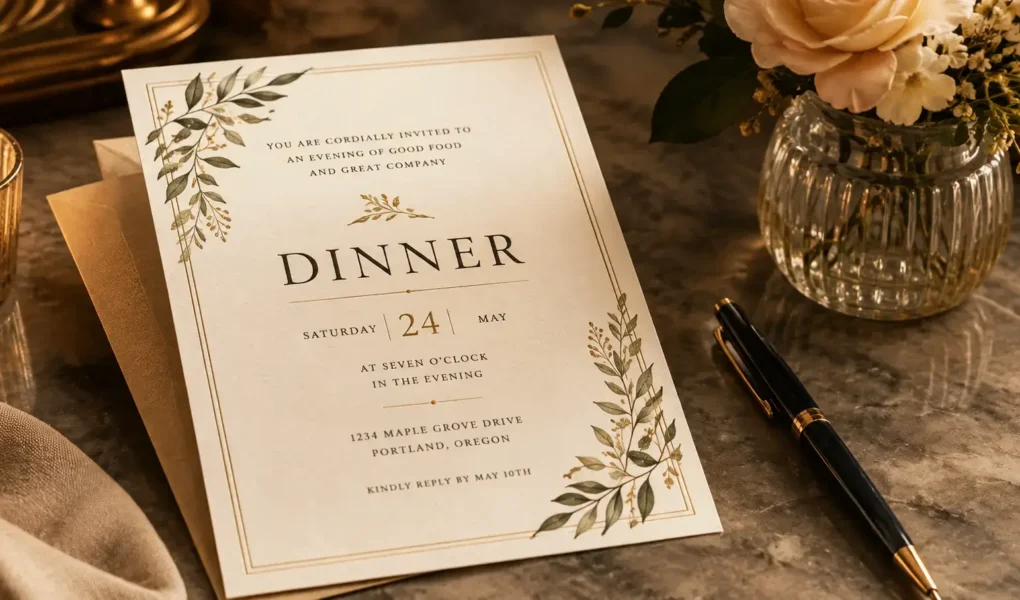
A group text with the date and time works fine for most get-togethers. But somewhere between that text and a formal engraved card, there’s a real decision about how much ceremony your dinner party actually needs. So is it a yes or no to sending formal dinner party invitations? Here is what you need to know.
What Makes an Invitation Formal?
A formal invitation typically includes the host’s name, the occasion, the date, time, and location spelled out clearly, any dress code, and a specific RSVP request, delivered through a printed card or a carefully formatted digital invitation rather than a quick text. According to the Emily Post Institute, invitations don’t just announce an event, they set guest expectations and cue attire, so the formality of the invitation should match the formality of the event itself. A casual invitation to a black-tie dinner sends the wrong signal just as easily as a stiff, formal card does for a relaxed weeknight gathering. More food and hosting breakdowns like this one are at YesVsNo.net.
Matching Invitation Formality to the Occasion
The type of gathering should drive the invitation choice, not the other way around.
| Occasion | Best Invitation Type | Why |
| Casual weeknight dinner with friends | Text or group chat | Fast, and matches the relaxed tone of the event |
| Milestone celebration (anniversary, birthday) | Formal digital or printed invite | Adds a sense of occasion a text can’t replicate |
| Holiday or extended family gathering | Formal invite with a clear RSVP | Reduces confusion across a larger, more varied guest list |
| Black-tie or business dinner | Printed formal invitation | Clearly signals dress code and formality upfront |
Benefits of Sending Formal Dinner Party Invitations
For the right occasion, a formal invitation genuinely improves the event before it even starts. Here is where it helps.
It Sets a Clear Tone Immediately
A formal invitation signals right away that the event calls for more than casual attendance, giving guests the context they need to show up appropriately dressed and mentally prepared for a more special occasion.
It Reduces Confusion About Key Details
A clearly formatted invitation with date, time, dress code, and RSVP instructions leaves far less room for miscommunication than a casual text, especially once a guest list grows beyond a handful of close friends.
It Adds a Sense of Occasion for Milestones
For anniversaries, honoring a guest, or other milestone dinners, a formal invitation communicates that the event matters in a way a group chat message simply can’t replicate.
Concerns and Downsides
Formality isn’t automatically the right call, and pushing it onto the wrong occasion can actually work against you. Here is where it backfires.
It Can Feel Stiff for Genuinely Casual Gatherings
Sending a formal invitation to close friends for a relaxed weeknight dinner can create unnecessary distance, making an easygoing event feel more like an obligation than a casual hangout.
Printed Invitations Take Real Time and Money
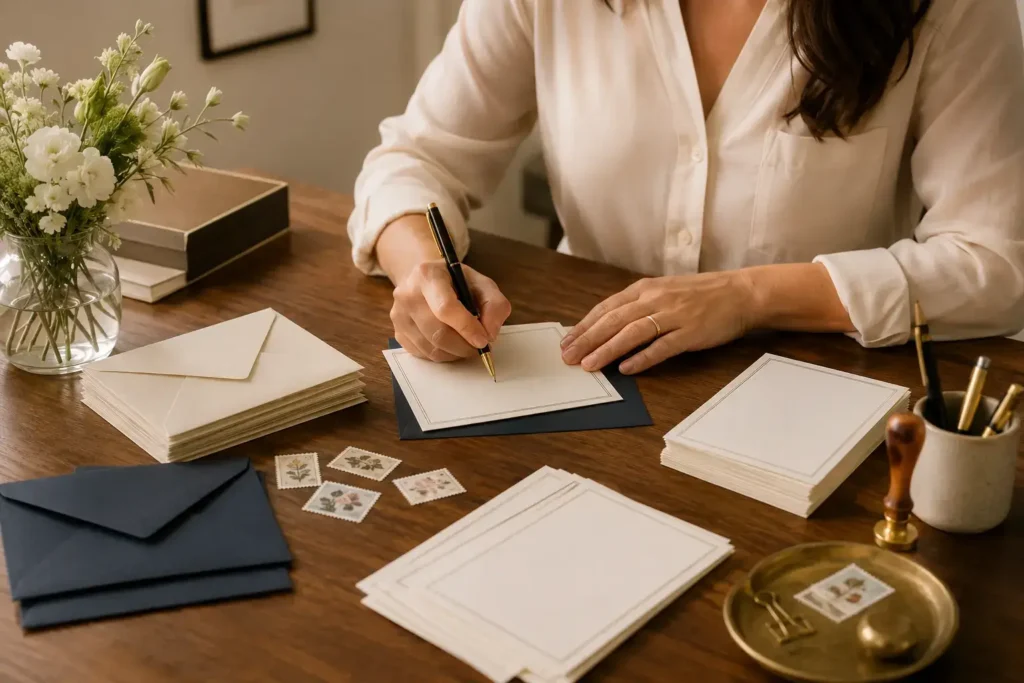
Mailed invitations require lead time for design, printing, and delivery, plus a real cost per guest, which isn’t practical for a spontaneous gathering or a dinner planned on short notice.
So Is It a Yes or No to Sending Formal Dinner Party Invitations?
The verdict: YES for the right occasion, but match the formality to the event and guest list.
The conditions: milestone celebrations, larger or more varied guest lists, and black-tie or business dinners genuinely benefit from formal invitations, whether printed or a well-formatted digital version. Casual, close-friend gatherings are usually better served by a simple text or group chat, since formality there can feel more distancing than welcoming. When in doubt, let the event itself, not personal preference alone, decide the level of formality.
How to Send a Formal Dinner Invitation
A few practical steps keep a formal invitation clear and properly timed.
- Include the host’s name, the occasion, date, time, and location spelled out clearly.
- Add a dress code if the event calls for one, so guests aren’t guessing.
- Send formal invitations three to four weeks in advance to give guests enough planning time.
- Include a specific RSVP deadline rather than leaving the response window open-ended.
- Choose a printed card for the most formal occasions, or a clean, well-formatted digital invitation for most other dinner parties.
Who Should Skip Formal Invitations
Formal invitations aren’t the right fit for every gathering, and a few situations call for a simpler approach.
- Close friends or family gathering casually, where a text or group chat fits the relationship better
- Spontaneous or last-minute dinners, where the lead time for printed invitations isn’t realistic
- Small, repeat gatherings among the same regular group, where formality can feel unnecessary each time
- Budget-conscious hosts planning a large event, where digital invitations achieve the same clarity without printing costs
Alternatives
A formal invitation is one way to set the tone for a dinner party, but it’s not the only piece of the planning worth thinking through.
If getting the house guest-ready is the bigger source of stress than the invitation itself, Yes or No to Minimalist Living looks at keeping a home easier to host in without a big pre-party scramble.
If a simpler weeknight version is more what you have in mind, Yes or No to One-Pot Pasta for Weeknight Dinners covers a more casual approach to hosting.
Still on the fence? Try our Yes or No Generator for an instant answer.
Still not sure where you land on this? If it’s a bigger decision than a quick yes or no, The Big Decision Workbook walks you through a full framework to think it through properly.
🧭 Get the Decision Workbook — $19FAQ
Here are the questions hosts ask most often about sending formal dinner party invitations.
What is considered a formal dinner invitation?
A formal dinner invitation typically includes the host’s name, the occasion, the date, time, location, dress code if relevant, and a clear RSVP request, delivered through a printed card or formatted digital invitation.
How do you create formal dinner party invitations?
Start with the essential details: who is hosting, the occasion, date, time, location, and RSVP instructions. Choose a design and format that matches the formality of the event.
When should you send out dinner party invitations?
For a formal dinner party, sending invitations three to four weeks in advance gives guests enough time to plan. Casual gatherings can work with much shorter notice, often just a week or two.
How do you word a formal dinner invitation?
Formal wording typically follows a set structure: the host’s name, a request like ‘requests the pleasure of your company,’ the occasion, the date and time spelled out, the location, and RSVP details.
Can formal dinner invitations be sent online?
Yes. A well-formatted digital invitation with the same essential details as a printed one can convey the same level of formality, especially when paired with a clear RSVP option.
Conclusion
So is it a yes or no to sending formal dinner party invitations? Yes, for the occasions that genuinely call for it, milestones, larger guest lists, and dressier events, but no for a casual dinner among close friends who’d rather just get a text. Match the invitation to the event, not the other way around, and the right level of formality tends to become obvious.
Still not sure where you land on this? If it’s a bigger decision than a quick yes or no, The Big Decision Workbook walks you through a full framework to think it through properly.
🧭 Get the Decision Workbook — $19