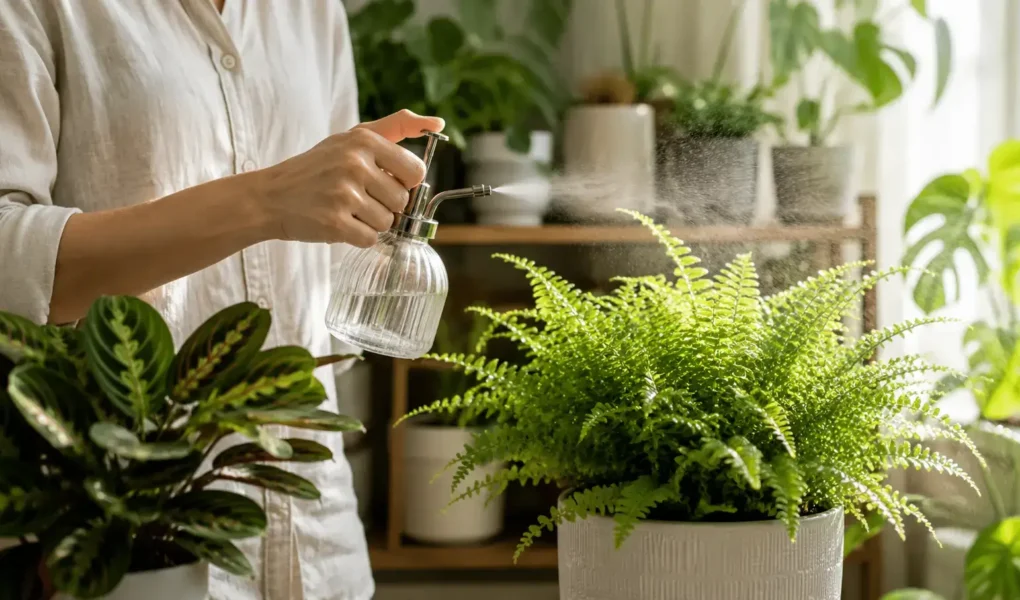
Misting is one of the most repeated pieces of houseplant advice out there, right up there with talking to your plants and rotating them toward the light. It’s also one of the most misunderstood. So is it a yes or no to misting your indoor plants? Here is what you need to know.
What Does Misting Actually Do?
Misting means lightly spraying water onto a plant’s leaves, usually with the goal of raising humidity around a plant that struggles in dry indoor air. It is not a substitute for watering the soil, and it does not deliver meaningful moisture to the roots. According to University of Maryland Extension, it is genuinely questionable whether misting plants actually raises humidity in any meaningful way, a finding echoed by extension programs at Iowa State, Nebraska, and Colorado State as well. That doesn’t mean misting is pointless, but it does mean it isn’t the humidity fix most people assume it is. More home breakdowns like this one are at YesVsNo.net.
Which Plants Actually Benefit From Misting?
Plant type is the single biggest factor in whether misting makes sense at all.
| Plant Type | Mist It? | Why |
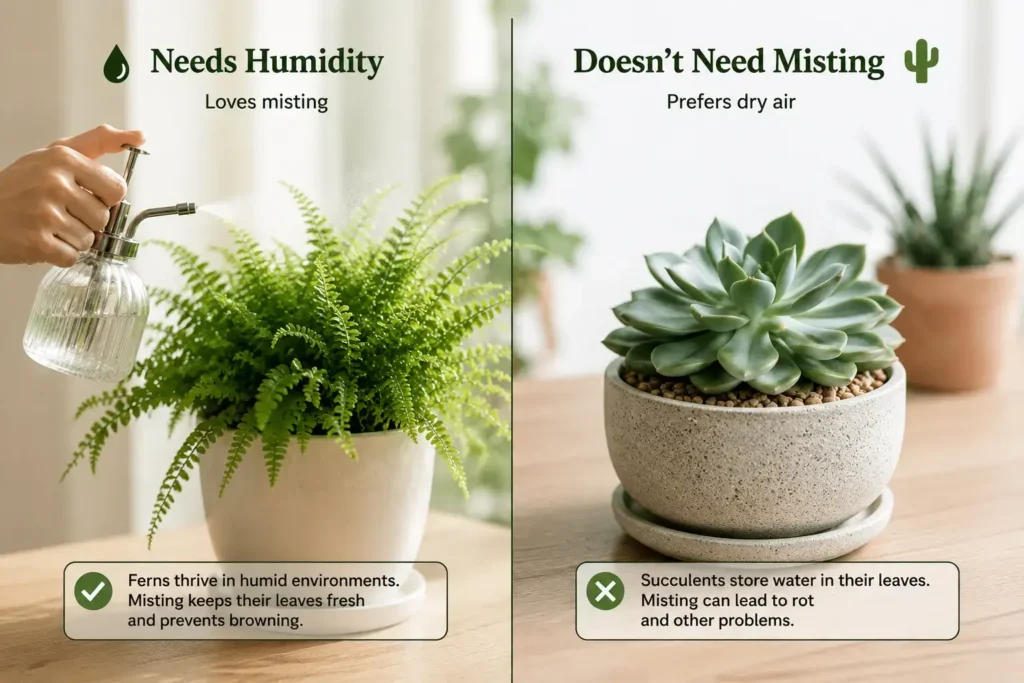
| Ferns, calatheas, prayer plants | Occasional light misting is fine | Enjoy brief leaf moisture, even though the humidity boost is short-lived |
| Orchids | Light misting okay, avoid flowers | Native to humid environments, but roots and blooms need airflow too |
| Pothos, philodendron, monstera | Optional, mostly cosmetic | Adapt well to normal home humidity regardless of misting |
| Succulents, cacti, snake plants, ZZ plants | Skip entirely | Adapted to dry conditions; excess moisture invites rot |
| Fuzzy-leaved plants (African violets) | Never mist | Water trapped in leaf hairs promotes fungal disease |
Common Misting Problems and How to Fix Them
Most misting complaints trace back to a small handful of causes, each with a simple fix.
| Problem | Likely Cause | Fix |
| Brown or black spots on leaves | Mineral buildup from hard tap water, or fungal disease from leaves staying wet overnight | Switch to filtered or distilled water; mist only in the morning |
| Powdery mildew or fungal spots | Leaves staying wet in a room with poor air circulation | Mist mornings only, improve airflow, skip misting if humidity is already high |
| Fungus gnats appearing | Excess moisture in the soil or surrounding area | Avoid wetting soil when misting; let soil dry between waterings |
| No real improvement in plant health | Misting was being used as a humidity fix | Switch to a humidifier or pebble tray, which actually raise ambient humidity |
Benefits of Misting Your Indoor Plants
Misting isn’t the humidity fix its reputation suggests, but it isn’t useless either. Here is where it genuinely helps.
It Keeps Broad Leaves Clean and Dust-Free
Dust buildup on leaves can interfere with a plant’s ability to photosynthesize efficiently, and a light misting session helps rinse that away, which is a real, if modest, care benefit unrelated to humidity at all.
It Gives a Brief, Harmless Moisture Boost to the Right Plants
For tropical, humidity-loving plants like ferns and calatheas, a light morning misting provides a short-lived moment of leaf moisture that these plants tolerate well, even though the effect fades within minutes rather than lasting all day.
It Builds a Routine Check-In With Your Plants
Misting regularly gives you a reason to get close to each plant and actually look at the leaves, which makes it easier to catch early signs of pests or disease before they become bigger problems.
Concerns and Downsides
The research here is unusually consistent, and it’s worth taking seriously rather than dismissing as just one opinion. Here is where misting falls short or backfires.
It Doesn’t Meaningfully Raise Humidity
The humidity increase from a single misting session evaporates within minutes, and university research consistently finds that even daily misting does little to change the overall humidity level around a plant in any lasting way.
It Can Promote Fungal Disease
Water sitting on leaves for extended periods, especially overnight or in a room with poor air circulation, creates ideal conditions for fungal leaf spot disease, which is a real risk that misting mishandled can actively cause.
So Is It a Yes or No to Misting Your Indoor Plants?
The verdict: DEPENDS, it’s a fine light habit for the right plants, but it is not an effective humidity strategy.
The conditions: if you enjoy misting and your plants are humidity-loving tropicals like ferns, calatheas, or orchids, it’s a harmless habit as long as you mist in the morning and never let leaves stay wet overnight. Skip misting entirely for succulents, cacti, and fuzzy-leaved plants like African violets, since it can genuinely harm them. If raising actual humidity is your real goal, the research is consistent that a humidifier or grouping plants together on a pebble tray works far better than a spray bottle ever will.
How to Mist Correctly If You Choose To
If misting still appeals to you for the right plants, technique and timing make the difference between harmless and harmful.
- Mist only in the morning, so leaves have the full day to dry before nighttime, when damp leaves are most vulnerable to fungal disease.
- Use a fine mist setting and apply a light coating rather than soaking the leaves until they drip.
- Use filtered or distilled water if you notice white or crusty mineral spots forming after misting with tap water.
- Avoid wetting the soil directly when misting, which can contribute to fungus gnats and overwatering.
- Skip misting entirely if you notice any signs of leaf spot disease, mold, or pest activity already present.
Who Should Skip Misting Entirely
For a few plant types, misting does more harm than good regardless of technique.
- Succulents and cacti, which are adapted to dry conditions and can develop rot from excess surface moisture
- Fuzzy-leaved plants like African violets, where water trapped in leaf hairs promotes fungal disease
- Any plant already showing signs of leaf spot, mold, or fungal infection
- Plants kept in rooms with poor air circulation, where wet leaves are slower to dry and more vulnerable to disease
Alternatives
If real humidity is the goal, a few other methods are far more effective than a spray bottle.
A humidifier is the most reliable option, since it raises and holds ambient humidity in a way misting simply cannot. Grouping several humidity-loving plants together also helps, since the collective moisture they release through transpiration modestly raises the humidity in that specific area.
If plant care is becoming just one more thing on a long mental checklist, Yes or No to Morning Routines looks at building sustainable habits without the pressure of doing everything perfectly.
For anyone tracking what actually works for each plant over time, Yes or No to Daily Journaling covers a low-effort way to notice patterns, whether that’s watering schedules or which plants respond to misting.
If a growing plant collection is starting to feel like clutter rather than calm, Yes or No to Minimalist Living and Yes or No to Minimalism for Families both look at scaling back to what you actually use and enjoy.
Still on the fence? Try our Yes or No Generator for an instant answer.
Still not sure where you land on this? If it’s a bigger decision than a quick yes or no, The Big Decision Workbook walks you through a full framework to think it through properly.
🧭 Get the Decision Workbook — $19FAQ
Here are the questions plant owners ask most often about misting.
How often should I mist my indoor plants?
If you choose to mist, two to three times a week in the morning is a reasonable routine for humidity-loving plants. Misting more often won’t meaningfully raise humidity, since the effect only lasts a few minutes.
Does misting indoor plants actually increase humidity?
Not in any lasting way. University extension research consistently finds the humidity boost from misting evaporates within minutes, meaning you’d need to mist nearly continuously to meaningfully raise humidity.
Can misting harm indoor plants?
It can, mainly by promoting fungal leaf spot disease when leaves stay wet too long. Succulents, cacti, and fuzzy-leaved plants like African violets are particularly vulnerable and generally shouldn’t be misted at all.
What types of plants benefit from misting?
Tropical, humidity-loving plants like ferns, calatheas, and prayer plants tolerate occasional misting well. Desert-adapted plants like succulents and cacti do not benefit and should be skipped entirely.
Should I use tap water or distilled water to mist plants?
Distilled or filtered water avoids the mineral spots that hard tap water can leave behind after it evaporates. Tap water isn’t harmful to the plant itself, but switching water sources usually resolves visible spotting.
Conclusion
So is it a yes or no to misting your indoor plants? It depends, mostly on which plant you’re asking about and what you’re actually hoping misting will accomplish. As a light, occasional habit for the right humidity-loving plants, it’s harmless and even mildly beneficial. As an actual humidity strategy, the research is clear that it falls short, and a humidifier or pebble tray will do the job far better.
Still not sure where you land on this? If it’s a bigger decision than a quick yes or no, The Big Decision Workbook walks you through a full framework to think it through properly.
🧭 Get the Decision Workbook — $19