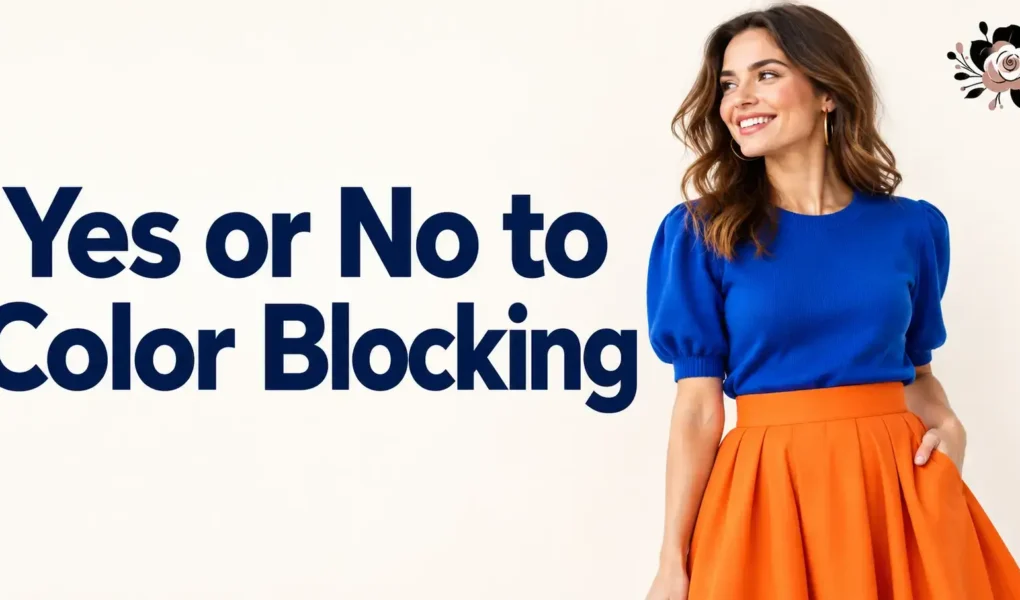
Runways keep swinging back to it every few years: bold, solid blocks of contrasting color worn together with zero blending. Fashion editors call it the season’s loudest trend. Plenty of regular closets call it a risk not worth taking.
Both reactions make sense, because color blocking really does split people, it either reads as confident and put together or as a mismatched accident, depending entirely on how it’s done. If you’re weighing this against other style decisions, YesVsNo.net runs the same honest breakdown on plenty of other habits. So is it a yes or no to color blocking? Here is what you need to know.
What Is Color Blocking?
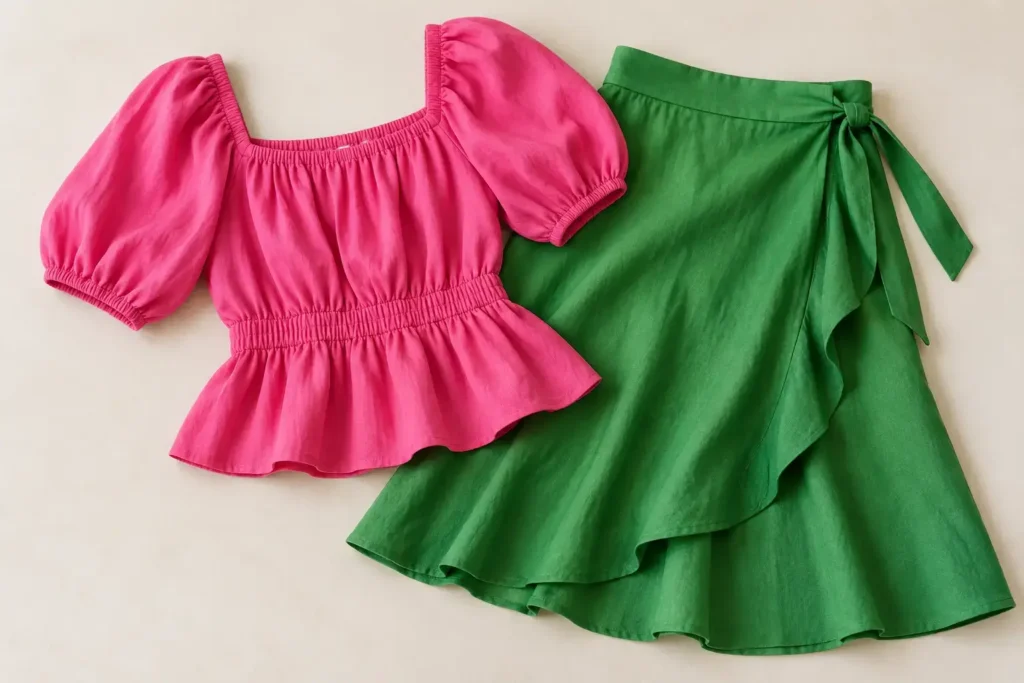
Color blocking is the deliberate pairing of solid, contrasting colors in one outfit, usually two or three bold shades worn in distinct sections rather than blended or patterned together. It often leans on complementary or high-contrast color pairs, like blue and orange or pink and green. L’Officiel USA’s coverage of the trend’s return to the runway describes designers like Marni, Prada, and Maison Margiela building entire Fall/Winter 2026 collections around it as minimalism gives way to bolder color choices.
Benefits of Color Blocking
Done well, color blocking earns its popularity. Here’s where it actually works:
It Makes an Outfit Instantly Memorable
Bold, contrasting color is one of the fastest ways to make an outfit stand out without relying on prints, logos, or statement accessories. A well-chosen color pairing does the work on its own.
It Simplifies Outfit Building
Once you commit to a color pairing, you’re not hunting for patterns that match or textures that coordinate. Solid, contrasting pieces are often easier to shop for and combine than a busy, mixed-print look.
It Can Genuinely Flatter Your Shape
Placing a lighter or brighter color strategically, like on top if you want to draw attention upward, can create real visual balance, the same principle stylists use with any strong contrast in an outfit.
It Works Across Seasons and Budgets
Color blocking doesn’t require expensive pieces or trend-specific shopping. Items you likely already own in solid, contrasting colors can often be recombined into a color-blocked look with no new purchases.
Concerns and Where Color Blocking Falls Short
It’s not a foolproof formula, though. A few real limitations are worth knowing:
It Can Read as Mismatched Instead of Intentional
The line between bold and clashing is thin. Without some planning around undertones and proportions, a color-blocked outfit can look like an accident rather than a styling choice.
It’s Not Always Appropriate for Every Setting
Conservative workplaces, formal events, and certain cultural or professional dress codes don’t always leave room for high-contrast color pairing, no matter how well it’s executed.
So Is It a Yes or No to Color Blocking?
The verdict: it depends. Here is how to decide.
Color blocking is worth trying if you’re comfortable standing out and have a setting, work, weekend, events, where bold color reads as styled rather than distracting. It’s a weaker fit for strict dress codes or if you’d rather ease into bold color with one accent piece first. Start with two colors you already own in solid pieces before buying anything new built specifically for the look.
How to Try Color Blocking the Right Way
- Start with two colors rather than three to keep the look controlled while you get a feel for it.
- Pick colors with similar intensity or saturation so neither piece visually overpowers the other.
- Keep silhouettes simple. Let the color do the work instead of pairing bold color with a busy cut.
- Anchor the look with one neutral piece, like shoes or a bag, if the full pairing feels like too much at first.
- Photograph the outfit before wearing it out. Color combinations often read differently in photos than in a mirror.
Who Should Avoid It
- Anyone with a strict workplace or event dress code that calls for neutral or muted tones
- People who feel most comfortable in colors that blend rather than contrast sharply
- Anyone newer to bold color who hasn’t tried a single statement piece yet
- Situations where the outfit needs to photograph or read consistently under mixed lighting, like certain professional settings
Alternatives
If full color blocking feels like too big a leap, a few other approaches ease into bold color more gradually.
If you’d rather start with one bold accessory instead of a full outfit, Yes or No to Mixing Gold and Silver Jewelry covers a smaller-scale version of the same mix-and-contrast decision.
When the question is really about which styling rules are worth following at all, Yes or No to Choosing Glasses by Face Shape takes on a different version of the same tension.
For a lower-risk way to stand out without full contrast, Yes or No to Dressing for Your Body Type covers building an outfit around fit and proportion instead of color.
Still on the fence? Try our Yes or No Generator for an instant answer, or use the Decision Wheel if you’re torn between two color pairings.
Still not sure where you land on this? If it’s a bigger decision than a quick yes or no, The Big Decision Workbook walks you through a full framework to think it through properly.
🧭 Get the Decision Workbook — $19FAQ
How do you style color blocking?
Start with two solid, contrasting colors of similar intensity, keep the silhouette simple, and let the color pairing carry the look instead of adding patterns or extra accessories on top of it.
What colors work well for color blocking?
Complementary pairs like blue and orange, or pink and green, tend to work well, along with high-contrast pairs like black and a single bright color. Matching saturation levels between the two colors usually looks more intentional than mixing a bright shade with a muted one.
Is color blocking still in style?
Yes. It resurfaces regularly on the runway and did so again heading into Fall/Winter 2026, with several major designers building collections around bold color pairing as a shift away from minimalism.
What are the best color combinations for color blocking?
Complementary color pairs from opposite sides of the color wheel, like red and green or purple and yellow, tend to create the strongest visual contrast, though plenty of color-blocked outfits also work with three related bold tones rather than a strict complementary pair.
Are there rules for color blocking?
No fixed rules, but a few general guidelines help: match color intensity, limit the look to two or three colors, and keep cuts simple so the contrast reads as deliberate rather than accidental.
Conclusion
Color blocking earns a genuine it depends, confident and memorable when the colors, proportions, and setting line up, risky when any one of those is off. Start small with two colors you already own, see how it photographs and feels, and build from there.
Still not sure where you land on this? If it’s a bigger decision than a quick yes or no, The Big Decision Workbook walks you through a full framework to think it through properly.
🧭 Get the Decision Workbook — $19