You found one lunch that works, it’s fast, it’s cheap, and you don’t have to think about it, so you just keep making it. But eating the exact same thing every day for weeks raises a real question about whether you’re missing something nutritionally. So is it a yes or no to eating the same quick lunch every day? Here is what you need to know.
What Happens Nutritionally When You Repeat the Same Lunch
Registered dietitians at the Cleveland Clinic, eating the same foods repeatedly isn’t inherently unhealthy, but it does raise the risk of missing out on nutrients that come from a wider variety of foods, especially if the repeated meal is heavy on the same few ingredients. That single distinction, repetition itself isn’t the problem, a narrow ingredient list is, shapes most of what follows. More decision breakdowns like this one are at YesVsNo.net.
Convenience vs. Variety: The Real Tradeoff
The appeal of a repeat lunch is obvious, less decision fatigue, less grocery planning, and a predictable calorie count. The cost only shows up gradually, in the form of nutrient gaps you won’t notice until months in, which is exactly why this is worth deciding on purpose instead of just falling into it.
Benefits of Eating the Same Quick Lunch Every Day
Repeating a lunch you already trust offers real, practical upside. Here is where it genuinely helps.
It Cuts Down on Decision Fatigue
Not having to decide what to eat every single day frees up mental energy for actual decisions, which adds up over a five-day work week.
It Makes Calorie and Macro Tracking Easier
A repeated meal has a known nutritional profile, so tracking intake becomes far more accurate and far less time-consuming, which is a real advantage for anyone managing weight or macros.
It Simplifies Grocery Shopping and Budgeting
Buying the same ingredients every week means fewer impulse purchases and a shorter, cheaper grocery list, making it easier to predict exactly what lunch costs you each month.
It Works Well With Batch Prep
A single repeated recipe is easy to make in bulk on one prep day, turning five separate cooking sessions into one.
Concerns and Downsides
Repeating the same lunch has real costs that go beyond just getting bored of it. Here is where it falls short.
It Can Create Nutrient Gaps
If your go-to lunch leans on the same few ingredients, you risk under-consuming nutrients that only come from foods you’re no longer eating, like specific vitamins found mainly in foods outside your rotation.
Food Safety Windows Still Apply
Batch-prepped lunches are generally safe for three to four days refrigerated, so making a week’s worth in one go and eating it past that window is a real food safety risk, not just a taste issue.
It Can Lead to Genuine Lunch Burnout
Even a lunch you liked at first can start to feel like a chore after enough repetition, and that kind of food fatigue sometimes leads to abandoning healthy eating altogether out of sheer boredom.
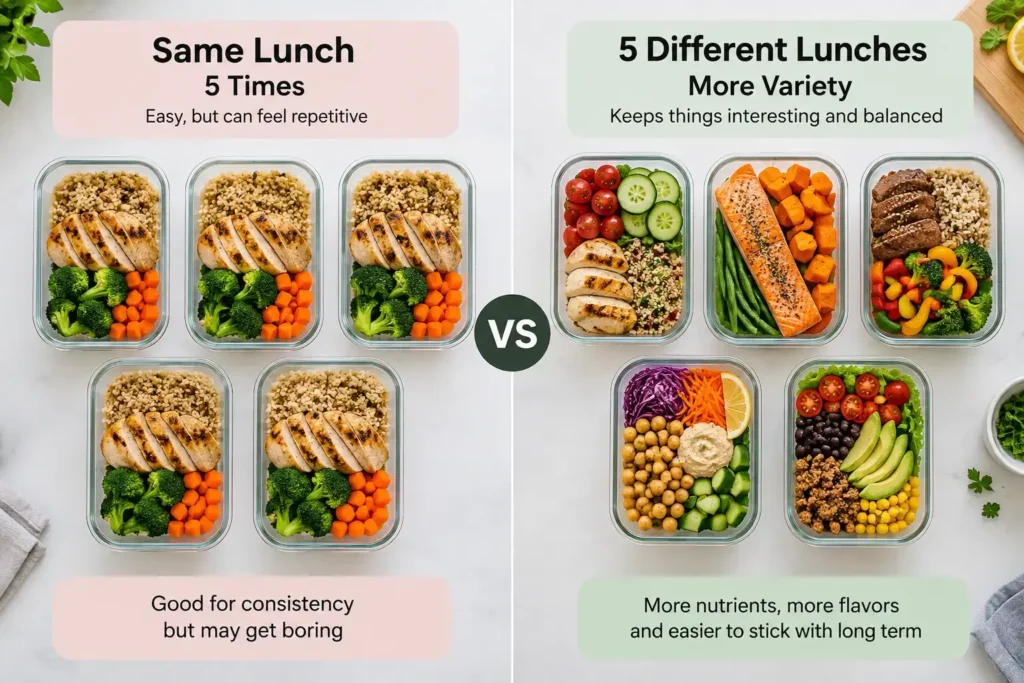
Same Lunch vs. Rotating Lunches, at a Glance
Here’s how the two approaches compare side by side.
| Same Lunch Daily | Rotating Lunches |
| Minimal daily decision-making | Requires more weekly planning |
| Easy, precise calorie tracking | Nutrition is harder to track precisely |
| Cheaper, simpler grocery list | Wider range of nutrients by default |
| Risk of nutrient gaps over time | Lower risk of missing nutrients |
| Can lead to food boredom | Keeps lunch more interesting |
So Is It a Yes or No to Eating the Same Quick Lunch Every Day?
The verdict: YES, as long as the lunch itself is nutritionally varied and you respect food safety storage limits.
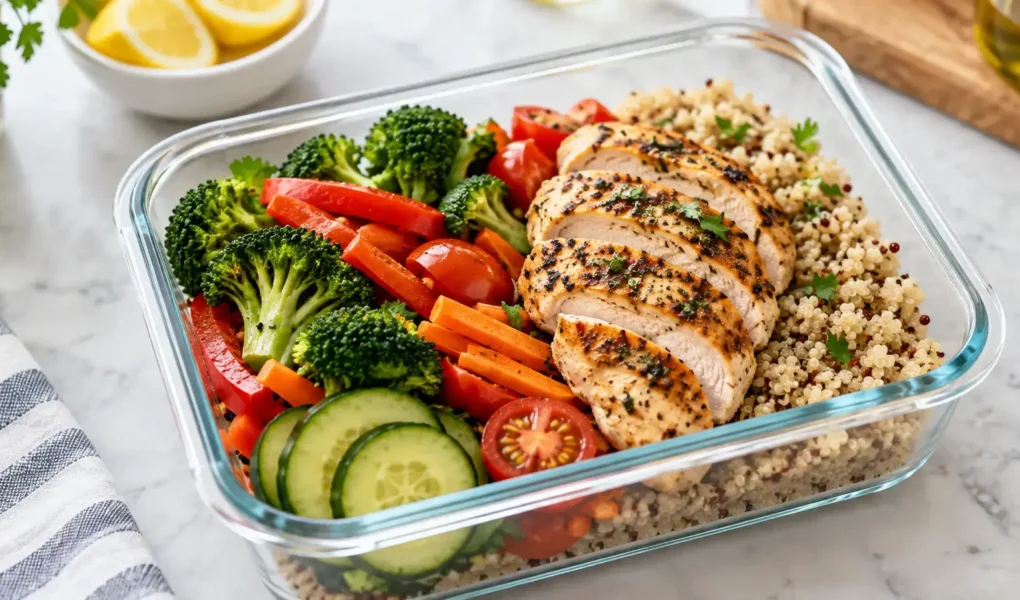
The conditions: build your repeat lunch around a rotating protein, a vegetable or two, and a whole grain or legume, rather than the same three narrow ingredients every time, so the meal itself carries variety even if the format doesn’t change. Keep any batch-prepped portions within the three to four day refrigerated window, and freeze extra portions if you’re making more than that. And if you notice yourself dreading lunch or skipping it out of boredom, that’s a sign to rotate in a second option rather than pushing through.
How to Repeat a Lunch Without the Downsides
A few habits keep a repeat lunch nutritionally solid and genuinely sustainable.
- Build the lunch around a protein, a vegetable, and a whole grain or legume, not just one or two repeated ingredients.
- Rotate the sauce, seasoning, or topping weekly to keep the same base meal from feeling identical every day.
- Batch prep no more than three to four days at a time, and freeze the rest if you’re making a bigger batch.
- Swap in a different vegetable or protein source every couple of weeks to close any nutrient gaps.
- Keep one backup lunch option on hand for the days you genuinely can’t face the usual one.
Who Might Want to Rethink a Repeat Lunch
A repeat lunch works well for most people, but a few situations point toward adding more variety.
- Anyone whose repeat lunch relies on a narrow set of ingredients rather than a balanced mix
- People managing a specific nutrient deficiency who need more dietary variety, not less
- Anyone who notices they’re skipping lunch entirely out of boredom with the usual meal
- People batch-prepping lunches beyond the safe three to four day refrigerated window
Alternatives
Repeating the same lunch daily is one approach, but it’s not the only way to keep lunch simple.
Try a two-lunch rotation instead of just one, alternating between two go-to meals so you get some variety without full weekly planning.
If a single quick recipe still feels too repetitive, Yes or No to One-Pot Pasta for Weeknight Dinners covers another fast option you could rotate into your lunch lineup.
And if what you’re really craving on repeat days is something more satisfying than practical, Yes or No to Comfort Food covers that side of the equation.
Still on the fence? Try our Yes or No Generator for an instant answer.
Still not sure where you land on this? If it’s a bigger decision than a quick yes or no, The Big Decision Workbook walks you through a full framework to think it through properly.
🧭 Get the Decision Workbook — $19FAQ
Here are the questions people ask most often about eating the same lunch every day.
Is it healthy to eat the same lunch every day?
It can be, as long as the lunch itself includes a protein, a vegetable, and a whole grain or legume, so the meal carries real nutritional variety even though the format stays the same.
How can I make my daily lunch more interesting without changing the whole meal?
Rotate the sauce, seasoning, or topping each week, which is often enough to keep the same base meal from feeling repetitive.
Can eating the same lunch help with weight loss?
Yes, for many people, since a known nutritional profile makes calorie tracking far more accurate, though it works best paired with a genuinely balanced recipe rather than a calorie-cut one.
How long can a batch-prepped lunch safely stay in the fridge?
Generally three to four days. Beyond that, freeze extra portions instead of pushing past the safe refrigerated window.
What nutrients are people most likely to miss by eating the same lunch daily?
It depends entirely on what’s in the meal, but a narrow rotation of ingredients commonly leaves gaps in specific vitamins and minerals that come mainly from foods outside that rotation.
Conclusion
So is it a yes or no to eating the same quick lunch every day? Yes, for most people, since the time and decision savings are real. Just make sure the lunch itself is nutritionally balanced and stays within safe storage limits, rather than assuming repetition alone is the problem.
Still not sure where you land on this? If it’s a bigger decision than a quick yes or no, The Big Decision Workbook walks you through a full framework to think it through properly.
🧭 Get the Decision Workbook — $19